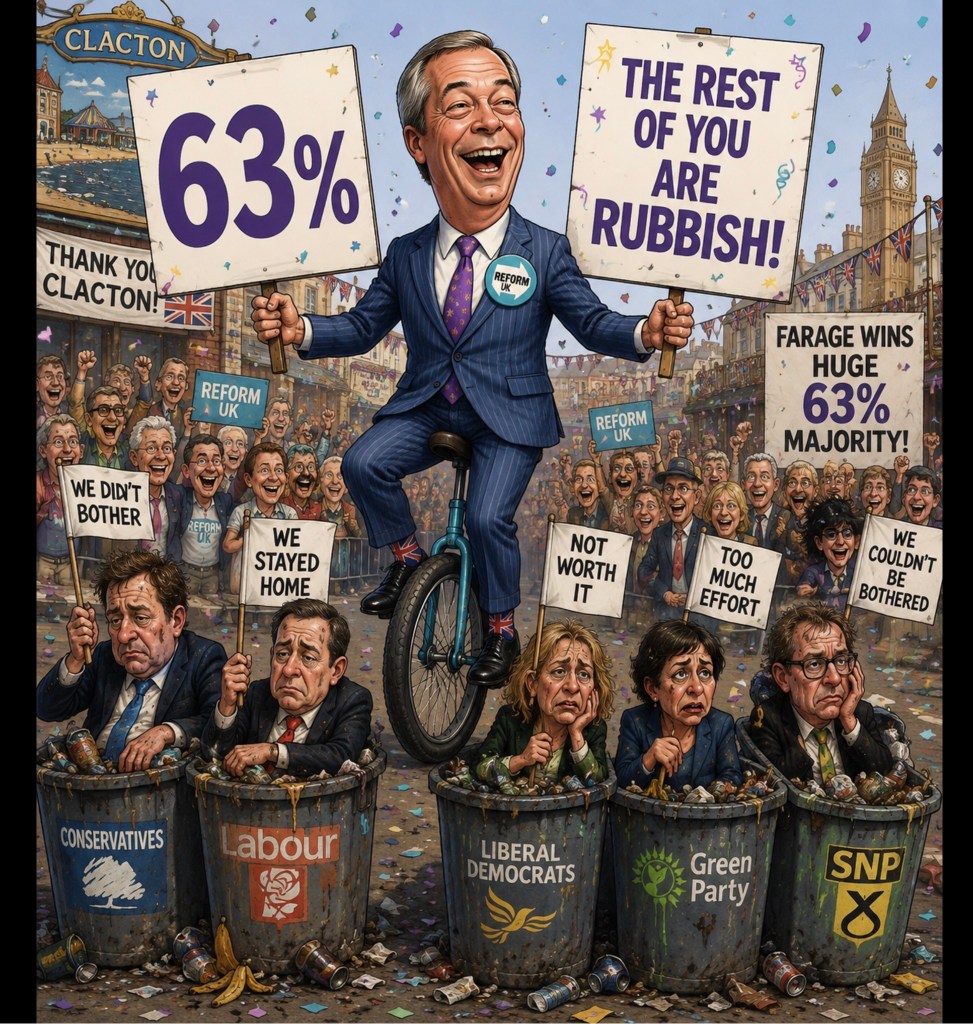
🗳️🎪Good Morning Britain seemed deeply puzzled that a 63% majority could count as democracy when Nigel Farage did not turn up to the count. Farage won the Clacton by-election with about 63% of the vote, while Count Binface came second on roughly 27%, in a contest the main Westminster parties largely boycotted.
🗑️ When You Lose to a Man Who Didn’t Turn Up, After Refusing to Turn Up Yourself
So let’s get this straight. The other parties looked at the so-called “farce,” folded their arms, refused to enter the ring, then commentators sat on breakfast television clutching their mugs and wondering why the bloke left standing won. Brilliant. That’s not democracy being threatened — that’s democracy being ghosted. 👻
They called it a stunt. They called it a circus. They called it a vanity project. Fine. But here’s the problem: if you refuse to fight the circus, don’t complain when the ringmaster rides out on a unicycle waving 63% of the vote. 🎪
Farage did not turn up for the count, which is poor theatre, granted. But the bigger disappearing act was from the parties who decided the best way to defend democracy was to stay at home and let Count Binface become the official opposition. That is not a strategy. That is a group project where everyone says, “You do it,” and then blames the printer.
And yes, Farage can walk away holding his head high — not because he defeated the full might of Westminster, but because Westminster failed to send anyone serious enough to beat him. He proved he could beat the bin man. The others proved they could not even be bothered to take out the rubbish. 🗑️🇬🇧
🔥Challenges🔥
Is a 63% win still democracy when the main parties refuse to play, or is it only democracy when the breakfast sofa approves the result? Drop your take in the blog comments — especially if you think boycotting an election then moaning about the winner deserves its own gold medal. 🥇💬
👇 Comment, like, and share — because apparently “democratic process” now means turning up only when the polls look comfy.
The best comments will be included in the magazine. 🎯📝


Leave a comment