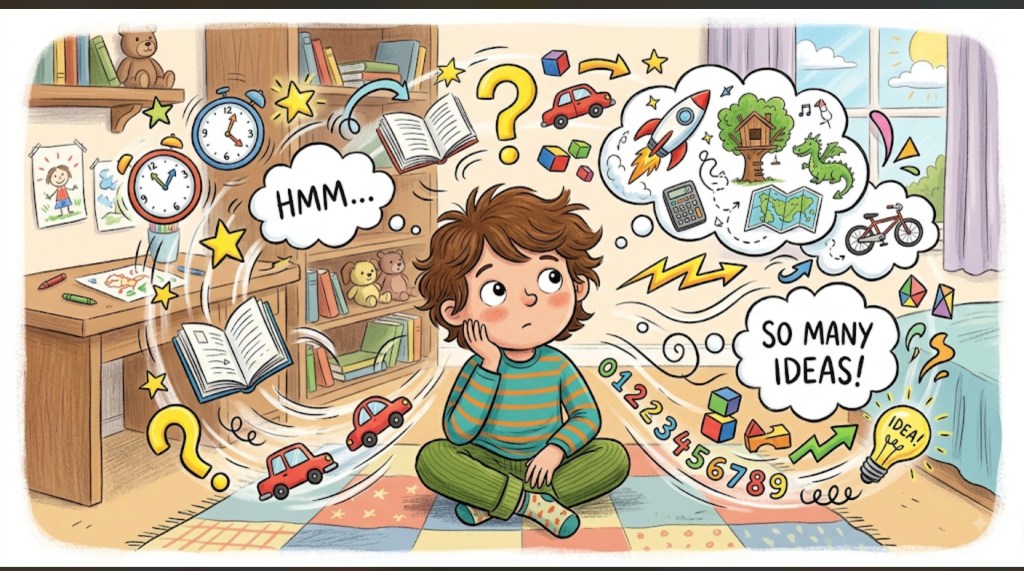
💊🧠⚡Tonight’s The Great ADHD Myth? throws a live grenade into one of modern medicine’s most sensitive debates: is ADHD always evidence of an underlying neurodevelopmental disorder—or have we built a world so hostile to restless brains that medication sometimes becomes the quickest way to make people fit the furniture?
The programme questions diagnostic thresholds, screens, schooling, lifestyle, expectations and the medicalisation of behaviour. But it also exposes something conveniently ignored by both extremes: swapping tablets for trainers isn’t a magic trick either. One child featured reportedly became happier and more sociable after stopping medication and changing exercise, diet and screen habits—but his concentration and classroom behaviour also deteriorated.
So perhaps the argument deserves something more sophisticated than “medicate everyone” versus “send them outside with a football.” ⚽💊
🪑 Welcome to the Great National Sit-Still Experiment
Modern childhood can sometimes resemble preparation for a career in airport security.
Sit down. Face forward. Stop fidgeting. Concentrate. Don’t interrupt. Ignore the glowing rectangle. Actually, use the glowing rectangle for your homework. Now stop using the glowing rectangle because apparently it’s destroying your attention span. 📱🤯
Then, when some children struggle with this extraordinary behavioural obstacle course, society asks: What’s wrong with them?
Perhaps sometimes something genuinely is.
And perhaps sometimes the better question is: what’s wrong with the obstacle course?
That is where this debate becomes uncomfortable.
ADHD specialists argue strongly that the condition is real, disabling and cannot simply be explained away by bad parenting, TikTok, sugary cereal or insufficient laps around the playground. For many people, diagnosis and medication can be transformative.
But critics are asking whether the boundaries have become too elastic—and whether perfectly human differences in energy, attention and temperament are increasingly being marched into the consulting room because they clash with the demands of classrooms, offices and screen-saturated modern life.
Which leaves us with a slightly awkward possibility.
Maybe biology matters.
Maybe environment matters.
Maybe both matter.
Apparently civilisation has reached the shocking discovery that the human brain is slightly more complicated than a Facebook argument. 🧠👏
The most provocative question isn’t whether children should never receive medication.
It’s whether medication can sometimes become society’s way of saying:
“We have designed an environment you struggle to tolerate, so here’s something to help you tolerate it.”
Because if a child needs more movement, better sleep, fewer screens, different teaching methods or simply room to behave like an energetic human being, reaching automatically for a prescription would be rather like fixing a smoke alarm by removing the batteries. 🔥🔋
But pretending exercise and kale smoothies can replace appropriate clinical treatment for everybody would be equally ridiculous.
The danger lies in certainty.
And television has just poured petrol all over it. 📺🔥
🔥 Challenges 🔥
Here’s the question nobody escapes easily:
Are we diagnosing a disorder—or sometimes diagnosing somebody’s inability to thrive in the world we’ve built?
And if modern schools, screens, sleep deprivation and sedentary lifestyles are contributing to attention problems, should society change the environment before asking the individual to change their brain chemistry?
Or does that argument dangerously minimise a genuine condition experienced by millions?
💬 Don’t leave this fight to television pundits and comment-section gladiators. Tell us what YOU think in the Chameleon News blog comments.
👇 Comment. Like. Share. Challenge the argument. Agree with it. Tear it apart. Just bring something better than “kids these days.”
🎯 The best comments, arguments and glorious verbal hand grenades will be included in the magazine.


Leave a comment