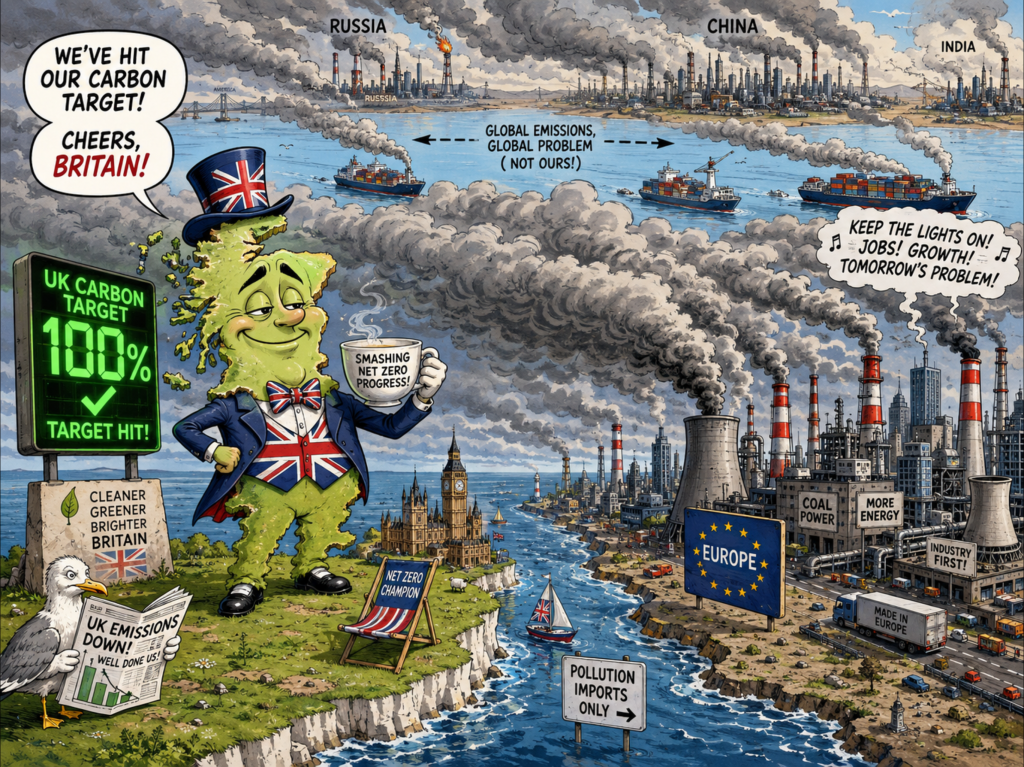
🛢️🌍Britain appears to have invented a remarkable climate strategy: shut domestic refineries, import the same fuel from abroad, then celebrate because the emissions vanished from the UK spreadsheet. 📉✨
Energy analyst Kathryn Porter argues that Britain’s carbon-pricing regime is now actively undermining its remaining refineries. After five closures since 2005—including Grangemouth and Lindsey in 2025—the UK is down to just four.
Those plants reportedly face around £200 million a year in UK ETS charges, while Porter estimates their wider competitive disadvantage against overseas refineries without comparable carbon costs at roughly £540 million annually.
And here’s the problem:
Britain still needs petrol, diesel, aviation fuel and petrochemical feedstocks.
So when a British refinery closes, demand doesn’t disappear.
The fuel simply gets imported.
🌱 Carbon Leakage: Now You See It, Now You Don’t
This is carbon leakage in its purest form.
Tax the British refinery.
Make it less competitive.
Close it.
Import the same fuel from somewhere with weaker carbon rules.
Then claim domestic emissions have fallen.
The carbon hasn’t vanished.
It’s just moved abroad. 🚢💨
That’s Porter’s central argument: this may look like decarbonisation on paper, while functioning more like deindustrialisation and offshoring in reality.
Grangemouth is the perfect example.
It stopped refining in 2025.
Scotland didn’t stop using fuel.
Grangemouth simply became an import terminal.
Same demand.
Different refinery.
Different country.
Different spreadsheet.
Meanwhile, Fuels Industry UK warns Britain has moved toward “high risk / low resilience” in diesel and aviation fuel following refinery closures, while the wider sector supports around 100,000 jobs and £11 billion in exports.
And then comes the absurdity.
Britain’s Carbon Border Adjustment Mechanism is designed to prevent carbon leakage by taxing certain carbon-intensive imports.
Steel is covered.
Aluminium is covered.
Refined petroleum products?
They aren’t. 🤡
So Britain is taxing domestic refineries for carbon while allowing competing imported fuels to arrive without equivalent protection.
That leaves Labour with a simple choice:
Change the carbon-tax treatment of British refineries—or risk losing more of them.
🔥 Challenges
If Britain shuts a refinery, imports the same fuel from abroad, and potentially shifts the emissions overseas, what exactly has been saved?
The climate?
Or Britain’s carbon-accounting spreadsheet? 📊🌍
💬 Drop your verdict in the Chameleon News blog comments.
👇 Comment. Like. Share.
The best comments will be featured in the next issue of the magazine. 🎯📰


Leave a Reply