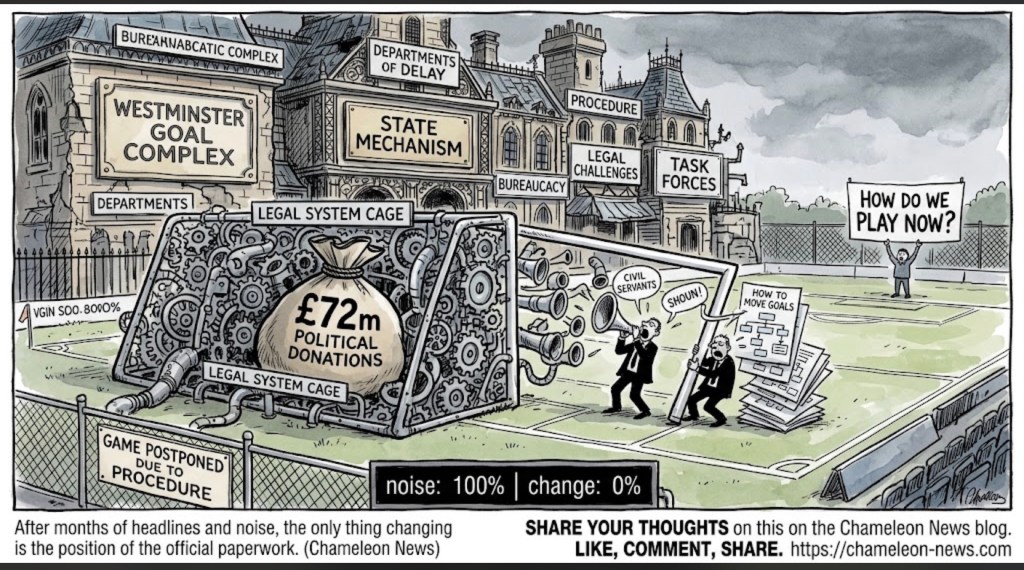
There is an exquisite, almost artistic beauty to watching a political leader transition from noisy opposition crusader to the heavily restricted caretaker of a spreadsheet. The grand spectacle of national transformation—complete with glowing promises of immediate public salvation—has hit the immovable object known as standard government process. It turns out that moving the goalposts is remarkably easy when you’re just throwing commentary from the touchline, but far trickier when you inherit the gloves, step onto the pitch, and discover the goals are actually bolted to the concrete by a dozen civil service committees.
A Masterclass in Legal Realism
Meanwhile, Angela Rayner has stumbled into her own crash course in administrative reality. After months of assuring the nation that stripping political rivals of their eye-watering financial war chests would be as simple as waving a parliamentary wand, the actual mechanics have proven somewhat less cooperative. The bold political rhetoric about instantly clawing back tens of millions in controversial party gifts hit a slight snag upon encountering the legal system, which insists on minor formalities like due process, static legislation, and actual court hearings rather than a decisive shout across the dispatch box. It is the political equivalent of announcing you are cancelling a neighbor’s subscription, only to find out you aren’t on the account and the customer service line has a three-hour hold time.
And then what? What actually changes after the dramatic TV appearances, the furious press releases, and the frantic attempts to draft retroactive legislation? We land precisely where British politics always lands: in a thicket of legal challenges, procedural delays, and endless compliance notices. The colossal efforts to claw back giant donations will inevitably drag through the courts for years, enriching a battalion of lawyers while the money sits safely in escrow. The grand promises of immediate overhaul will be quietly repackaged as “long-term strategic framework consultations” scheduled for the next parliamentary term.
The practical alternative to this permanent theatrical performance is blindingly simple: draft clear, enforceable rules from the outset, apply them equally without waiting for a public panic, and stop pretending that complex legal processes can be shortcut by a snappy soundbite. Until then, the government remains locked in a high-stakes game where the rules are rewritten mid-match, the referee is bogged down in paperwork, and the crowd is left wondering if anyone is actually playing the game.
🔥 Challenges: If passing a law to claw back a political donation requires three years of court battles and fifty legal opinions, how many generations will it take to fix a broken bus lane? Share your thoughts on the Chameleon News blog.
Like, comment, and share to keep the wheels turning.
The video below covers the £72 million donation dispute and the government’s proposed capping rules, detailing the exact legal and political hurdles involved:


Leave a comment