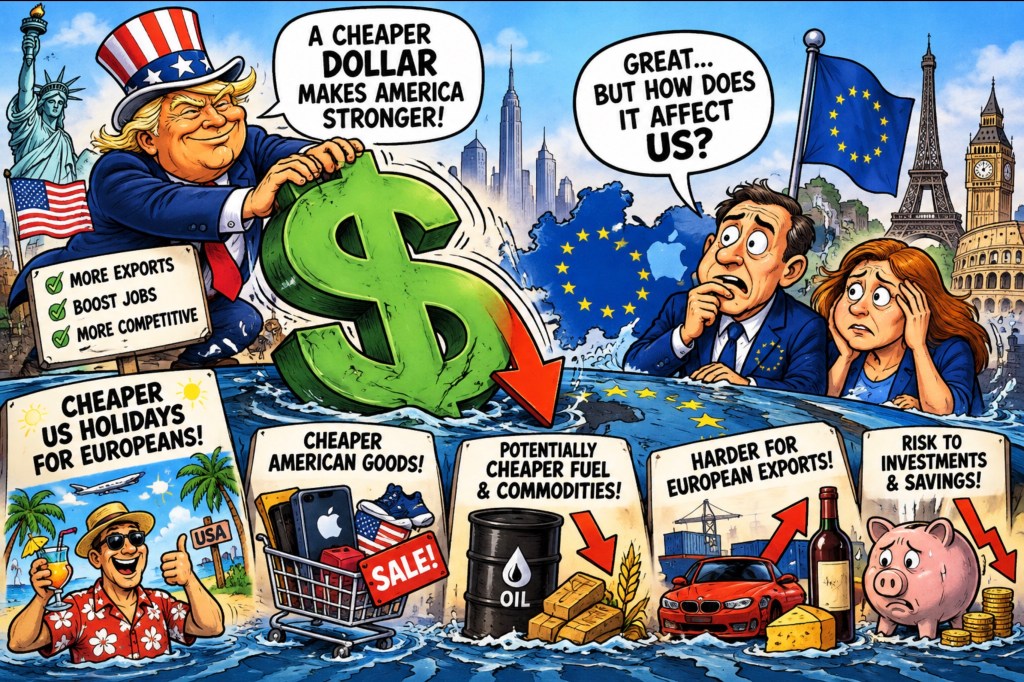
💵🇪🇺🌪️America wants a cheaper dollar, which sounds like one of those distant financial thunderclaps that only bothers bankers, currency traders, and men who say “macroeconomic conditions” at dinner parties. But for Europe, it matters. A weaker dollar can ripple through fuel prices, imports, exports, holidays, investments, and the price of everything from iPhones to industrial parts.
In simple terms: if the dollar falls against the euro or pound, European shoppers may find some American goods cheaper, European tourists may get more spending power in the US, and dollar-priced commodities can shift in price. Lovely, right? Not so fast. Because Europe’s exporters may suddenly find it harder to sell into America, while global markets start wobbling like a supermarket trolley with one possessed wheel. 🛒📉
💶 Europe Watches the Dollar Diet While Its Own Wallet Starts Sweating
A cheaper dollar sounds like a bargain until you remember the world economy is basically a plate-spinning act performed on a greased floor. If the dollar weakens, European currencies may strengthen by comparison, which can make European exports more expensive for American buyers. That is bad news for carmakers, luxury brands, machinery firms, wine producers, and anyone whose business model involves selling beautiful European things to Americans with credit cards and emotional damage. 🍷🚗
For ordinary people in Europe, the effects are mixed. Holidays to the US could become cheaper. American online shopping might look more tempting. Imported US goods may soften in price. But European companies that rely on US sales could feel the squeeze, and that can eventually show up in jobs, wages, investment, and the general corporate mood — which is already about as cheerful as a damp sock in November.
Then there is oil, gas, and global commodities, many of which are priced in dollars. A weaker dollar can sometimes make these cheaper in euro or pound terms, but because energy markets enjoy behaving like caffeinated raccoons in a bin, there are no guarantees. 🦝⛽
And investors? They get the full theme park experience. European pension funds, savers, and portfolios holding US assets may see currency movements eat into returns. Your American shares might rise, but if the dollar falls, the exchange rate can sneak in like a pickpocket wearing a Bloomberg terminal.
So yes, Europe might get cheaper US holidays and slightly friendlier import prices. But it could also get pressure on exporters, nervous markets, investment weirdness, and another excuse for companies to say, “Due to global uncertainty…” before charging you more for less. Classic. 🎪💸
🔥
Challenges
🔥
So what do you think: is a cheaper dollar good news for Europeans, or just another financial magic trick where the rabbit gets replaced with a bill? 🐇📄
Would you rather have cheaper US travel and imports, or stronger European exporters and safer jobs? Drop your take in the blog comments — especially if you can explain currency markets without sounding like a haunted spreadsheet. 💬🔥
👇 Comment, like, and share. Tell us who really wins when America weakens the dollar.
The best comments will be included in the magazine. 🎯📝


Leave a comment