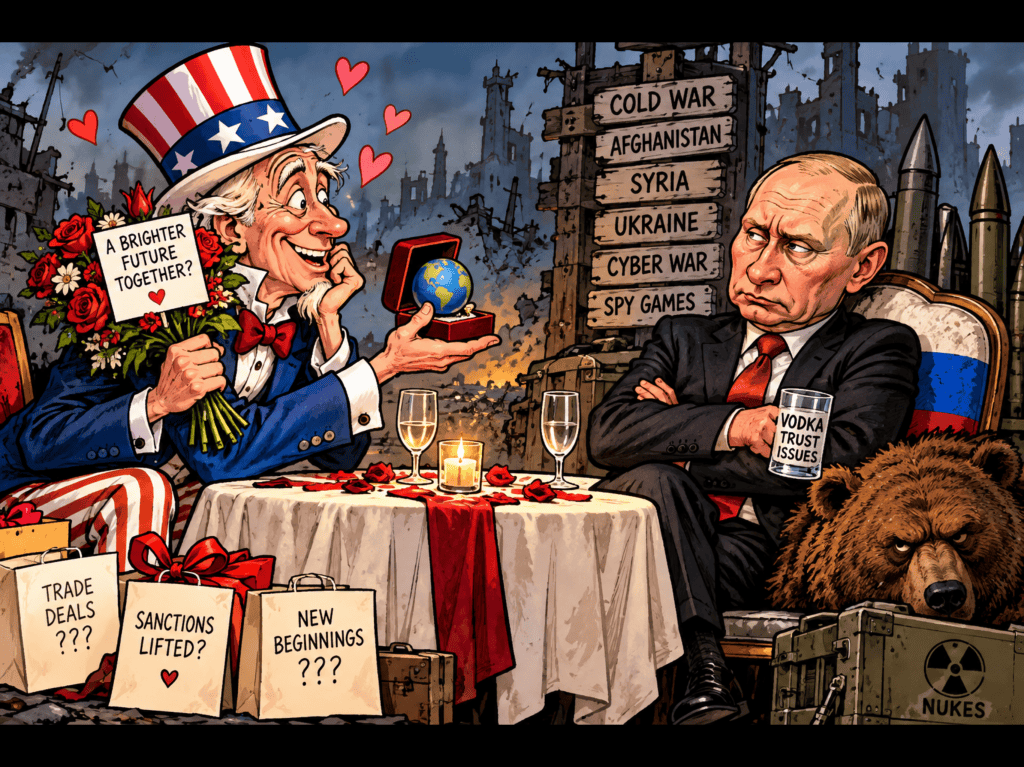
🕊️💣“Not many people have ever managed to bomb their way into friendship” lands like a diplomatic brick through a stained-glass window. It says the quiet bit loudly: pressure might bend a battlefield, but it cannot sit across a table, make concessions, or sign the bit of paper that stops people dying.
War can be influenced by force. Peace, annoyingly for the armchair generals and missile-menu enthusiasts, still requires conversation. And no, listening to Russia does not mean applauding the invasion. It means recognising that permanent hostility is not a strategy—it is a subscription plan for misery. Ukraine must have a meaningful voice in its own future, because peace imposed over its head would be less “settlement” and more “geopolitical ventriloquism.” 🎭
The Megaphone Diplomats and Their Exploding Friendship Strategy
📢🔥There is a certain breed of commentator who seems convinced that negotiations are weakness, dialogue is surrender, and the only acceptable peace plan is shouting “more pressure” until the map apologises.
But history has a rude habit of reminding us that wars usually end with people talking to people they despise. That does not make the aggression acceptable. It does not erase responsibility. It does not turn invasion into a misunderstanding over tea and biscuits. It simply acknowledges the grim adult truth: enemies do not stop being enemies because nobody answers the phone.
Keeping channels open with Russia is not moral collapse. It is basic conflict management with a pulse. You can condemn the invasion, support Ukraine’s sovereignty, and still accept that a workable peace will require some form of engagement with Moscow. That is not appeasement. That is reality walking into the room wearing muddy boots. 🥾
The challenge is making sure Ukraine is not treated like a prop in its own tragedy. Any negotiation that sidelines Ukrainian agency would be a peace process with the ethics of a backroom furniture sale: “slightly damaged nation, must collect.” 🪑🇺🇦
A serious settlement means pressure, yes—but also diplomacy, guarantees, accountability, and a route out of endless escalation. Because “continued hostility” sounds tough until you realise it is just another way of saying “more funerals, more ruins, more speeches from people nowhere near the front line.”
🔥Challenges🔥
Can peace be built with people you cannot trust—or is that exactly why negotiation matters? This is where the shouting usually begins, so bring your sharpest argument, your coldest logic, or your finest sarcastic side-eye. Drop your take in the blog comments and tell us whether diplomacy is realism, weakness, or the least terrible option left. 💬🕊️
👇 Comment, like, and share—because the peace debate deserves more than slogans fired from a safe distance.
The best comments will be included in the magazine. 🎯📝


Leave a Reply