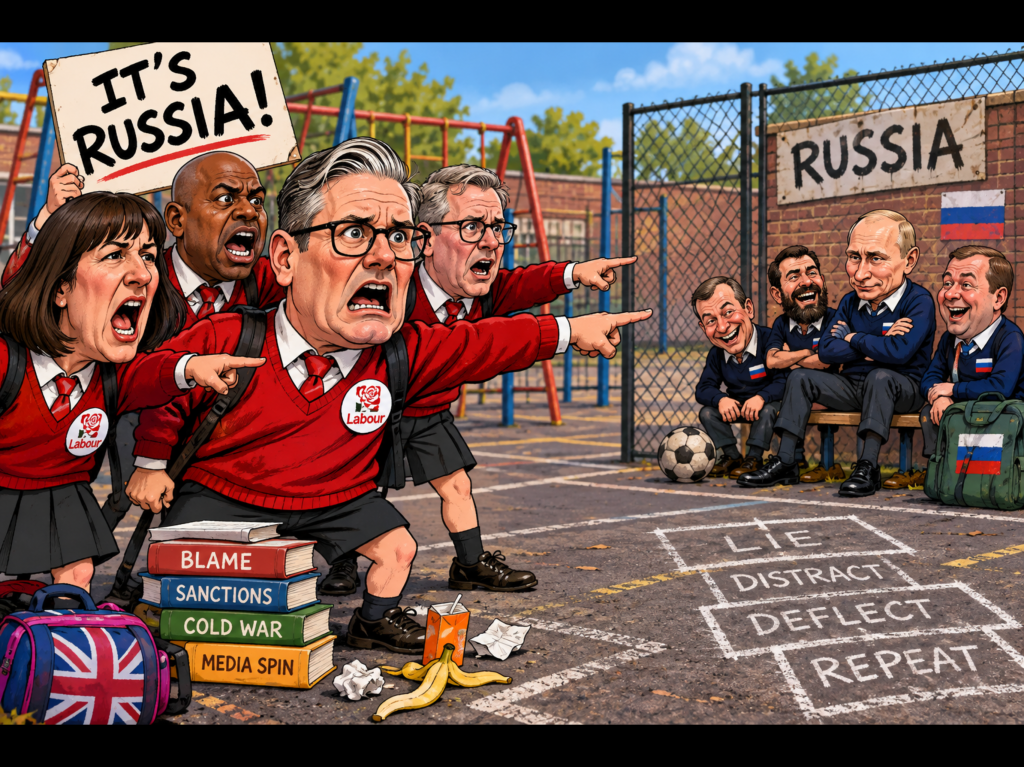
🎭⚠️Governments don’t always need to lie with a flashing neon sign that says “FABRICATION HERE.” Sometimes they do it with slippery phrasing, heavy implications, patriotic fog machines, and just enough wiggle room to deny everything later. The result? A public left squinting at statements that sound like warnings, feel like threats, and somehow come with absolutely no straight answer attached.
The Diplomatic Playground Needs Fewer Bullies and More Grown-Ups
🌍🧸Blaming Russia, or any country, like it’s a national reflex does nothing to build a safer future. It may score cheap political points, fire up headlines, and give leaders something dramatic to point at while everything else quietly catches fire—but it does not promote trust, peace, or good relations.
And honestly, watching grown politicians communicate like schoolyard bullies with security briefings is exhausting. “We’re not saying it was definitely them… but obviously look over there.” Wonderful. Nothing says mature global leadership like veiled accusations wrapped in plausible deniability and delivered with the emotional depth of a playground shove.
The real trick is implication. Say enough to make people reach a conclusion, but not enough to be held fully responsible for putting it there. That way, when challenged, the politician can retreat behind the sacred curtain of “I never technically said that.” Ah yes, the classic escape hatch of the professionally slippery.
But the public is not stupid. People deserve clear language, honest evidence, and leaders who don’t treat communication like a magic show performed by lawyers in expensive shoes. If a claim is serious, prove it. If evidence is limited, say so. If the situation is uncertain, admit it. That should not be revolutionary—but apparently, in politics, basic honesty now needs a marching band and a parliamentary inquiry. 🥁
The responsibility sits with leaders to speak plainly, not manipulate by implication. It also sits with education systems to teach people how to question claims, spot loaded language, and ask the most dangerous question in politics: “What evidence do you actually have?” 🔍
Because deliberate deception does not always arrive wearing a fake moustache and carrying forged documents. Sometimes it arrives as a carefully worded statement, a raised eyebrow, a dramatic pause, and a press conference designed to make people believe more than was actually proven.
🔥Challenges🔥
Are we being informed, or are we being nudged into fear by people who know exactly how powerful implication can be? That’s the question worth dragging into the daylight.
Drop your take in the blog comments: are leaders communicating badly, or are they communicating badly on purpose? 💬⚡
👇 Comment, like, and share if you think political language needs less smoke, fewer mirrors, and a lot more honesty.
The best comments will be included in the magazine. 📝🎯


Leave a Reply