Read Time: 10 minutes — Best paired with a sunny window, a curious mind, and the occasional gust of inspiration
There’s a quiet revolution waiting to power the future — and it doesn’t rely on miracle tech or fantasy economics. It’s already here, and it’s powered by three of Earth’s most abundant forces: sunlight, wind, and gravity-fed water.
At the center of this energy dream team is the closed-loop hydro system — a marvel of engineering that, when paired with solar and wind power, forms the most reliable and sustainable battery the modern world could ask for.
🌊 What Is a Closed-Loop Hydro System?
Let’s break it down.
A closed-loop hydro system (also called pumped-storage hydropower) is like a renewable energy time machine. It stores energy generated during off-peak times — when electricity is cheap or overabundant — and delivers it exactly when it’s needed most.
Here’s how it works:
1. Two Reservoirs, One Loop: Water is moved between an upper and a lower reservoir.
2. Charge Mode: When there’s surplus electricity (say, from solar panels at noon or wind turbines at midnight), it’s used to pump water uphill into the upper reservoir.
3. Discharge Mode: When demand peaks or the sun goes down, the stored water is released downhill, spinning turbines to generate power.
4. Repeat: No new water is needed — the loop just keeps turning.
This creates a giant, gravity-powered battery, capable of delivering electricity on demand with nearly zero emissions.
☀️ + 🌬️: How Solar and Wind Supercharge the System
Now, pair this water-based battery with solar and wind — and things get really exciting.
During the Day: Solar’s Golden Hours
Solar panels generate the most electricity when the sun is highest — often more than the grid can use right away. That’s when you pump water uphill using clean, free solar energy instead of wasting it or curbing production.
At Night or Off-Peak: Wind Takes Over
Wind often peaks when the sun goes down — late evening, overnight, and early morning. Wind turbines keep generating power when solar is offline, helping to either:
• Continue pumping water uphill if there’s excess,
• Or power the grid directly.
During Peak Demand: Hydro Releases Stored Power
When energy use surges (typically mornings and evenings), and neither solar nor wind can fully meet demand, the hydro system kicks in — delivering stored energy instantly and reliably.
🔋 Why This Trio Works So Well
1. Complements, Not Competition: Solar and wind are intermittent. Hydro storage smooths out their variability.
2. Infinite Fuel Supply: Sunlight, wind, and water — free, clean, and abundant.
3. Grid Resilience: Closed-loop systems can ramp up generation in seconds, helping stabilize the grid during fluctuations.
4. Scalable and Proven: Pumped hydro has been around for decades — this isn’t experimental tech. It just needs modern integration with renewables.
🏗️ Building a Sustainable Energy Loop
This trio isn’t just about electrons — it’s about ecosystems of opportunity:
• Old mines and quarries can become hydro storage sites.
• Floating solar panels can reduce evaporation on hydro reservoirs while generating energy.
• Wind turbines can occupy ridge lines above water storage basins, co-locating energy generation and storage.
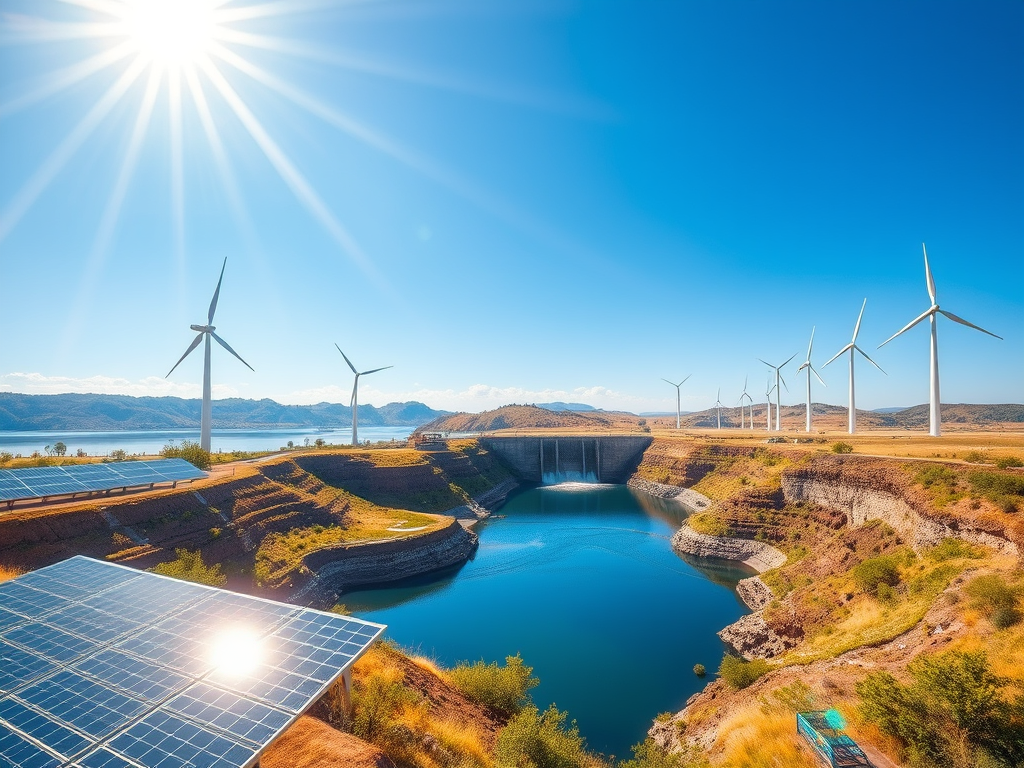
Imagine a solar farm charging a hydro battery by day, wind topping it off by night, and water delivering clean electricity right when your city needs it most.
It’s the loop we’ve been looking for — and it’s one nature already approves of.
💼 What’s at Stake?
This model creates:
• Long-term jobs in engineering, construction, maintenance, and grid tech.
• Low-carbon energy security that doesn’t rely on imports or finite fuels.
• Energy justice for remote and underserved areas where renewables can be localized.
It’s a future where sustainability is circular, not linear — producing, storing, and using energy in harmony with the planet, not at its expense.
⚡ Final Thoughts: The Clean Loop Is the Smart Loop
In a world desperate for clean, flexible energy solutions, closed-loop hydro backed by solar and wind isn’t just a good idea — it’s an obvious one. It’s the energy triangle that checks every box: renewable, reliable, and ready to scale.
So the question isn’t if we should build this. It’s why we haven’t already — everywhere.
Challenge for You, Reader:
What’s the closest old quarry, mountain basin, or underused industrial zone near you? Could it become part of a solar–wind–hydro revolution? Post your ideas, local examples, or even wild visions below — and let’s start mapping the energy loops of tomorrow.


 Chameleon Magazine
Leave a comment