🐔👜🌍
We rail against fur coats and leather boots while munching factory-farmed chicken and pretending petroleum-based “ethical” alternatives don’t stink of hypocrisy and microplastics. Welcome to the Great Ethical Wardrobe Illusion.
👢 The Morality Pageant of Animal Products: Leather Bad, Chicken Sandwich Good?
Ah, the modern conscience—so loud, so stylish, so…confused. Say “fur coat” in a room of oat milk evangelists and you’ll be accused of being a relic from the Neanderthal couture line. Mention leather and watch the eyebrows arch like vegan croissants. But casually unwrap a spicy chicken burger, and no one bats a soya-lashed eyelid.
The logic? Fur is glamorous cruelty, while chicken nuggets are just “dinner.” Never mind the billions of broiler chickens raised in conditions that would make a haunted house seem like a spa retreat. These animals live in spaces so cramped, so dystopian, they’d violate international human rights laws if they were applied to actual humans. But sure, tell me more about the evils of someone’s vintage mink coat from 1962. 🙄🐔
We seem to think our ethics are scalable based on fashion trends. Leather shoes? Unethical. Leather seats in a Tesla? “Well, it’s got good range.” It’s not a moral compass—it’s a moral roulette wheel. 🎰
💀 Vegan Chic or Just Polyester in Disguise?
Enter faux fur and vegan leather—the heroes of conscious consumerism. Or, as they’re known in scientific terms: wearable oil spills.
Your “ethical” trench coat is basically a petroleum poncho. Those fake leather boots? A microplastic molotov for the nearest estuary. With every step, you’re sprinkling little plastic confetti bombs into the environment like a deranged eco-clown. 🤡🎉
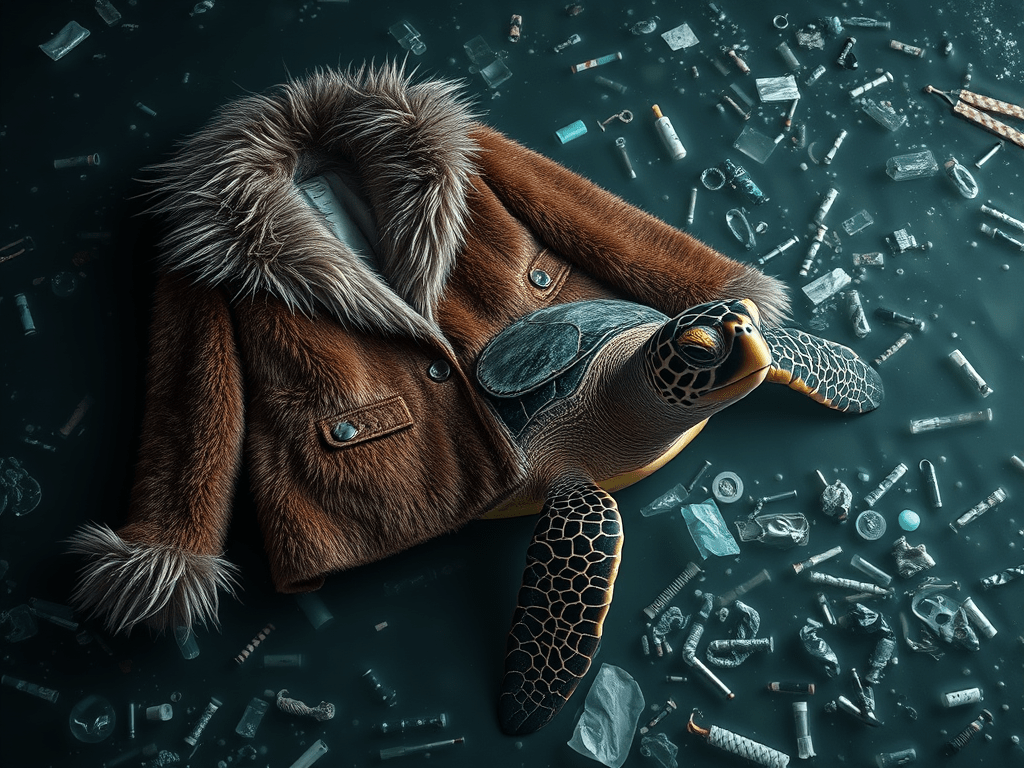
The truth? Real leather biodegrades. Faux leather photo-bombs sea turtle nests for centuries. So while we’ve saved the fox, we’ve gifted future archaeologists a perfectly preserved Zara puffer made from dinosaurs.
And don’t even ask where it’s made. Somewhere between “underpaid” and “poisoned,” in factories that dye your conscience green with heavy metals and runoff rivers that glow in the dark.
🔍 Ethics or Optics? Because One Is Easier to Hashtag
So what’s the real scorecard?
- The chicken in your sandwich? Tortured.
- The leather bag? A byproduct of the same industry that fills your fridge.
- Your vegan boots? Plastic garbage with a halo filter.
- Your moral outrage? Selective and suspiciously on-trend.
We protest fur because it’s visible. It’s a red-carpet villain with a face and a tail. But the slow horror of factory farming, plastic pollution, and underage garment labor? That’s conveniently hidden under “cruelty-free” tags and pastel-colored marketing.
The truth isn’t glamorous: being truly ethical means consuming less, not just differently. It’s not a question of leather or latex—it’s a question of whether your ethics are principles or just Pinterest boards.
🧠 Choose Less, Not Just “Nice”
If your vegan shoes are killing the climate, your fake fur is killing fish, and your plant-based ethics are wrapped in plastic and built on overseas misery—congrats. You’re not ethical. You’re aesthetically guilty.
So let’s stop asking if it’s vegan or not. Start asking: Was it needed? Was it just? Will it outlive the cockroach apocalypse?
Because if your outfit saves a lamb but torches a rainforest, you’re not wearing a conscience. You’re wearing denial. 🧥🔥
💣
Challenges
💣
Still think your “ethical” outfit is squeaky clean? Or are you ready to admit it might be squeaky greenwashed? Unleash your rage, insight, or guilt-ridden confessions in the comments. Let’s stop cosplaying as conscious consumers and actually dig into the dirt. 🌱🕵️♀️
💬 Smash that comment section, slap a like, or share with someone who thinks faux leather makes them Gandhi in Gucci.
🔥 Best rants, revelations, or roastings will be featured in our next issue. Don’t just comment on Facebook—hit the blog! 👇


 Chameleon Magazine
Leave a comment