(A story about democracy, dignity, and doing the right thing)
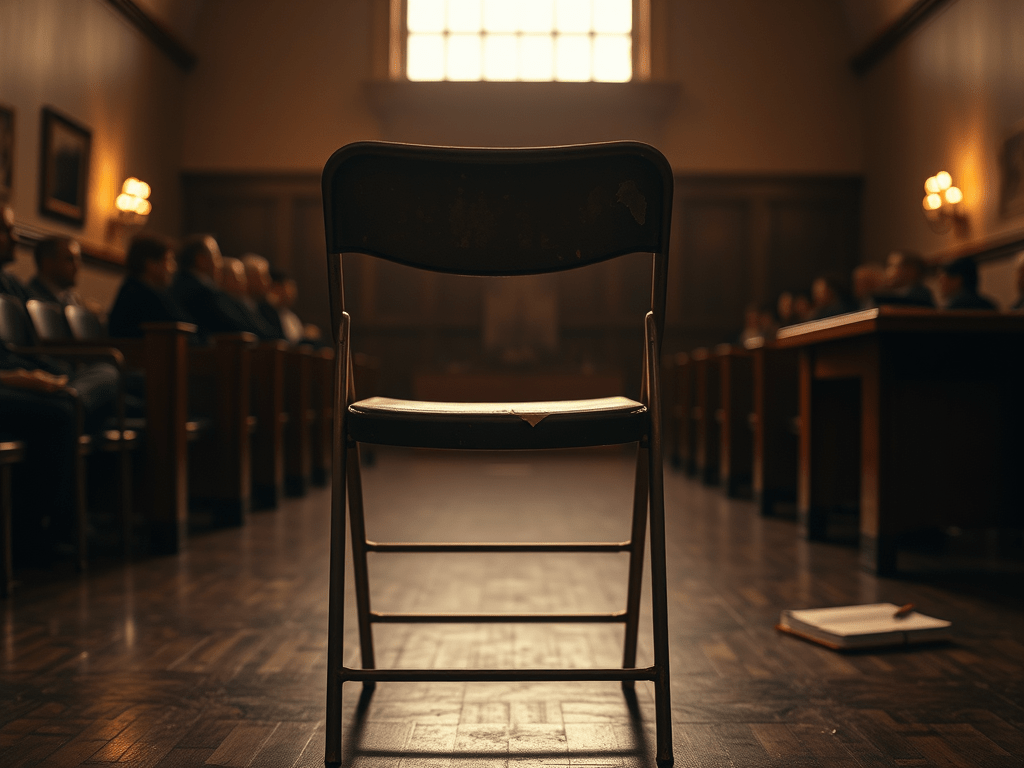
For twenty years, the folding chair in the back row of the town hall meetings had never been filled.
Everyone in the village of Coldwater knew it — the old rusted frame, the tear in the vinyl, the spot of faded red paint on the leg. They called it “the protest chair,” though no one could remember why.
It had belonged to Clara Walsh.
Clara was a school teacher, the kind who bought supplies with her own money and taught kids how to think, not just how to test. In the 90s, she began attending council meetings — not because she loved politics, but because something in her knew that silence could be dangerous.
Every month, she showed up. She took notes. She asked questions. She challenged backroom deals. She wrote letters. She demanded fairness.
She never raised her voice, but somehow — she was heard.
Over the years, she lost battles. Some broke her heart. But every time she lost, she came back. And when she won, she never gloated. She just smiled and said, “That’s democracy. You show up.”
When Clara died, the chair stayed. No one sat in it — not out of fear, but out of reverence.
And for years, it stayed empty.
Until the night a young woman stood at the back of the hall, notebook in hand, anxiety in her chest. She was 26, fresh out of grad school, watching her town slide into decisions that didn’t reflect its people.
She looked at the chair.
Then she walked across the room and sat down.
The room fell silent for a moment. Then the council leader — who’d once been Clara’s student — smiled and nodded.
“Welcome,” he said. “We’ve missed you.”
And just like that, the chair wasn’t empty anymore.
Moral of the story:
Democracy doesn’t live in marble halls — it lives in folding chairs, quiet questions, and people who dare to show up. You don’t need a title to lead or a microphone to be heard. Sometimes, all it takes is sitting down where others have stood before you — and refusing to leave until the truth is heard.


 Chameleon Magazine
Leave a comment