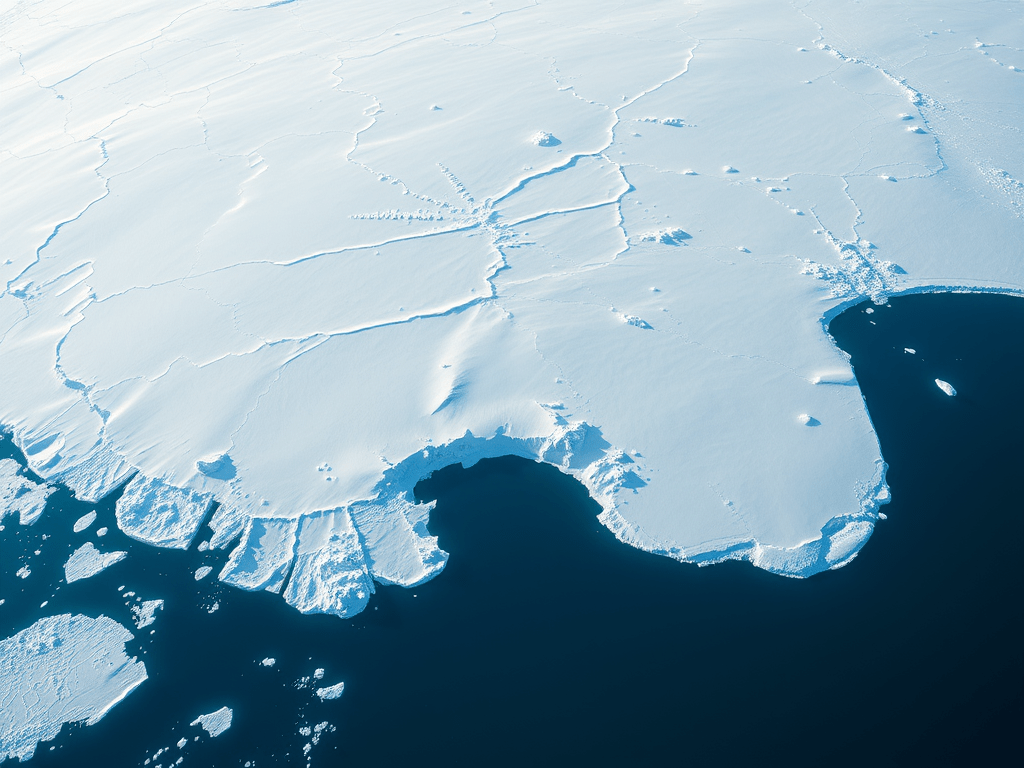
Antarctica has gained ice. Satellites measured it. Between 2021 and 2023, roughly 108 to 119 billion tons of snow and ice stacked onto the southern continent each year—mostly thanks to extreme snowfall over East Antarctica. That’s not a projection. It’s not a model. It’s real data, freshly beamed from space.
And yet, the moment that fact hits the news cycle, it’s spun, diluted, and buried under a landslide of “but this doesn’t mean what you think” and “here’s what will happen next.” The result? A public that doesn’t trust climate reporting—not because the science is wrong, but because the message keeps shifting from what is to what might be.
🔍 The Facts Were Measured. The Forecasts Were Not.
This isn’t about denying climate change. It’s about separating hard measurements from soft narratives. The mass gain in Antarctica is observable, not debatable. Satellites recorded the increase. Sea levels slowed by 0.3mm/year because of it. That’s not an opinion—it’s physics.
But scientists and media outlets rush to “frame” the news:
- “It’s temporary.”
- “It doesn’t reverse global warming.”
- “It’s just a blip.”
Yes, maybe all true. But those are interpretations—not the facts themselves. And when interpretations dominate, truth gets second billing to speculation.
🧠 Why This Matters: Trust Is Melting
We need to start with what we know, not what we think will happen. When facts are constantly wrapped in warnings and predictions, people stop listening. They see the cautionary tone not as responsible—but as manipulation.
If climate communication can’t acknowledge when something unexpectedly positive occurs—even briefly—it loses credibility. You can’t claim to “follow the science” and then downplay the results when the data defy expectations.
📏 Does Anyone Ever Measure the Accuracy of Climate Predictions?
This is the elephant in the (melting) room: do we ever go back and check the accuracy of the climate predictions we were fed years ago?
- Who tracks which projections came true and which fizzled?
- Where’s the accountability for forecasts that missed major developments—like this ice gain?
- Are those “worst-case scenarios” archived for future scrutiny, or quietly forgotten when they don’t play out?
Scientific integrity demands a feedback loop. Predictions should be revisited, evaluated, and—when necessary—publicly corrected. Otherwise, public trust erodes. The message becomes not “follow the science,” but “believe us or else.”
If prediction accuracy isn’t measured, what separates climate science from a weather fortune cookie?
❄️
Challenges
❄️
Are we mature enough to handle facts that don’t fit the script? Can we ask for accurate forecasts and accept the occasional surprise? Let’s debate it—fiercely, factually, and publicly.
👇 Comment, share, and tag someone who’s tired of science being treated like a PR campaign.
The boldest, most truth-first takes will be featured in the next magazine. 🔍🧊


 Chameleon Magazine
Leave a comment