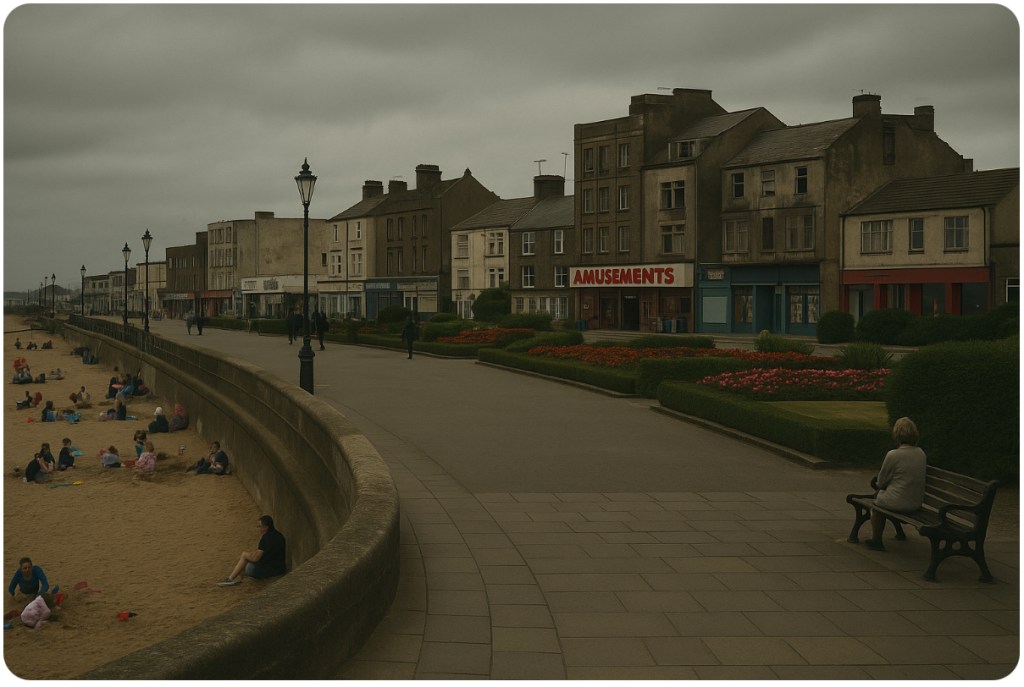
🏖️💸Gillian Cooper (whoever she is—probably the Jane Austen of TripAdvisor) summed up Clacton in a nutshell: “drab town centre, lovely beach.” And honestly, she’s not wrong. The promenade stroll? Delightful. The cafes with sea views? Charming. The beach? Full of families actually enjoying themselves. The high street? Looks like someone forgot to hit “upgrade” after 1987.
🏚️ Town Centres on Life Support, Beaches Doing Overtime
This isn’t just a Clacton problem—it’s the great British seaside curse. Councils gorged themselves during the fat years, slapped a fresh coat of paint on a few railings, and then spent the rest on consultant reports gathering dust. Fast forward a decade: the arcades are half-empty, the shopfronts look like Cold War relics, and everyone’s wondering where the money went. Spoiler: not into reinvestment.
The result? The beach carries the whole town’s reputation on its sandy shoulders while the town centre sulks in the background like an unloved cousin. People come for the sea breeze, the ice cream, the cheap deckchairs—but when it’s time to stroll into town, the vibe switches from “holiday postcard” to “economic depression chic.”
And here’s the kicker: no one seems to look to the future. Everyone’s too busy living in the now—great if you’re on holiday, not so great if you’re running a town. Forgetting you’ve actually got a future is easy when you’re already halfway to the coffin. 🪦 That’s the problem: seaside councils love the quick sugar rush, but long-term planning? About as absent as a working payphone on the pier.
🌊 Challenges 🌊
Why do we keep letting councils squander the good years and then act shocked when town centres look like Soviet leftovers? Is Clacton just unlucky, or is this the fate of every seaside town where the sea gets love but the streets get neglect? And what happens if living “in the now” just leaves us with no tomorrow worth living in? Drop your thoughts in the blog comments—bonus points if you’ve got your own horror stories of drab-but-charming UK resorts.
👇 Comment, like, and share if you think Britain’s beaches deserve better than council mismanagement.
The sharpest takes will feature in the magazine. 📝🔥


 Chameleon Magazine
Leave a comment