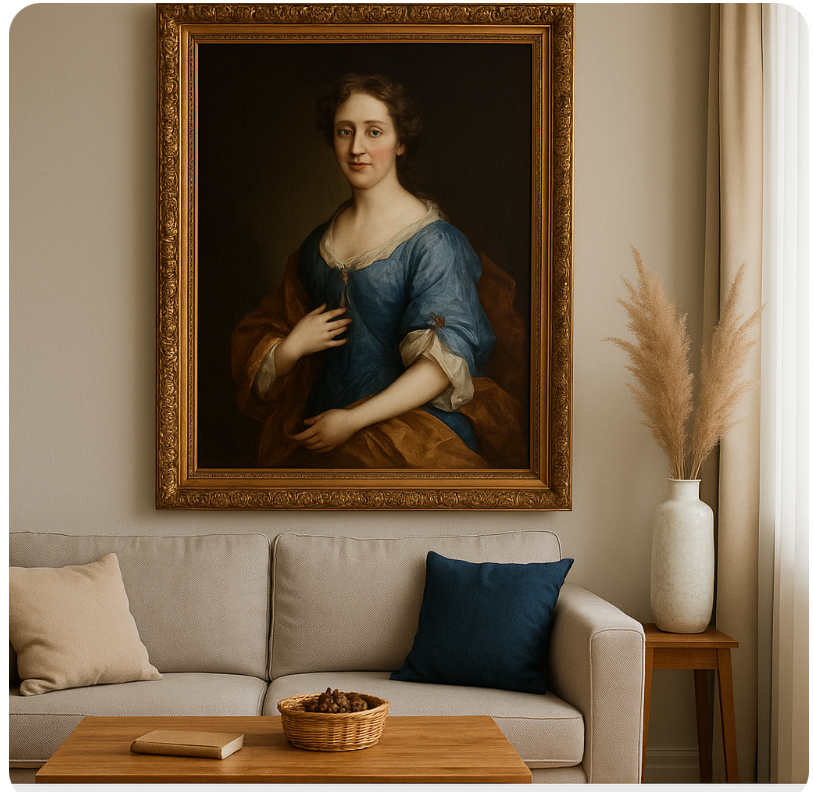
🎨🔎It’s the kind of plot twist even Netflix wouldn’t greenlight: a painting stolen by Nazis in 1940—vanished for over 80 years—suddenly resurfaces not in a museum, not in a black-market vault, but in… a real estate listing. That’s right, “Portrait of a Lady” was casually hanging in the background of a house-for-sale photo like it was just another IKEA print.
🏠 When Looted Art Becomes Home Décor
The absurdity writes itself. Somewhere between “3-bed semi with original hardwood floors” and “great transport links,” buyers were treated to a lost masterpiece once stripped from a Jewish owner during the Holocaust. Forget crown moldings—the real feature was the stolen portrait glaring down from the wall, silently screaming: I survived the Nazis only to become Zillow clickbait.
And this isn’t an isolated fluke. Police are now sniffing around other artworks with suspiciously murky backstories. Translation: someone’s nana’s “family heirloom” may turn out to be Exhibit A in a war crimes investigation. The art world’s dirty laundry isn’t just hanging in museums—it’s literally hanging in hallways above people’s staircases.
🖼️ Challenges 🖼️
Why do we keep acting shocked when looted art pops up like a cursed eBay auction? Shouldn’t there be a global system to track and return these pieces, instead of waiting for them to photobomb estate agents’ catalogues? Drop your outrage, sarcasm, or conspiracy theories in the blog comments.
👇 Comment, like, and share if you’d swipe left on a flat with “includes complimentary Nazi loot.”
The sharpest takes will be published in the magazine. 📝🔥


 Chameleon Magazine
Leave a comment