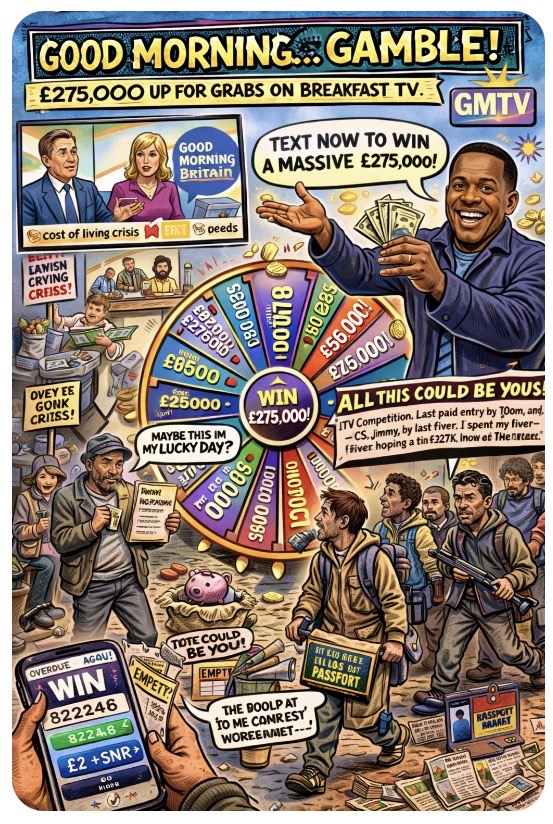
Ah yes, the sacred ritual of morning television—coffee in hand, toast half-buttered, and a cheery host casually dangling life-changing cash prizes like a carrot in front of a nation already juggling bills. Welcome to the glittering paradox of Good Morning Britain, where social issues are discussed with furrowed brows… right before cutting to “WIN £275,000 NOW!!!” flashing like a Vegas slot machine on caffeine.
🎤 Andy Peters: The Smiling Bookie of Breakfast TV
Enter Andy Peters—passport stamped, teeth gleaming, enthusiasm dialled to eleven—guiding viewers through the noble pursuit of dialling a premium number and hoping for divine intervention.
He’s not just presenting a competition. No, no. He’s orchestrating a national daydream. A fantasy where your problems vanish if you just text “WIN” fast enough and beat Doris from Doncaster to the punch. 📱💸
And while the show tackles serious topics—cost of living, mental health, social inequality—it somehow finds room (lots of room) to remind viewers that salvation might be just one paid entry away. Because nothing complements a segment on financial hardship quite like encouraging people to gamble their last fiver.
💰 Poverty Talk, Jackpot Walk
Let’s admire the balancing act here:
• Segment 1: “Families struggling to make ends meet” 😔
• Segment 2: “You could WIN BIG—enter now!” 🎉
It’s less journalism, more emotional whiplash.
The messaging? Grim reality meets glitter cannon. And somewhere in between, viewers are nudged—subtly, persistently—toward the idea that luck, not policy, might be their ticket out.
Because why fix systemic issues when you can just raffle your way out of them? 🎟️
🎭 The Illusion of Opportunity
These competitions are wrapped in excitement, but let’s not pretend they’re anything other than a well-oiled revenue machine. The house always wins—even when someone technically “wins.”
And the audience? Often the very people most vulnerable to the lure of easy money. The same viewers watching for advice, reassurance, or just a bit of normality are being sold a dream with a price tag attached.
It’s not illegal. It’s not even unusual. But it is… telling.
Because in modern Britain, hope apparently comes with terms and conditions—and a premium-rate charge.
🔥 Challenges 🔥
Is this harmless entertainment—or a glossy distraction from real issues? Should daytime TV be offering solutions… or selling dreams? And at what point does “fun competition” start looking a lot like exploitation? 👀🔥
👇 Drop your thoughts in the blog comments—this one’s ripe for debate.
Like it, share it, and call it out if you see it differently.
🏆 The best comments will be featured in the next issue of the magazine.


 Chameleon Magazine
Leave a comment