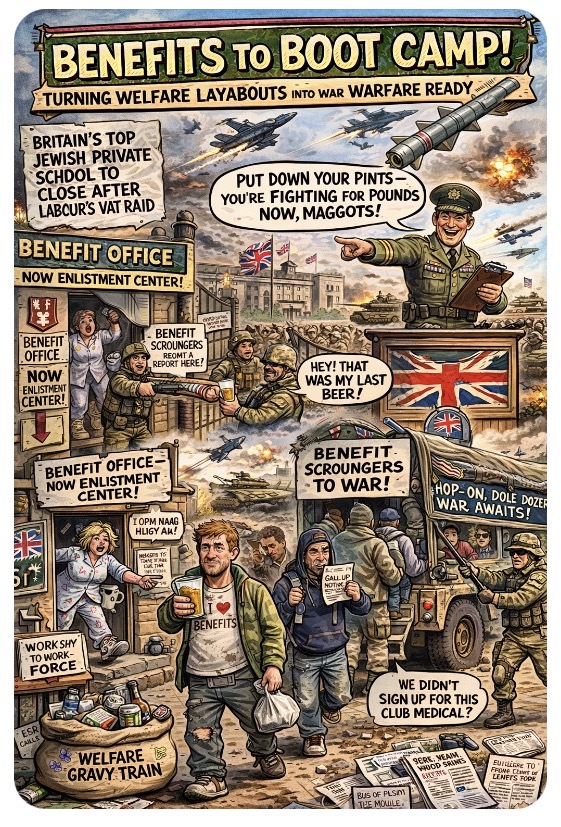
Somewhere in the corridors of power, a grim little equation is being scribbled on a whiteboard: spend on people… or spend on missiles. And apparently, the conclusion being floated is that feeding families might just have to take a back seat to funding firepower.
Yes, really. That’s the debate now.
⚔️ Bombs Before Bread? That’s the Pitch
You’re not imagining it—this narrative is creeping louder. The idea that a nation must tighten welfare to strengthen defence is being framed as “tough but necessary.” As if the only way to protect a country is to make life harder for the people already living in it.
Because nothing says “strong nation” like citizens struggling to get by while the defence budget gets a fresh coat of gloss. 🪖✨
It’s a clever bit of political theatre, really. Take two completely different priorities—social support and national security—and force them into a cage fight. Welfare vs warfare. Compassion vs strength. Survival vs spectacle.
But here’s the twist—they’ve now added a new angle to the script.
🎖️ From Benefits to Boot Camp? The “Simple Solution” Nobody Asked For
Lurking in the background of this debate is an eyebrow-raising idea: if welfare is the problem, why not turn recipients into recruits?
On paper, it sounds like a neat little package—cut welfare costs, boost military numbers, and wrap it all up as “national service.” Problem solved, right?
Except… reality isn’t a recruitment poster.
Reducing people on welfare to a convenient pool of manpower ignores why many need support in the first place—health issues, caregiving responsibilities, unstable job markets, or simply falling through the cracks of a system that isn’t as fair as it pretends to be.
Turning that into a one-size-fits-all solution risks swapping one problem for another—economic hardship traded for forced obligation.
And let’s be honest, dressing it up as a fix for so-called “scroungers” says more about the narrative being pushed than the people being talked about. It’s less about solutions and more about framing—who’s deserving, who’s not, and who gets to decide. 🎭
🎭 The False Choice Nobody Asked For
This whole argument rests on a neat little illusion—that there’s only one pot of money, and it must be fought over like scraps at a banquet.
So instead of asking:
• Are we spending efficiently?
• Are there alternatives?
• Who really benefits from these decisions?
We get handed a moral dilemma instead:
“Do you care more about the vulnerable… or the safety of the nation?”
As if those two things aren’t deeply connected.
Because a country isn’t just protected by tanks and treaties—it’s held together by stability, fairness, and the basic dignity of its people. Undermine that, and no amount of military hardware is going to fix the cracks. 🧩
🧠 What Are We Actually Being Told Here?
That helping the poor is now a luxury?
That social support is expendable, but military expansion isn’t?
That the solution to global instability is to create more instability at home?
It’s the kind of messaging that makes you stop and think: Did they really just say that out loud?
And maybe that’s the point. Normalize the trade-off. Make it sound inevitable. Shrug, and move on.
🔥 Challenges 🔥
Is this about national security—or narrative control? Are we solving problems, or just repackaging them with a uniform and a slogan? And how far should a government go before “support” turns into “obligation”? 👀🔥
👇 Drop your thoughts in the blog comments—this one cuts deep.
Like, share, and challenge the narrative.
🏆 The best comments will be featured in the next issue of the magazine.


 Chameleon Magazine
Leave a comment