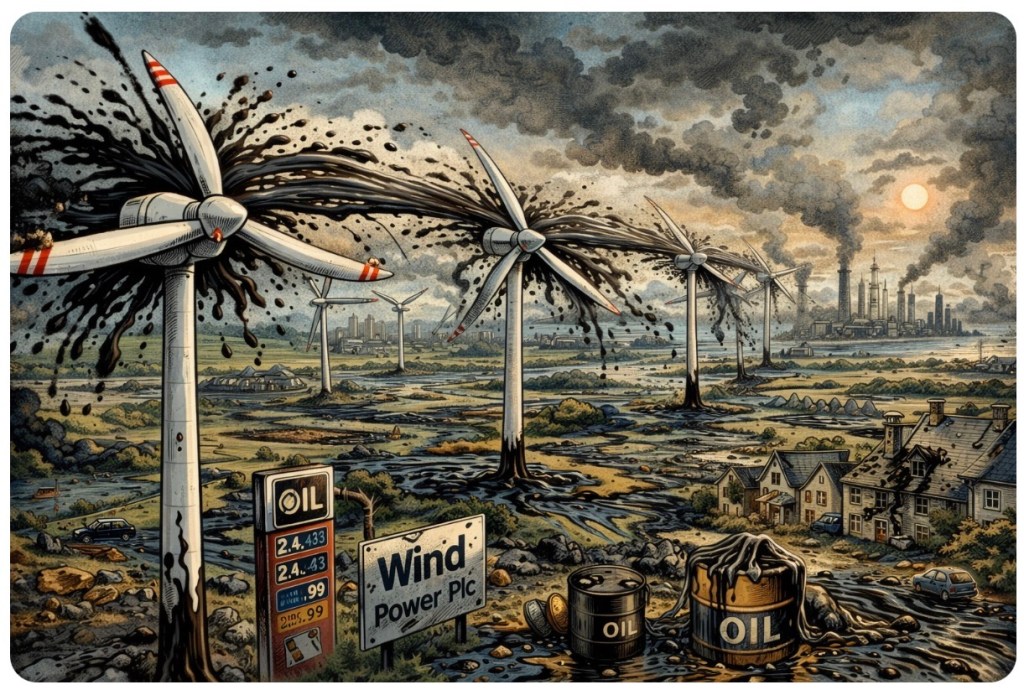
The UK energy market is a strange beast right now—where wind turbines spin gracefully across the countryside, yet your bill still feels like it’s being calculated in barrels of oil. Critics of Keir Starmer argue that failure to properly separate electricity pricing from fossil fuels has created a system where even renewable energy gets dragged into oil-linked costs. The result? Profits surge, and the public foots the bill.
⚡ Green Energy, Fossil Prices — Make It Make Sense
Here’s the absurdity in plain English:
Wind is free. Sunlight is free. The infrastructure? Sure, that costs money. But once those turbines are spinning, they’re not burning oil.
And yet—you’re still paying as if they are.
Why? Because the UK energy market is tied to a pricing system where the most expensive energy source (often gas) sets the price for everything else. So even if renewable energy is cheaper to produce, it gets sold at the inflated “market rate.”
It’s like buying tap water priced as champagne because someone, somewhere, opened a bottle.
Meanwhile, oil and gas giants are raking it in—whether directly or indirectly—because the system props up high pricing across the board.
🛢️ The £30 Million Question
The claim that big oil is pulling in eye-watering sums—figures like $30 million an hour—isn’t plucked from thin air. During periods of high global prices, major energy companies have posted record profits.
But here’s the kicker:
Even when renewables dominate supply, the pricing structure means consumers don’t see the benefit.
So the frustration isn’t just about profits—
It’s about a system that disconnects cost from reality.
And that’s where the political heat turns up. 🔥
Because if the system could be changed…
Why hasn’t it been?
🧾 Policy, Pressure, and Public Patience
Governments face a balancing act:
- Change the system too aggressively → risk market instability
- Do nothing → public anger boils over
Right now, many feel like it’s the second option winning.
The idea of decoupling electricity prices from gas/oil has been floated repeatedly. But reform is slow, complex, and—critics would say—conveniently delayed.
And while policymakers debate frameworks and futures, households are staring at bills that don’t reflect the “green revolution” they keep hearing about.
🔥Challenge🔥
If renewable energy is supposed to be cheaper… why aren’t you feeling it? 🤨
Who really benefits from a system where cheap energy sells at expensive prices?
Is this economic necessity—or a rigged game dressed up as policy?
👇 Don’t just rant on social—take it to the blog. Say what you really think.
Like, share, and challenge the narrative.
The sharpest comments will be featured in the next issue of the magazine. 🎯📝


Leave a Reply