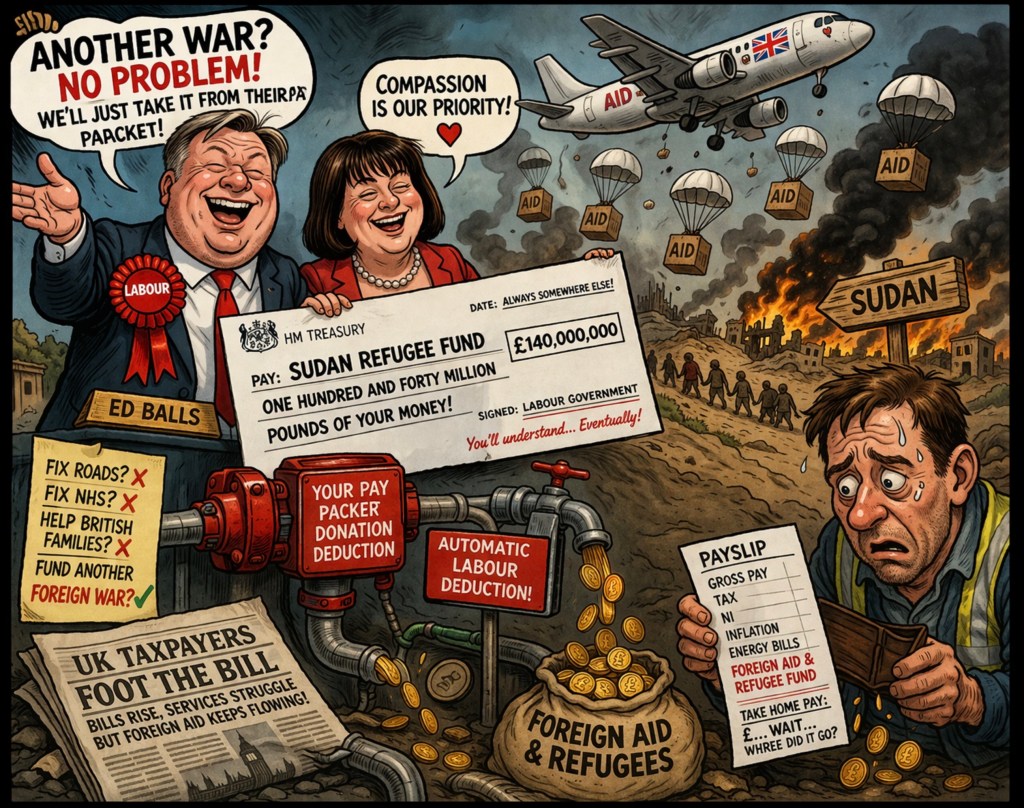
As conflict in Sudan intensifies, the UK finds itself dragged into a familiar storm: humanitarian commitments abroad, rising costs at home, and a public increasingly split between compassion and frustration. With figures like Yvette Cooper signalling openness to accepting refugees and reports of significant financial aid packages, the reaction isn’t calm debate—it’s combustible.
💣 Compassion or Costly Chaos?
Here we go again. Another crisis, another cheque, another political promise that sounds noble in a press release but lands like a brick through the taxpayer’s window.
Let’s break the tension: on one side, you’ve got a genuine humanitarian disaster. War in Sudan isn’t abstract—it’s brutal, destabilising, and displacing millions. People fleeing that aren’t looking for luxury; they’re looking to survive.
On the other side? A UK public already squeezed tighter than a budget airline seat. Energy bills, rent, food prices—and now headlines about millions (or hundreds of millions) being sent abroad while domestic services creak like an old ship in rough seas.
So when politicians talk about accepting more refugees AND sending large sums overseas, it doesn’t land as compassion—it lands as contradiction.
And that’s where the real fire starts. 🔥
Because people aren’t just asking “Should we help?”
They’re asking: “At what cost—and who decides?”
🧠 The Politics of Optics vs Reality
Here’s the uncomfortable truth: governments don’t just act—they signal. Aid packages and refugee policies aren’t only about solving problems; they’re about positioning, reputation, and global standing.
But optics don’t pay bills.
When leadership appears quicker to open the wallet internationally than fix potholes locally, trust erodes fast. And once that trust goes, every decision—no matter how justified—starts looking like waste.
That doesn’t mean the crisis in Sudan isn’t real. It absolutely is.
But it does mean the UK government has a messaging problem the size of a cargo plane.
Because right now, many people don’t see strategy.
They see spending.
They see strain.
And they see themselves footing the bill.
🔥Challenges🔥
Is this moral leadership—or political overreach dressed up as generosity? Should the UK step up globally, or sort itself out first before playing international rescuer?
And here’s the kicker: Do you trust the people making these decisions to get the balance right? 🤔💥
👇 Don’t just scroll past—say what you actually think.
Drop your take in the blog comments. Argue it. Defend it. Tear into it.
Like, share, and get this debate where it belongs—out in the open.
The sharpest comments will be featured in the next issue of the magazine. 🎯📝


Leave a Reply