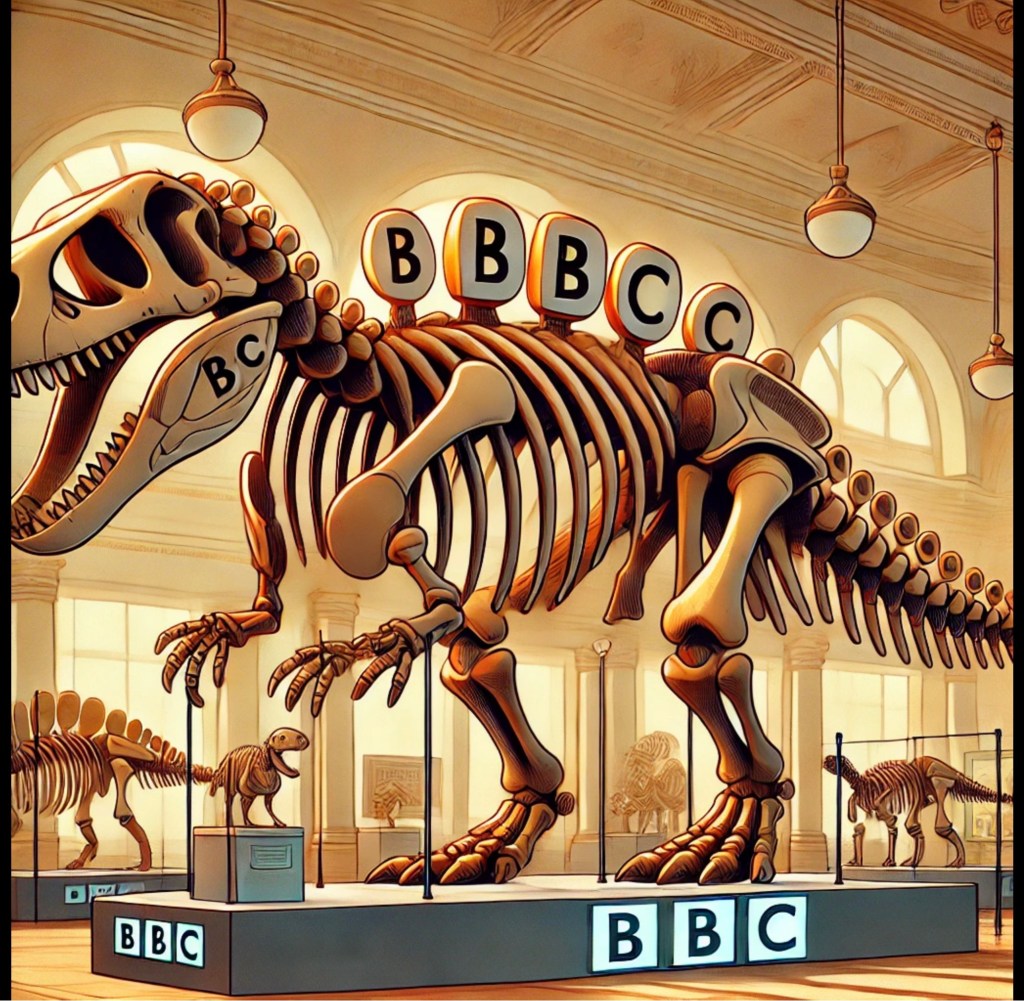
The BBC is shedding jobs, but this isn’t just a tidy HR exercise—it’s the sound of heavy footsteps from a creature that’s suddenly realised the climate has changed. Once the undisputed king of public broadcasting, it now looks increasingly like a relic trying to justify its own mass in a world that streams, scrolls, and skips. The issue isn’t simply cuts—it’s what those cuts reveal about an institution struggling under its own weight.
🦴 Too Big to Fail… or Just Too Big to Function?
Let’s not dress this up as “modernisation.” When an organisation starts trimming limbs, it’s usually because the body can’t support itself anymore. The BBC has grown into a sprawling, multi-layered machine where decision-making moves slower than a dial-up connection and accountability gets lost somewhere between departments 47 and 112.
This isn’t nostalgia talking—it’s structural reality. You can’t be everything to everyone, everywhere, all at once, and still expect to stay nimble. While newer platforms pivot overnight, the BBC holds meetings about whether to schedule a meeting.
And here’s the uncomfortable bit: the public is noticing. The licence fee model, once accepted with a resigned shrug, is now questioned with increasing volume. Viewers aren’t just asking what they’re paying for—they’re asking why the cost keeps rising while relevance feels like it’s shrinking.
The dinosaur metaphor isn’t subtle, but it fits. Dinosaurs didn’t fail because they were weak. They failed because they were massive, slow, and spectacularly unprepared for change.
🧾 Bureaucracy: The Real Apex Predator
Inside large institutions, bureaucracy doesn’t just exist—it thrives. It multiplies. It feeds on itself. And eventually, it starts making survival harder rather than easier.
The BBC’s challenge isn’t talent or history—it’s inertia. Layers of management, legacy systems, competing priorities, and a culture that often values process over outcome. By the time change is approved, the world has already moved on… twice.
Meanwhile, competitors—leaner, sharper, less sentimental—are eating its lunch and live-streaming the meal.
Are we watching necessary evolution—or the early stages of a slow-motion collapse? Is the BBC slimming down to survive, or simply shrinking because it can’t sustain what it built?
Here’s the real question: Do you still believe institutions like the BBC can reinvent themselves—or are they destined to become cautionary tales? 💬
👇 Drop your take directly on the blog. Not just a like, not just a scroll—say it properly.
Share this, challenge it, tear it apart if you want.
The sharpest comments will be featured in the next issue of the magazine. 🎯📝


Leave a Reply