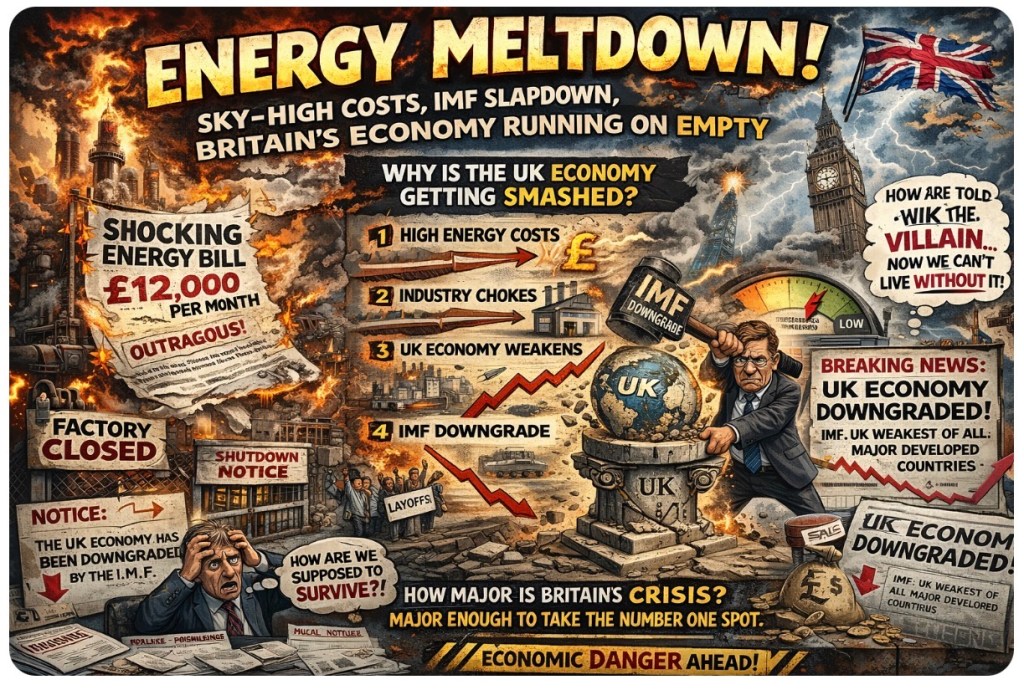
⚡📉Industrial energy costs exploding. The UK economy getting publicly downgraded. And somehow, we’re still being told everything is “under control.”
Spoiler: it doesn’t look under control.
🔌 Power Bills Up, Confidence Down — Welcome to Economic Gymnastics
Let’s connect the dots they’d rather you didn’t.
Energy isn’t just about keeping the lights on—it’s the lifeblood of industry. When costs go through the roof:
- Factories slow down or shut 🏭
- Production drops
- Prices rise
- Jobs start wobbling
And the UK? It’s been hit harder than most. Businesses here are staring at energy bills that make competitors abroad look like they’re running on discount mode.
So what happens next?
Industry shrinks. Investment hesitates. Growth stalls.
Enter the International Monetary Fund — not exactly known for sugarcoating bad news.
And what do they do?
Downgrade the UK’s outlook more than other major economies.
That’s not just a technical adjustment. That’s a global “something’s not right here.”
📉 The Spiral Nobody Wants to Admit
Here’s the uncomfortable loop:
- High energy costs choke industry
- Weak industry drags down growth
- Weak growth hits tax revenue
- Government leans harder on taxes
- Businesses and workers feel the squeeze even more
Round and round it goes 🎢
Meanwhile, competitors with cheaper energy quietly pull ahead while the UK debates targets, frameworks, and long-term visions… while the short term is on fire. 🔥
🧠 Reality Check
This isn’t abstract economics. It lands right on your doorstep:
- Higher prices in shops
- Fewer job opportunities
- Slower wage growth
- More pressure on households
All while being told it’s just “global conditions.”
Funny how those “global conditions” seem to hit some countries a lot harder than others.
At what point do we admit this isn’t just bad luck? How high do energy costs need to go before industry simply taps out? And how many downgrades before “resilience” starts sounding like denial?
Drop your take in the blog comments—anger, analysis, or dark humour all welcome. 💬🔥
👇 Like, comment, and share if you think the UK economy deserves more than crossed fingers and wishful thinking.
The sharpest takes will be featured in the next issue. 🎯📝


Leave a Reply