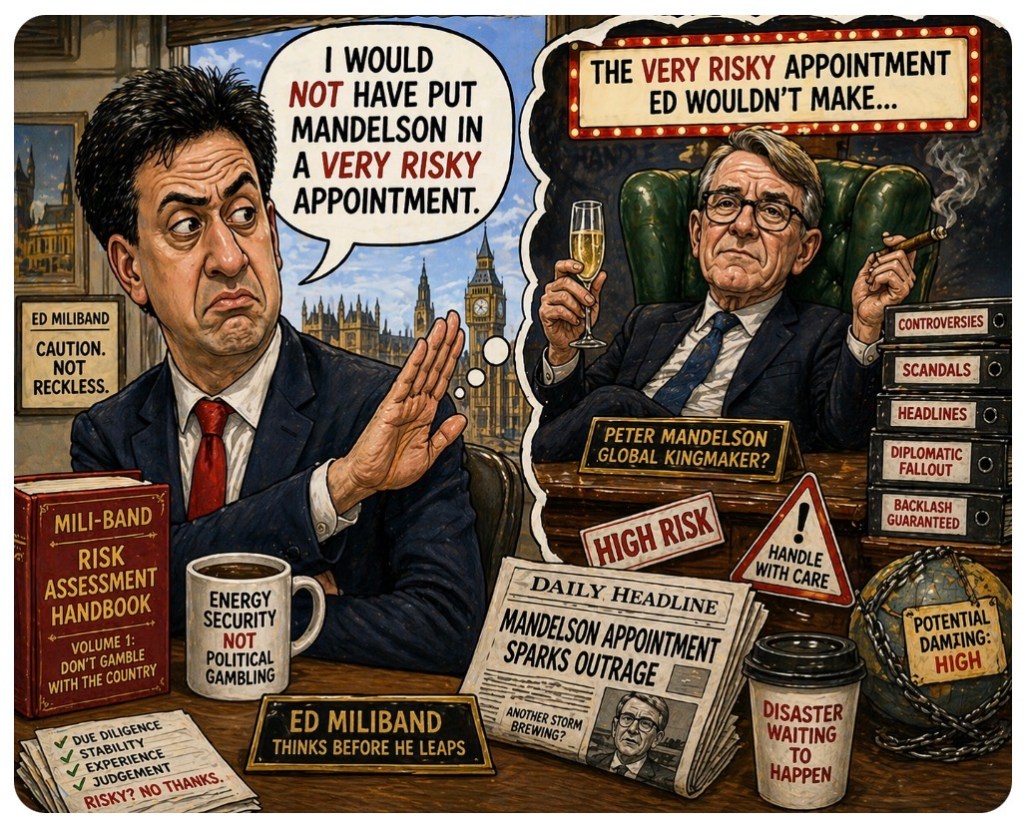
Ah, the classic Westminster manoeuvre—duck, deflect, and gently shove someone else into oncoming traffic. And this time, it’s got all the hallmarks of a perfectly timed political sidestep, the kind that leaves the boss blinking in the headlights wondering how they suddenly became the impact point.
Enter Keir Starmer—a man who’s built a reputation on control, discipline, and keeping the show tightly scripted… now getting a front-row seat to what happens when someone flips the script mid-scene.
🎭 Loyalty: Now Available on a Sliding Scale
Throwing the boss under the bus used to be a last resort. Now? It’s practically a contingency plan. When the pressure builds, the narrative shifts, and suddenly “team unity” starts looking a lot like individual survival.
Because let’s be honest:
- When things go well → it’s leadership 👏
- When things go wrong → it’s… someone else’s department 🤷♂️
And just like that, the chain of command turns into a game of pass-the-blame, with everyone keenly aware that the music can stop at any moment.
💥 A Taste of the Fallout
Here’s the twist—when it happens close enough to the top, it stops being abstract. It becomes personal.
For Starmer, this isn’t just political theory anymore—it’s a live demonstration of how quickly control can slip when allies start creating distance. Because nothing sharpens perspective quite like being the one left holding the consequences.
It’s one thing to manage fallout.
It’s another to be the fallout.
🧠 The Unwritten Rule of Power
Power comes with loyalty—until it doesn’t. And the higher you climb, the thinner that loyalty gets when reputations are on the line.
Today’s trusted voice can become tomorrow’s distancing statement.
Today’s team player can become tomorrow’s “independent view.”
And when that shift happens? It’s not subtle. It’s surgical. 🔪
🔥Challenges🔥
Is this just smart political survival—or a complete breakdown of accountability at the top? And if even the boss isn’t safe, what does that say about how decisions are really owned?
Drop your take in the blog comments—who’s really responsible when the blame starts flying? 💬🔥
👇 Comment, like, share—call out the bus-throwing for what it is.
The sharpest, boldest takes will be featured in the next issue of the magazine. 🎯📝


 Chameleon Magazine
Leave a comment