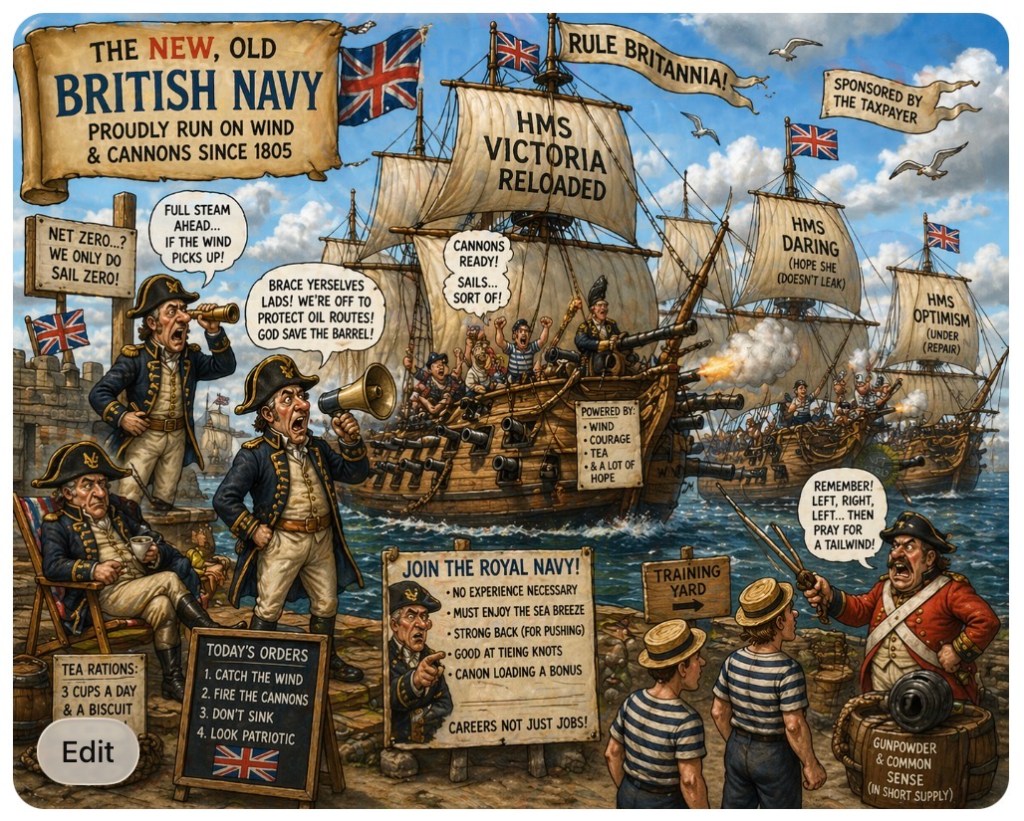
As tensions bubble in the Middle East like an overworked kettle, the UK is stepping forward—clipboard in hand—to lead global talks on securing one of the world’s most critical oil chokepoints: the Strait of Hormuz. Because nothing says “calm, measured diplomacy” quite like scrambling to keep the global oil lifeline from turning into a geopolitical traffic jam. 🚢🔥
🏴☠️ Back to the Future: Cannons, Courage… and a Light Breeze?
In a plot twist worthy of a historical reboot, the United Kingdom appears ready to remind the world it once ruled the waves. The plan? Reassert naval presence to safeguard oil routes and stabilise supply chains. The reality? A public half-expecting to see frigates powered by sails, guided by a bloke named Nigel with a telescope and strong opinions about “the wind picking up soon.” 🌬️👀
Let’s be clear—modern naval fleets are among the most advanced military machines on Earth. But the timing couldn’t be more ironic. At home, fossil fuels are treated like an embarrassing ex you pretend you’ve moved on from… while abroad, the same fuels suddenly become worth defending with warships.
So which is it? The age of oil is over—or it’s important enough to deploy fleets and hold emergency summits?
Meanwhile, global markets jitter like they’ve had three espressos too many. Oil prices wobble, airlines sweat, and holidaymakers wonder if their summer getaway will require a GoFundMe page. ✈️💸
And hovering above it all is the grand Net Zero narrative—still promising a cleaner, greener future, just slightly delayed by the inconvenient fact that the world currently runs on the very thing it’s trying to phase out.
🔥Challenges🔥
Can you champion the end of fossil fuels while scrambling to protect their supply routes? Is this strategic realism—or ideological whiplash at full throttle? And when the cost of energy hits home, who actually pays the price for these contradictions? 🤨⚖️
Sound off in the blog comments—bring the heat, the sarcasm, or the cold hard logic. We want it all. 💬🔥
👇 Hit comment, like, and share—don’t just scroll past the storm.
The sharpest takes will be featured in the next issue of the magazine. 🎯📝


 Chameleon Magazine
Leave a comment