The UK’s top cyber watchdog has issued a not-so-subtle warning: the next “war” might not come with tanks or missiles—but with keyboard warriors, botnets, and a well-timed server crash. As tensions rise globally, businesses and public institutions are being told to treat cybersecurity like oxygen—essential, invisible, and absolutely catastrophic if it suddenly disappears.
🧠💣 The Keyboard is Mightier Than the Missile
Forget boots on the ground—this is hoodies in basements, energy drinks in hand, and a suspiciously fast internet connection. Why invade a country when you can just unplug it?
Welcome to the age of hacktivism, where ideological crusaders and state-sponsored cyber ninjas blur into one digital fog. One minute your government website is loading fine, the next it’s replaced with a pixelated skull and a message that reads: “You’ve been owned.”
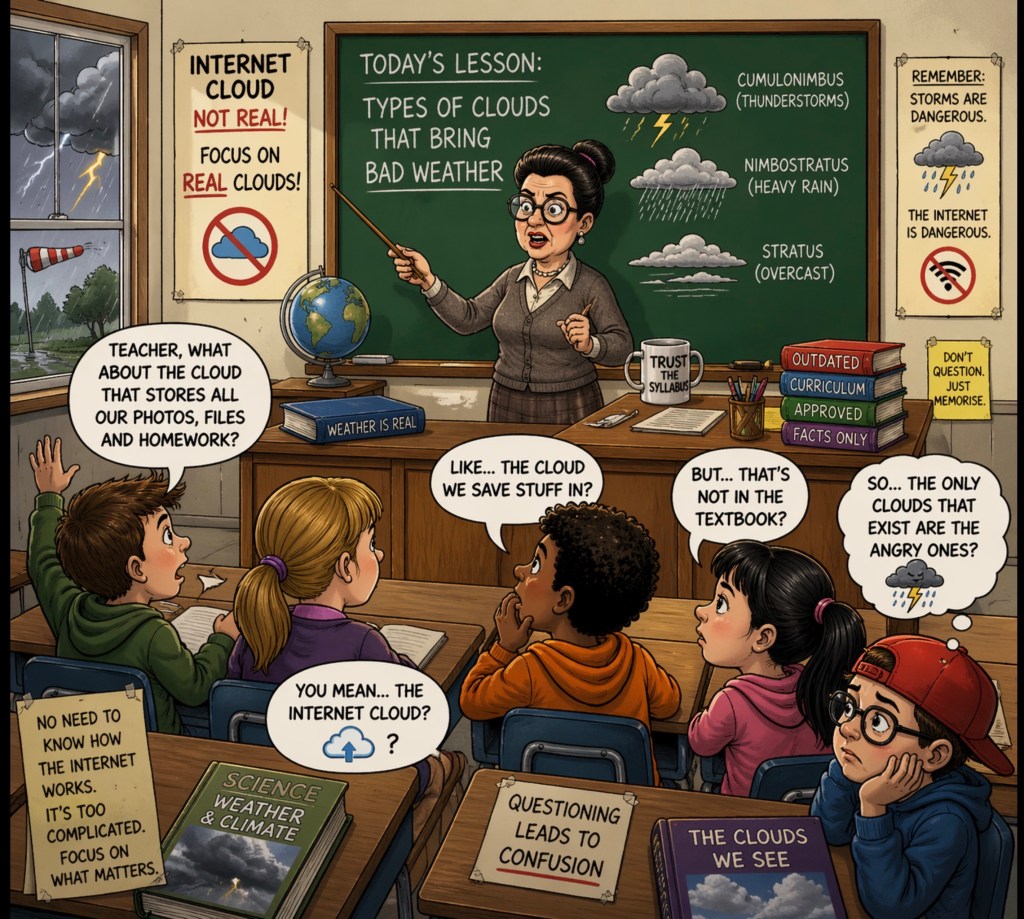
And here’s the kicker—while some nations are quietly training elite cyber units like it’s the Olympics of espionage, others are… debating whether kids should even learn how to use technology in the first place. Because nothing says “national resilience” like a generation that thinks “the cloud” is just weather. ☁️🤦♂️
Let’s spell it out:
If you can’t defend your digital infrastructure, you don’t need an invading army—you’ve already lost.
Power grids, banking systems, hospitals, transport networks—every critical system is now just a few lines of malicious code away from chaos. No explosions. No sirens. Just silence… and error messages.
And yet, we’re still treating cybersecurity like it’s optional. Like it’s the IT department’s problem. Like Dave from accounts is going to fend off a coordinated cyber assault with his password: Password123.
Meanwhile, somewhere else in the world, teenagers are being trained to dismantle entire networks before they’ve even passed their driving test.
🔥Challenges🔥
If the internet went down tomorrow—no banking, no communication, no infrastructure—how long would we last? A day? An hour? Or would we all just stare blankly at our screens like unplugged NPCs?
Is this the future we’re sleepwalking into—digitally defenceless, technologically confused, and wildly unprepared? Or do we finally wake up and treat cyber defence like the frontline it actually is?
💬 Drop your take in the blog comments—panic, sarcasm, solutions, or full-blown conspiracy. We want it all.
👇 Smash that comment button, share this with someone who still uses “1234” as a PIN, and let’s hear your thoughts.
The sharpest takes and most savage insights will be featured in the next issue of the magazine. 🧠🔥


 Chameleon Magazine
Leave a comment