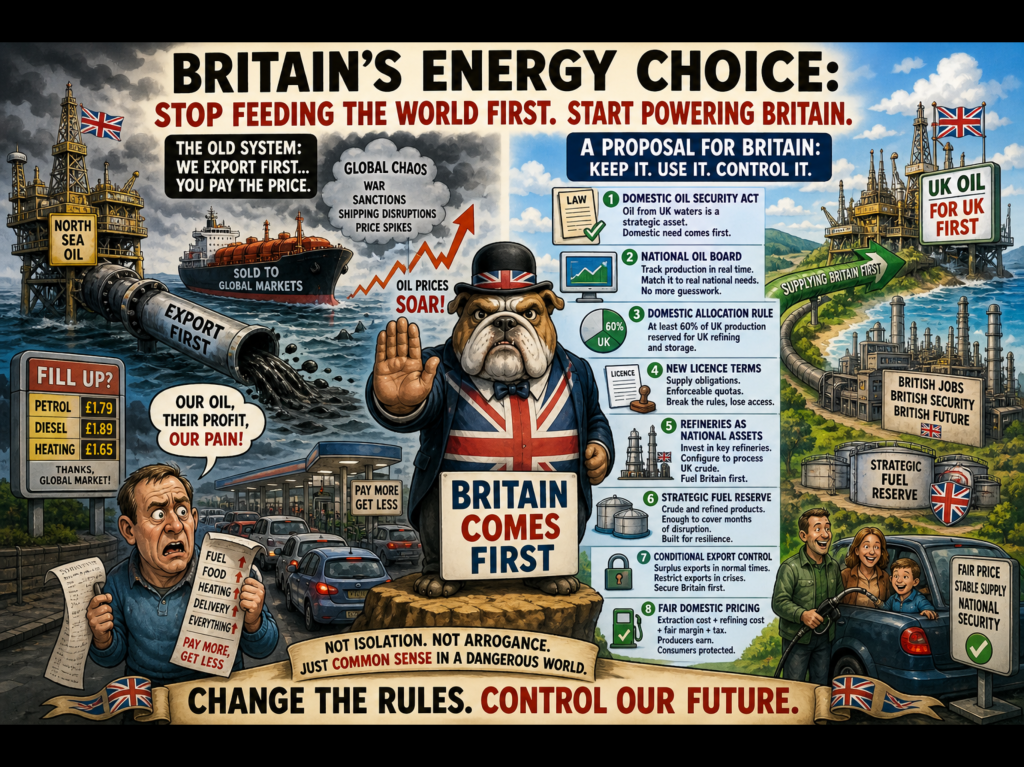
🛢️🇬🇧While the world plays geopolitical Jenga with oil routes and price spikes, Britain’s current strategy is… vibes. Hope the tankers arrive, cross fingers at the pump, and pretend “market forces” are a personality trait. Meanwhile, North Sea oil flows out like it’s on a gap year—off to explore the world—while Brits pay premium prices for the privilege of watching their own resources leave the building. 🚢💸
🇬🇧 A Proposal for Britain: Keep It, Use It, Control It
Let’s translate this grand proposal into plain English: Britain finally decides that oil found under British waters might—brace yourself—be used for Britain first. Outrageous. Practically medieval. Next thing you know, we’ll be suggesting umbrellas when it rains. ☔
The idea of a Domestic Oil Security Act isn’t radical—it just sounds radical because we’ve spent decades treating national assets like they’re up for auction at a global car boot sale. The proposal flips the script: instead of exporting first and shrugging later, Britain keeps a chunk (say, 60%) for domestic use. Not forever. Not in isolation. Just… first dibs.
And naturally, this is where the corporate pearl-clutching begins. “But the markets!” cry the suits, as if markets were sacred woodland creatures that must never be startled. Meanwhile, households are startled every time petrol prices jump because someone sneezed near the Strait of Hormuz. 🌍😷
Enter the proposed National Oil Board—a concept that will undoubtedly send shivers down the spine of anyone allergic to the word “national.” Its job? Track supply, match it to real-world needs, and ensure Britain doesn’t accidentally sell its lifeboats during a storm. Not glamorous, but neither is queuing at a pump during a supply crunch.
Then there’s the real kicker: changing the rules for oil giants. If you want to drill in British waters, you play by British priorities. Supply obligations, quotas, consequences. It’s less “corporate freedom” and more “adult supervision.” And frankly, after decades of “do what you like, we’ll cope,” supervision might be overdue. 🧾👀
Refineries? Yes, remember those? Turns out you actually need them if you want to turn crude oil into, you know, usable fuel. Rebuilding them as strategic assets might sound unsexy, but it beats importing refined fuel made from your own exported oil at a markup that feels like a practical joke.
And let’s not forget the strategic reserve—a national stash of fuel ready for when the world inevitably loses its mind again. Because if recent history has taught us anything, it’s that global stability is about as reliable as British summer weather. 🌦️
Finally, the pièce de résistance: export controls in emergencies. Not forever, not recklessly—but when things go sideways, Britain keeps what it needs. No apology tour required. It’s not isolationism; it’s common sense wearing a slightly tougher jacket.
🔥Challenges🔥
Here’s the uncomfortable question: why does this sound radical at all? Why does prioritising domestic stability feel like heresy in a system that happily lets you pay global panic prices for local resources? 🤨
Is this bold statecraft—or just the bare minimum we’ve been too polite (or too timid) to demand?
Drop your hottest takes, coldest sarcasm, or most unhinged analogies in the blog comments—not just the socials. We want the full chaos. 💬🔥
👇 Like it, share it, argue with it. Tag someone who still thinks “the market will fix it.”
The sharpest comments will be featured in the next issue of the magazine. 🎯📝


Leave a comment