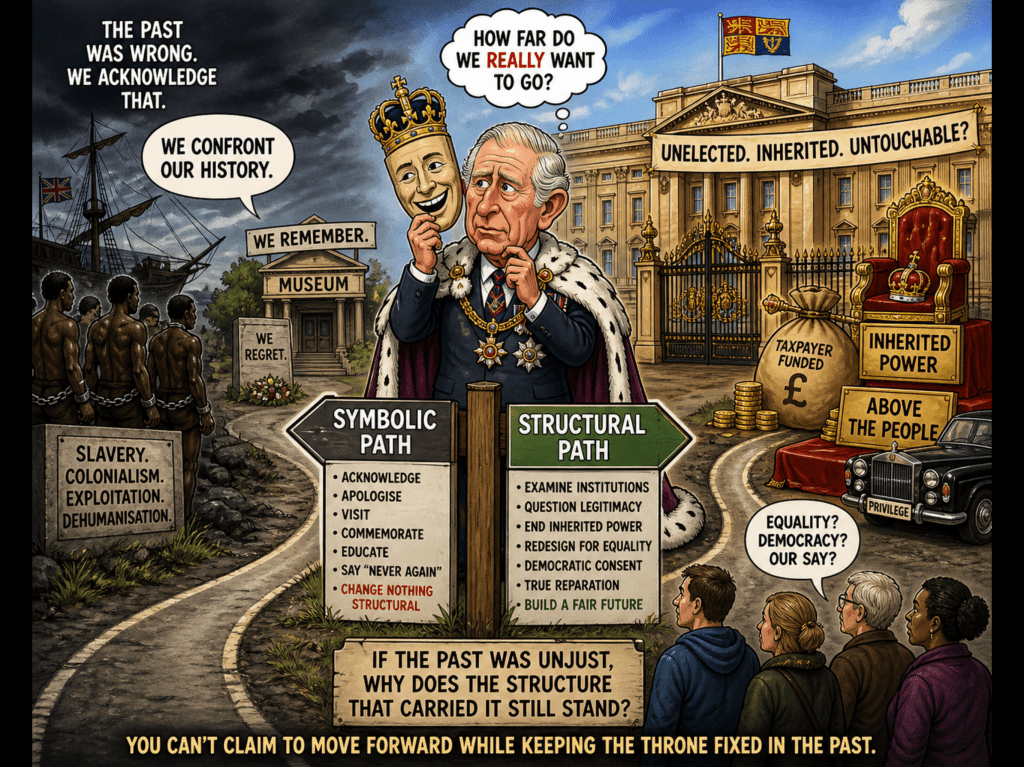
A nation can’t claim to reckon with its history while carefully sidestepping the structures that history built. When King Charles III speaks candidly about slavery in Bermuda, it sounds like progress—until you notice the institution behind the speech hasn’t moved an inch.
🎭 The Great British Balancing Act: Apology Without Consequence
Here’s the trick: say the right words, strike the solemn tone, maybe nod respectfully in front of a museum display—and then carry on exactly as before. It’s historical accountability as theatre. 🎬
The problem isn’t the apology. It’s the perimeter around it.
Because once you admit the past was unjust, you’ve quietly opened a door you might not want to walk through. A door that leads straight to the question no one in polished ceremonial robes seems eager to answer:
If the system was wrong then… why is its core still right now?
The British monarchy isn’t just a historical footnote—it’s a living structure built on inherited authority. Not elected. Not merit-based. Not exactly aligned with the “everyone’s equal” slogan printed on modern democracy’s brochure.
And yet, there it stands—untouched, unquestioned in any meaningful structural sense, like a historical exhibit that somehow still runs the building.
It’s a bit like condemning feudalism while keeping a duke in charge of your Wi-Fi password. 📶👀
You don’t get to have it both ways. Either history matters enough to reshape the present—or it’s just a carefully managed PR exercise with better lighting and a string quartet.
Because acknowledging injustice without changing the system that grew from it isn’t bravery—it’s branding.
🔥Challenges🔥
So here’s the uncomfortable itch: are we confronting history… or just rehearsing regret? 🤔
If equality actually means something, where does inherited power fit in that equation? And more importantly—why hasn’t that question been pushed harder into the spotlight?
💬 Drop your sharpest takes in the blog comments—not just a polite nod on social media. Say what others are skirting around.
👇 Like it, share it, challenge it—but most importantly, engage with it.
The boldest, smartest, and most ruthless comments will be featured in the next issue. 🎯📝


Leave a comment