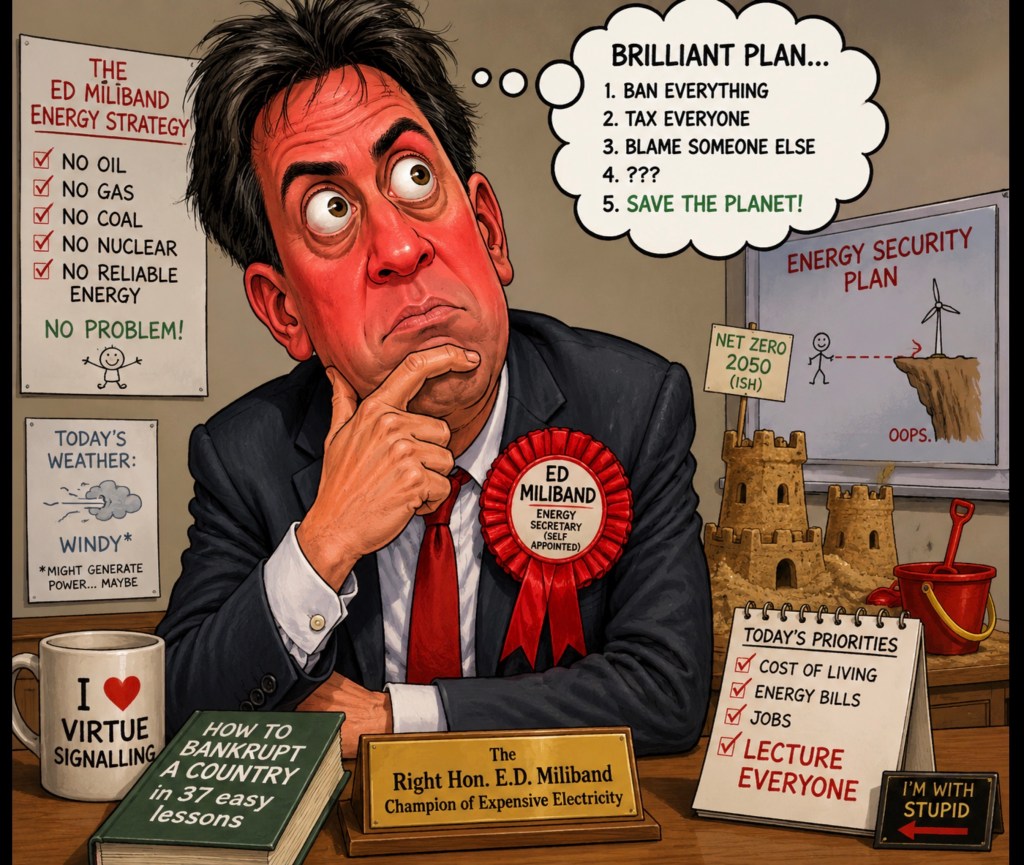
While Britain debates whether the future can run entirely on hope, slogans, and favourable weather conditions, Norway is quietly doing something far less fashionable — protecting its energy security.
The reactivation of older North Sea fields sends a very clear message:
industrial economies still require reliable energy.
Not theoretical energy.
Not “maybe the wind picks up tomorrow” energy.
Reliable, controllable, scalable energy.
Norway understands something many European politicians pretend not to:
modern economies are built on stability first and ideology second.
Germany needs power.
The UK needs power.
Industry needs power.
Homes need power.
And when demand rises during cold, dark, windless periods, governments suddenly rediscover the importance of gas and oil they spent years publicly condemning.
That’s the contradiction now sitting at the heart of Western energy policy.
One half of the political class speaks as though hydrocarbons belong to the past.
The other half quietly imports them, reopens fields, signs supply agreements, and hopes nobody notices.
Norway noticed.
And while others chased headlines about “ending fossil fuels”, Norway protected skills, infrastructure, supply chains, tax revenues, and long-term leverage.
Because unlike political slogans, energy shortages have real consequences:
factory shutdowns,
higher bills,
economic contraction,
and dependence on whoever still produces what you refused to.
The answer may be blowing in the wind some days.
But governments quickly discover that economies cannot run on “some days”.


Leave a comment