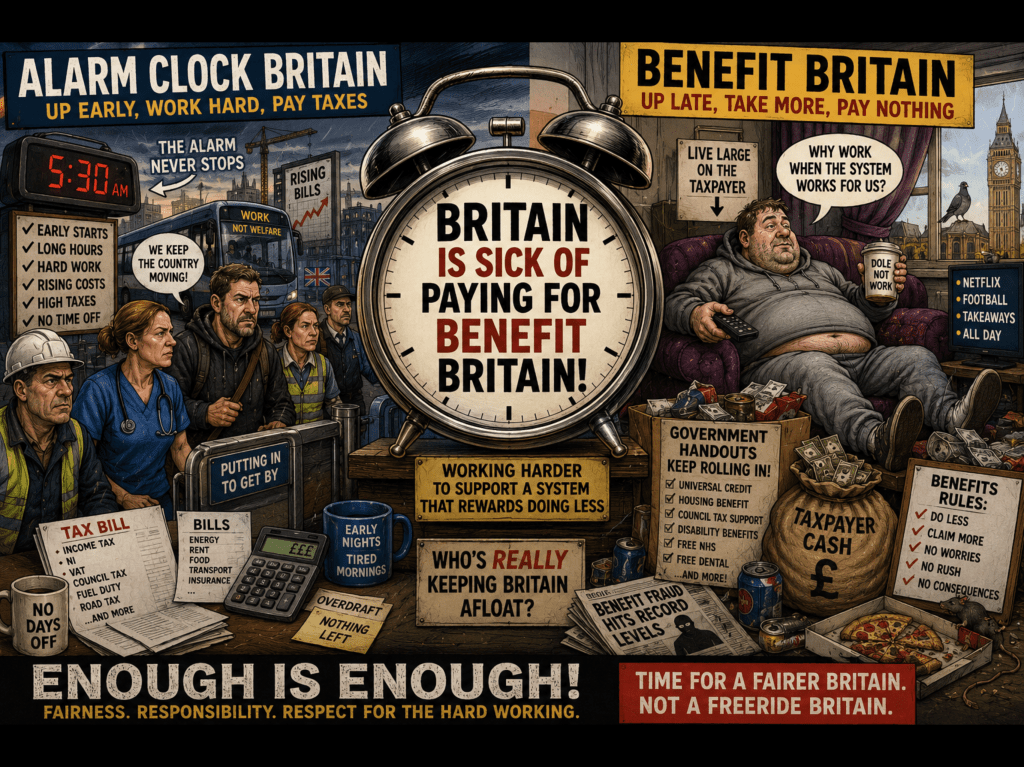
⏰💷🔥Every morning millions of people drag themselves out of bed in darkness, crawl into traffic, freeze at bus stops, survive soul-crushing commutes, and spend half their wages on rent, fuel, taxes, and supermarket prices that now resemble hostage demands. 🥶🚆💸
And increasingly many of them are asking the same furious question:
“Why does it feel like the people getting up at 6am are carrying the entire country on their backs?” 🇬🇧
Welcome to the growing divide between what many now call:
Alarm Clock Britain and Benefit Britain.
⏰ The Workers Who Keep the Country Moving
These are the people:
- builders,
- nurses,
- drivers,
- tradesmen,
- carers,
- warehouse staff,
- shop workers,
- office workers,
- small business owners,
- and everyone else surviving on caffeine, overdrafts, and blind optimism. ☕💀
They’re not asking for luxury.
Most just want:
- affordable bills,
- safe streets,
- decent public services,
- manageable taxes,
- and the feeling that hard work still actually means something.
Instead many feel punished for doing the “right thing.”
They work longer hours…
yet often feel barely better off than those contributing little at all.
That resentment is becoming politically explosive.
🛋️ The Fear Isn’t Welfare — It’s Dependency Becoming Permanent
Most people support helping:
- the disabled,
- the elderly,
- people temporarily struggling,
- or families hit by genuine hardship.
Britain has always believed in some form of safety net. 🇬🇧
The anger comes when welfare appears less like emergency support and more like a parallel lifestyle system with no expectation of exit.
Because workers notice contradictions:
- they work overtime while others remain indefinitely unemployed,
- they budget carefully while fraud stories explode online,
- and they watch governments endlessly raise taxes while promising “support packages” funded by the same shrinking pool of taxpayers. 💷🔥
The public mood increasingly becomes:
“When exactly does support become unsustainable?”
🏛️ Politicians Are Terrified of This Debate
This is why governments constantly dance around the issue using carefully sanitised language:
- “economic inactivity,”
- “complex barriers,”
- “support pathways,”
- “capacity building.”
Normal people translate this roughly as:
“Nobody wants to confront the problem honestly.” 😐
Because politically, welfare debates are radioactive.
One side screams cruelty.
The other screams exploitation.
Meanwhile ordinary workers simply wonder why life feels harder despite doing everything society told them to do.
💸 Britain’s Real Crisis Might Be Incentive Collapse
The deeper fear is not just cost.
It’s morale.
A society only functions when people believe:
- work improves life,
- effort is rewarded,
- fairness exists,
- and contribution matters.
Once large numbers feel the system punishes productivity while rewarding dependency, bitterness spreads fast.
And when that happens, trust in the entire social contract begins collapsing. 📉
That’s the danger politicians increasingly sense beneath the anger.
Not just frustration over benefits —
but the growing belief that Britain no longer properly rewards responsibility itself.
Has Britain struck the right balance between welfare support and personal responsibility — or has the system become unfair to the people funding it? 💷🤔
And are politicians too frightened to discuss welfare dependency honestly?
Drop your thoughts in the blog comments. 💬🔥
👇 Like, comment, and share if you think the people getting up early every morning are increasingly carrying a system that no longer respects them.
The sharpest comments and fiercest debates may feature in the next magazine issue. 📰⚡


Leave a Reply