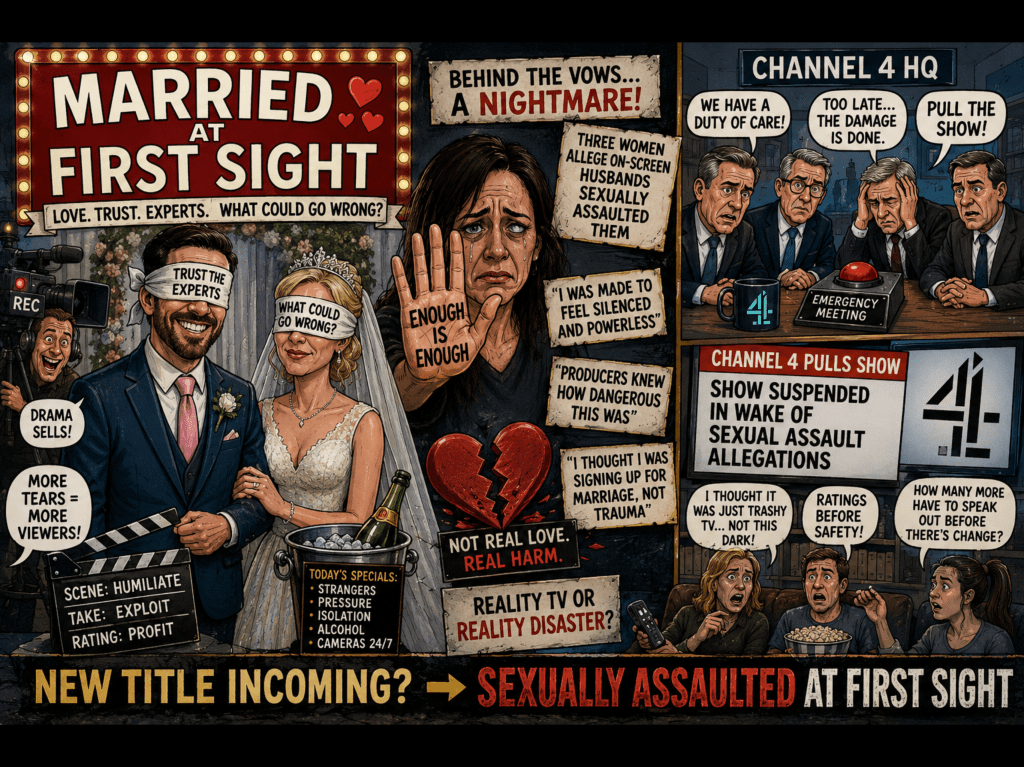
What began as a reality TV experiment in rushed romance has now exploded into something far darker, after allegations emerged that several women from Married at First Sight claim they were sexually assaulted by the very men producers paired them with. Channel 4 has reportedly pulled the show into crisis mode faster than a groom spotting the wedding bill. 📺🔥
From “Reality Romance” to a Legal Nightmare 🎭⚠️
Reality television has spent years pretending emotional chaos counts as entertainment. Lock strangers in apartments, add unlimited prosecco, emotional instability, manufactured arguments, and cameras rolling 24/7 — then act shocked when things spiral into disaster. 🍷📹
And now the glossy matchmaking circus has collided headfirst with allegations so serious they make the usual “he flirted with a bridesmaid” drama look absurdly trivial.
The phrase “duty of care” gets thrown around by TV executives more often than confetti at these weddings, yet critics are asking whether producers were more interested in explosive ratings than protecting contestants from potentially dangerous situations. 🎬💣
Reality TV increasingly resembles a social experiment designed by people who watched Black Mirror and thought:
“Needs more sponsorship deals.” 😬
Because somewhere along the line, television stopped asking:
“Should we do this?”
…and started asking:
“How many viewers will it get if it goes horribly wrong?” 📈💥
And yes — the internet has already brutally renamed the show. Dark humour arrives on schedule every single time Britain loses faith in television ethics. But beneath the sarcasm sits a very ugly question:
How far has reality TV pushed exploitation in pursuit of ratings? 🎯
🔥 Challenges 🔥
Should shows built on emotional manipulation, forced intimacy, and public humiliation face tighter regulation? Or has reality TV simply become a gladiator arena for modern audiences addicted to chaos? 💬📺
Drop your thoughts in the blog comments:
👉 Has reality television gone too far?
👉 Are producers protecting contestants — or protecting ratings?
👉 And at what point does “entertainment” become exploitation? ⚖️
👇 Comment, like, and share — especially if you think reality TV executives would film the Titanic sinking if the viewing figures looked strong enough.
The sharpest comments and most savage takes will feature in the next magazine issue. 📝🔥


Leave a comment