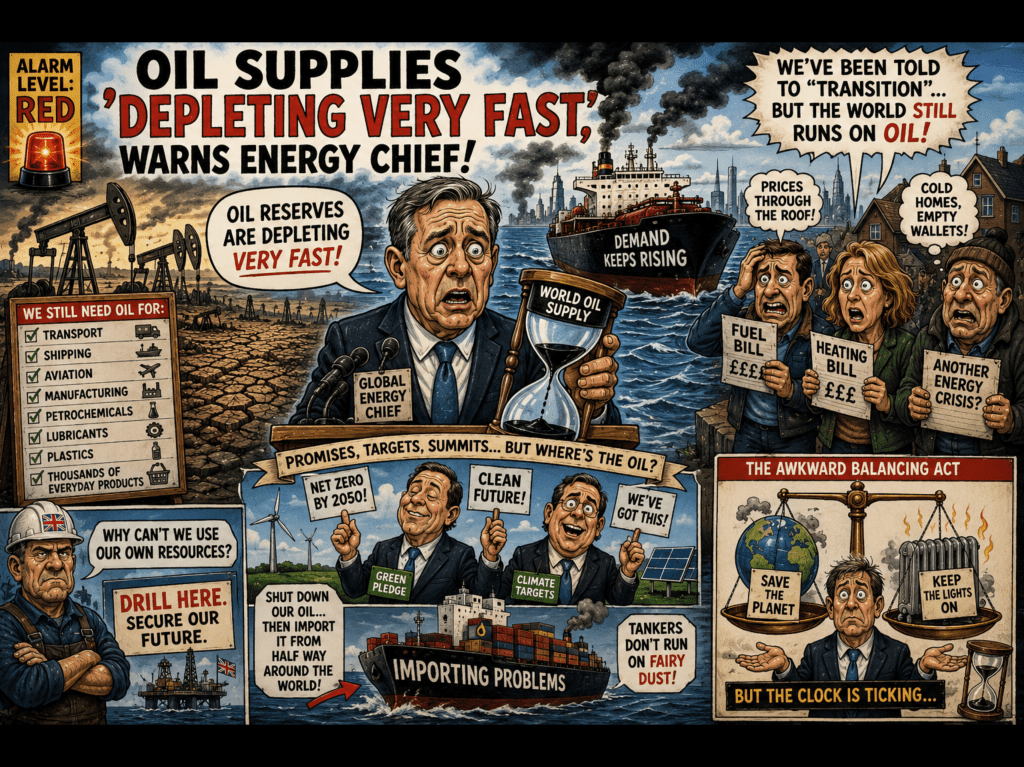
The world spent years being told oil was yesterday’s problem. Now energy chiefs are warning supplies are “depleting very fast,” and suddenly everyone’s rediscovering that modern civilisation still runs on the black goo we supposedly moved beyond five climate summits ago. 🌍🔥
The Green Transition Meets Reality 💸⚡
For years politicians stood at podiums promising a smooth transition to a shiny renewable future where windmills spin gracefully, electric cars hum quietly, and nobody notices the price of heating anymore.
Then reality arrived carrying a fuel bill the size of a mortgage payment. 📈🏠
Because despite all the speeches, hashtags, and corporate green logos, the global economy still depends on oil for:
🚚 transport,
🏭 manufacturing,
🚢 shipping,
✈️ aviation,
🛠️ industrial lubricants,
📦 plastics,
and about 5,000 other things modern society quietly forgets about until shortages hit.
Now energy bosses are sounding alarms that supplies are tightening while demand refuses to vanish. And suddenly governments are trapped in the world’s most awkward balancing act:
“Save the planet… but also keep the lights on.” 💡😬
The irony writes itself. Countries shut down domestic drilling, lecture citizens about carbon footprints, and then import fuel from halfway around the world on giant diesel-powered tankers. Environmental policy now sometimes resembles a student hiding takeaway wrappers under the bed and claiming the room is clean. 🗑️😂
Critics argue the West rushed too fast toward “net zero” fantasies without securing stable replacement infrastructure. Supporters counter that the real danger is not moving fast enough away from fossil fuels before resources tighten even further.
Meanwhile ordinary people just want affordable fuel, affordable heating, and perhaps the luxury of surviving winter without selling a kidney on Facebook Marketplace. ❄️💸
🔥 Challenges 🔥
Are governments honestly preparing for energy shortages — or are they hoping slogans will somehow generate electricity? Can renewables realistically replace oil at scale fast enough, or is the public being sold a transition timetable written in fantasy ink? ⚡🛢️
Drop your thoughts in the blog comments:
👉 Is the energy crisis self-inflicted?
👉 Should Britain drill more domestically?
👉 And why does every “temporary” energy problem now feel permanent? 💬🇬🇧
👇 Comment, like, and share — especially if your heating bill now requires a payment plan and emotional support.
The sharpest comments and best energy rants will feature in the next magazine issue. 🔥📝


Leave a comment