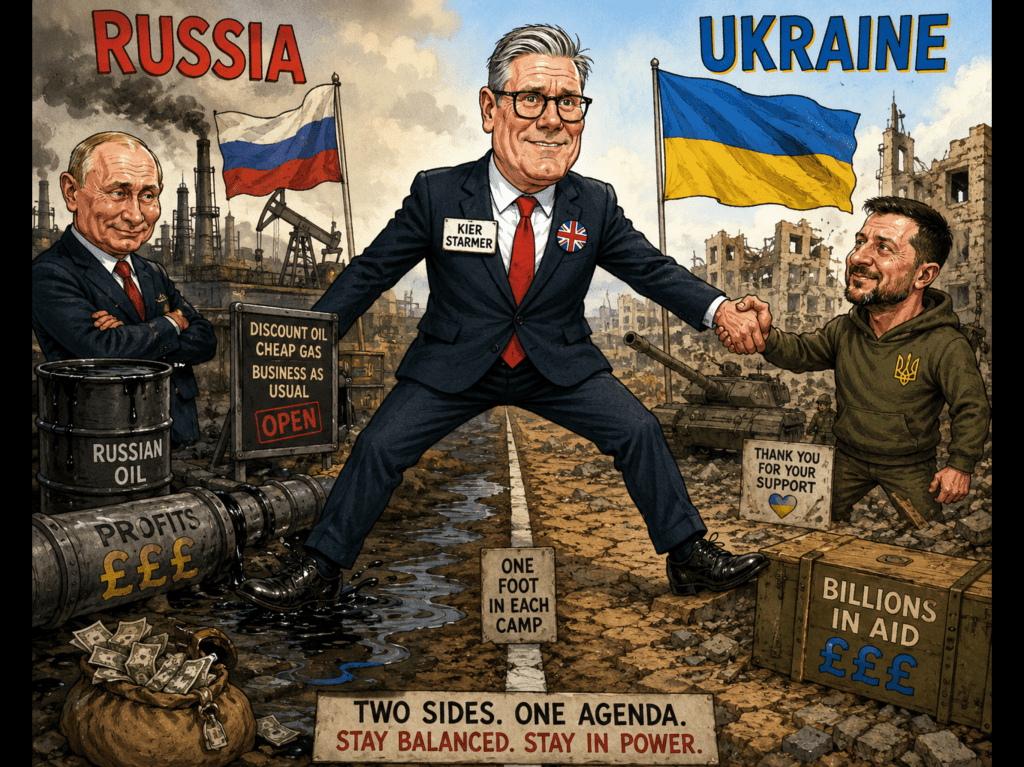
The modern geopolitical strategy seems to be: “Stop buying Russian oil… unless it’s rerouted through three countries, relabelled, and sold back at a markup.” Meanwhile, Western governments are simultaneously pouring billions into Ukraine’s war effort—some of which has been used to strike Russian energy infrastructure. So yes, to many people, it looks like we’re funding both the economic boycott and the fireworks display. 🎭🔥
But beneath the outrage and irony sits a brutal reality: energy wars aren’t just about oil anymore. They’re about leverage, symbolism, economics, and endurance. Russia relies heavily on energy exports to fund its state and military. Ukraine and its allies see energy infrastructure as a pressure point. The West wants to weaken Moscow economically without collapsing global fuel markets or bankrupting its own citizens in the process. That balancing act is about as graceful as a shopping trolley with three wheels.
⚔️ “We’re Cutting Dependence!” — While Quietly Buying Through the Side Door 🚪🛢️
Europe loudly declared it would reduce dependence on Russian fossil fuels after the invasion of Ukraine. Headlines screamed about sanctions, embargoes, and “energy independence.” Yet Russian crude kept finding creative paths into global markets through intermediaries like India and Turkey, often refined and resold back into Europe in different forms. 🌍🔄
So the public hears:
- “We must stop funding Putin’s war machine.”
And then notices: - Energy prices soaring 📈
- Taxpayer billions sent abroad 💷
- Russian oil still floating around global supply chains 🚢
- Ukrainian drones hitting refineries 💥
To the average person struggling with bills, it can feel less like coherent policy and more like a geopolitical improv class run by caffeinated consultants.
And then comes the messaging circus:
“Support Ukraine to defend democracy.”
“Cut Russian energy to punish aggression.”
“Please ignore your heating bill.”
“Also, here’s another £12 billion package.” 🎪
No wonder people are asking whether anyone at the top has actually connected the dots.
🧠 The Strategic Logic… Even If It Sounds Completely Mad
Supporters of the policy argue the contradiction is only superficial. Their argument goes something like this:
- Reducing dependence on Russian oil weakens Russia’s long-term economic power.
- Supporting Ukraine militarily helps it resist invasion.
- Strikes on oil facilities reduce Russia’s revenue and logistics capacity.
- Transitional economic pain is considered preferable to allowing territorial conquest unchecked.
Critics, meanwhile, argue the West has managed to create the worst of all worlds:
- Higher domestic energy costs 💸
- Massive taxpayer spending 💰
- Continued indirect purchases of Russian-linked energy 🔄
- Escalation risks ☢️
- No clear endgame 🕳️
And honestly? Both sides can point to evidence that makes the other look absurd.
🔥Challenges🔥
At what point does strategy become contradiction? Are sanctions actually working, or are they just creating more middlemen and more misery for ordinary people? And if we’re still indirectly tied to Russian energy markets anyway… what exactly are citizens sacrificing for? 🤔💥
Drop your take in the blog comments. Tear apart the logic, defend the strategy, or expose the hypocrisy. We want the sharpest arguments, the darkest humour, and the most savage observations. 💬⚡
👇 Comment, like, and share if you’re tired of politicians acting like economic warfare comes with no collateral damage.
The best comments and most brutal truth bombs will be featured in the next issue of the magazine. 📝🔥


Leave a comment