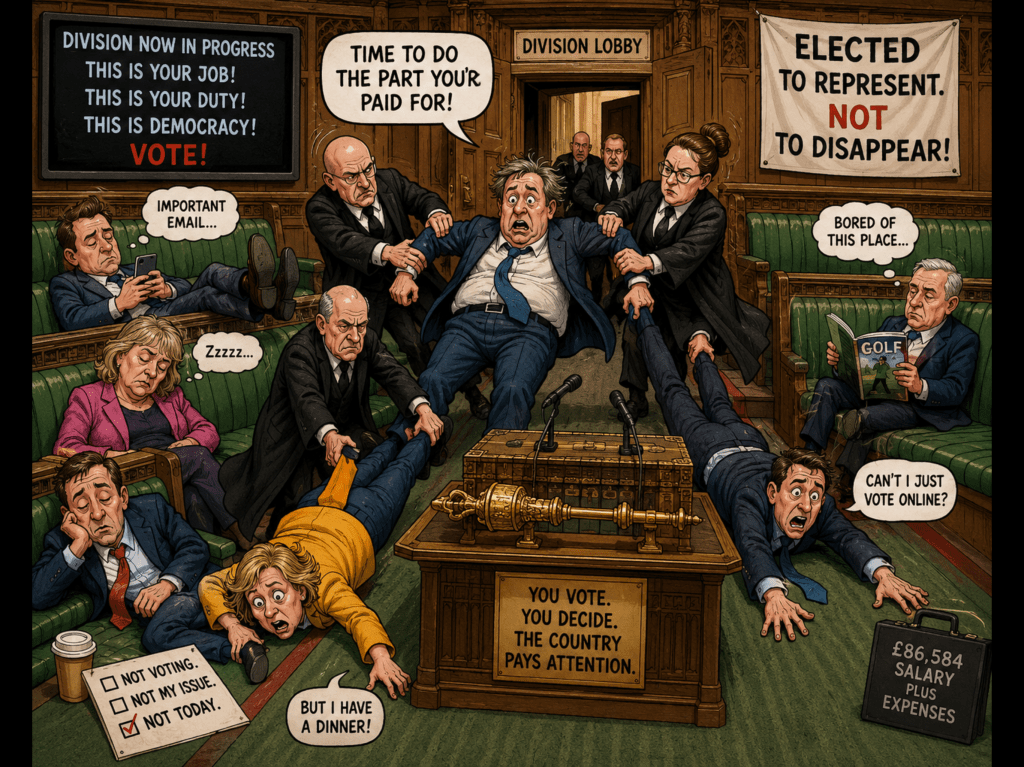
There’s a strange little magic trick in modern politics: some MPs campaign tirelessly to get elected, plaster their faces on leaflets, promise to “fight for the people”… and then mysteriously vanish when it’s time to actually vote on legislation. 🫠📜
Because apparently, in Westminster Wonderland, “representative democracy” now occasionally means “representatives representing themselves at a networking lunch.”
Let’s be serious for a second: voting is not a side quest of the job. It is the job. Citizens don’t elect MPs to warm green benches like decorative parliamentary houseplants. 🌱💺 They elect them to make decisions on taxation, war, healthcare, public spending, civil liberties, and the laws that shape everyday life.
If your GP skipped appointments 40% of the time, you’d complain.
If your train driver only turned up “when they felt strongly about the route,” there’d be national outrage. 🚆🔥
But somehow, an MP missing major votes gets explained away like they were trapped in a very important cheese-and-wine emergency.
🎭 Westminster’s Favourite Olympic Sport: Dodging Accountability
Of course, MPs do more than vote. Constituency work matters. Committees matter. Scrutiny matters. But voting remains the defining constitutional mechanism of Parliament itself. It’s the moment where elected officials stop tweeting opinions and actually make binding decisions for millions of people. ⚖️📢
And here’s where the public frustration boils over:
ordinary people don’t get to selectively perform the “core bits” of their jobs while still collecting the full salary package and prestige. Yet politics often treats attendance as optional homework rather than democratic duty.
Imagine firefighters saying:
“I reviewed the flames extensively from home.”
Or airline pilots declaring:
“I support the concept of landing.” ✈️💀
There’s also the uncomfortable truth that low attendance quietly weakens democracy itself. Every absent MP means thousands of constituents effectively lose their voice during critical decisions. In close votes, that absence can reshape national policy entirely.
Yet somehow Westminster culture often shrugs:
“Ah well, these things happen.”
Yes. They do.
That’s the problem. 😑📉
🔥Challenges🔥
Should MPs be required to attend and vote on the overwhelming majority of legislation unless there’s a serious reason not to? Or is modern politics already too overloaded for that expectation? 🤔⚡
More importantly:
if voting stops being treated as a core obligation, what exactly separates democracy from political theatre? 🎪🏛️
Drop your thoughts in the blog comments — not just the social media shouting pit. We want the sharpest takes, the funniest burns, and the most brutal truths. 💬🔥
👇 Comment, like, and share if you think public office should involve… well… publicly doing the office.
The best comments will be featured in the next issue of the magazine. 📝🎯


Leave a Reply