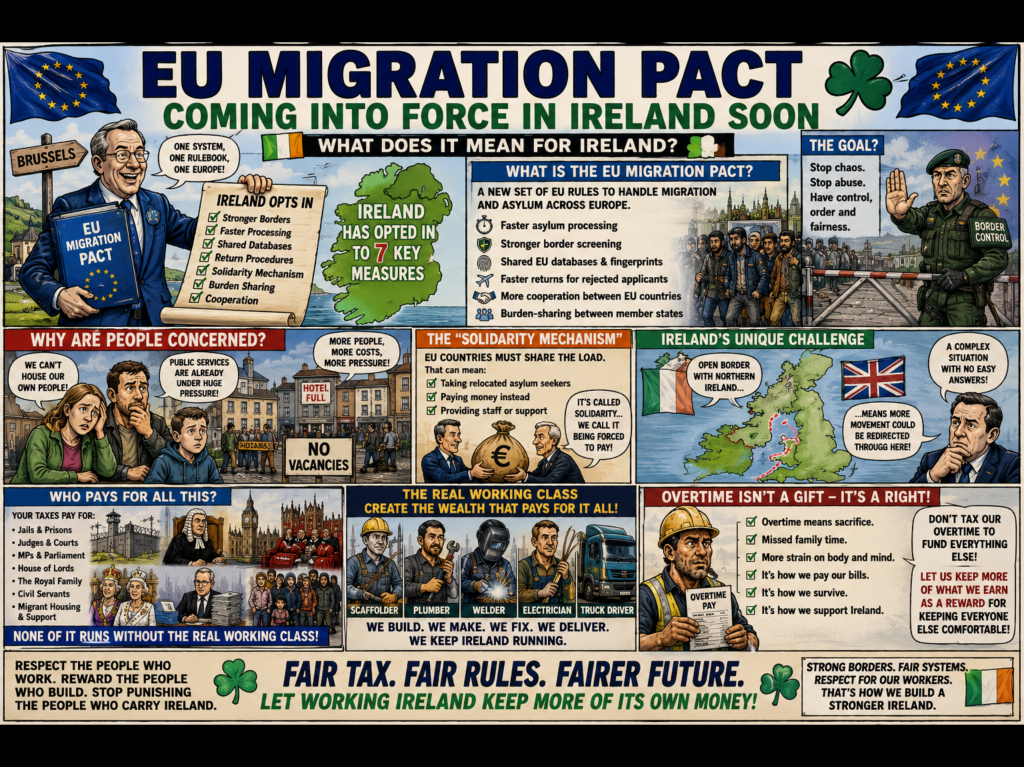
The EU Migration Pact is one of the biggest changes to immigration and asylum rules in Europe in years — and Ireland has officially signed up to major parts of it. 🇪🇺🇮🇪
For supporters, it’s about creating a more organised European system instead of chaotic migration policies that leave countries scrambling.
For critics, it raises serious questions about sovereignty, accommodation pressure, housing shortages, border control, and whether Ireland is being signed into obligations the public never properly debated. 🔥
So what does it actually mean for Ireland?
🛂 Ireland Is Joining Parts of the Pact
Ireland opted into seven major measures within the EU Pact on Migration and Asylum.
The changes are expected to fully kick in around mid-2026 and will reshape how asylum claims, migrant processing, screening, returns, and EU cooperation work.
Key changes include:
- Faster asylum processing procedures ⏱️
- Shared EU migrant databases and biometric systems 💻
- New border screening rules 🛂
- Faster deportation/return procedures for rejected applicants ✈️
- Greater cooperation between EU countries 🤝
- Burden-sharing mechanisms across member states 🌍
The EU says the goal is to stop uncontrolled migration flows while creating a fairer and more unified system.
🏠 Why Ireland Is Nervous About It
This debate is explosive in Ireland because the country is already under enormous pressure.
Housing shortages.
Hotel accommodation costs.
Public services stretched thin.
Communities feeling ignored.
And many Irish people are asking a blunt question:
“How can Ireland absorb more migration pressures when it can barely house its own people?” 🏘️📉
That’s the political fault line underneath all of this.
The government argues the Pact could actually reduce chaos by speeding up processing and improving returns for failed applicants.
Critics argue the opposite — that Ireland could become more tied into EU migration obligations while losing flexibility over national policy.
🚨 The “Solidarity Mechanism” People Keep Talking About
One of the most controversial parts is the EU “solidarity mechanism.”
Under the Pact, EU countries are expected to help share responsibility for migration pressures. That can mean:
- Accepting relocated asylum seekers
- Providing financial contributions
- Supplying staff or operational support
The system is designed so frontline countries like Italy or Greece are not left carrying all the pressure alone.
Supporters say this is basic European cooperation.
Critics say it risks creating permanent migration redistribution systems across Europe.
That’s why emotions are running high.
🇬🇧 Ireland’s Unique Problem: The UK Border
Ireland’s situation is more complicated than most EU countries because of the Common Travel Area with the UK and the open border with Northern Ireland.
Officials have already acknowledged this creates “difficult” migration challenges.
A major concern is whether tougher EU systems could simply redirect more movement through Northern Ireland into the Republic.
And politically, many voters feel decisions made in Brussels may not fully account for Ireland’s unique geography and housing crisis.
💶 The Big Fear: Cost and Capacity
Another concern is cost.
Ireland is already spending huge sums on accommodation, processing systems, staffing, and asylum infrastructure. Reports suggest implementation will require major new spending and accommodation expansion.
Critics worry taxpayers will continue footing rising bills while ordinary Irish workers struggle with rents, mortgages, healthcare queues, and cost-of-living pressures.
Supporters argue a more structured system could eventually reduce disorder, speed up removals, and improve management overall.
But right now, trust is thin.
🔥
Challenges
🔥
Should Ireland have signed up to the EU Migration Pact at all? 🤔🇮🇪
Will this create a more controlled and fair immigration system — or tie Ireland deeper into a European migration framework many people feel they never voted for?
And how does Ireland balance compassion, border control, housing shortages, and national sovereignty all at the same time? 🔥
Drop your thoughts directly into the blog comments. We want real discussion — not slogans, not party talking points, and not social media shouting matches. 🗣️⚡
👇 Comment, like, and share if you think Ireland’s migration debate is only going to get bigger over the next few years.
The strongest reader comments and best arguments will be featured in the next magazine issue. 📰🇮🇪


Leave a comment