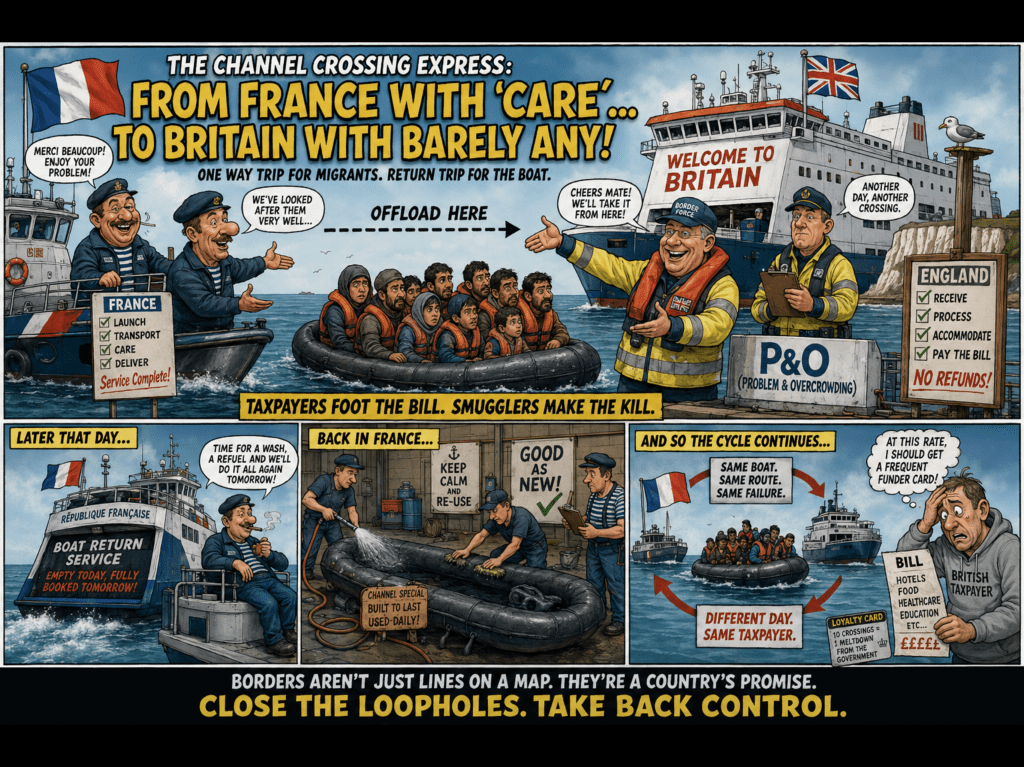
Reports and allegations about how migrant crossings are being handled in the English Channel have triggered outrage across Britain — especially among people who already believe the system has spiralled completely out of control. 🌊🇬🇧
The image many critics paint is almost surreal: overloaded dinghies drifting through one of the busiest shipping lanes on Earth while French and British authorities play what some describe as an expensive maritime relay race.
To many ordinary people watching this unfold, it looks absurd.
The boats leave France… get escorted… intercepted… transferred… and somehow the smugglers’ equipment allegedly ends up back in circulation again. 🚨🚤
That’s the part driving public anger through the roof.
🛟 “Border Control” or International Ping-Pong?
Critics argue that if the boats are repeatedly being reused, then the current strategy starts looking less like deterrence and more like an accidental subscription service for people smugglers. 💸
The average taxpayer sees billions spent on border enforcement while crossings continue, hotels fill up, local services strain, and politicians hold another emergency press conference using phrases like “robust action” and “deep concern.”
Meanwhile, the public reaction is increasingly:
“If this is robust action… what would failure look like?” 🤦♂️
Supporters of tougher border controls say Britain cannot sustain a system where illegal crossings appear easier than legal migration routes. They argue it undermines trust in immigration itself and fuels resentment toward political institutions seen as weak or performative.
On the other side, humanitarian groups stress that many migrants are fleeing war, persecution, or poverty, and that international law requires rescue operations when lives are at risk at sea.
But politically, the optics are explosive.
Because once voters believe borders are symbolic rather than real, frustration spreads far beyond immigration debates. It becomes about competence, sovereignty, fairness, and whether governments actually control anything anymore. 🔥
🇬🇧 Why This Debate Keeps Getting Hotter
The Channel crisis has become a symbol of a wider national mood:
people feeling like rules apply differently depending on who you are.
Work hard? Taxed.
Miss a bill? Penalised.
Try to navigate legal systems properly? Endless bureaucracy.
But criminal gangs trafficking people across international waters somehow keep operating like they’ve got a loyalty card and weekend discounts. 🎟️💀
That’s why parties like Reform UK keep gaining traction on this issue. They tap directly into the frustration many voters feel has been ignored, mocked, or dismissed for years.
🔥Challenges🔥
At what point does public frustration become impossible for the political establishment to ignore?
Should Britain take a dramatically tougher approach to Channel crossings — or is the real solution international cooperation and fixing asylum systems altogether? 🤔💬
Drop your thoughts directly in the blog comments. Not the sanitised corporate social media version — the real opinion.
We want the anger, the arguments, the solutions, and the uncomfortable truths. 🗣️🔥
👇 Comment, like, and share if you think the Channel crisis has become a symbol of wider political failure.
The sharpest comments and strongest reader takes will be featured in the next magazine issue. 📰⚡


Leave a comment