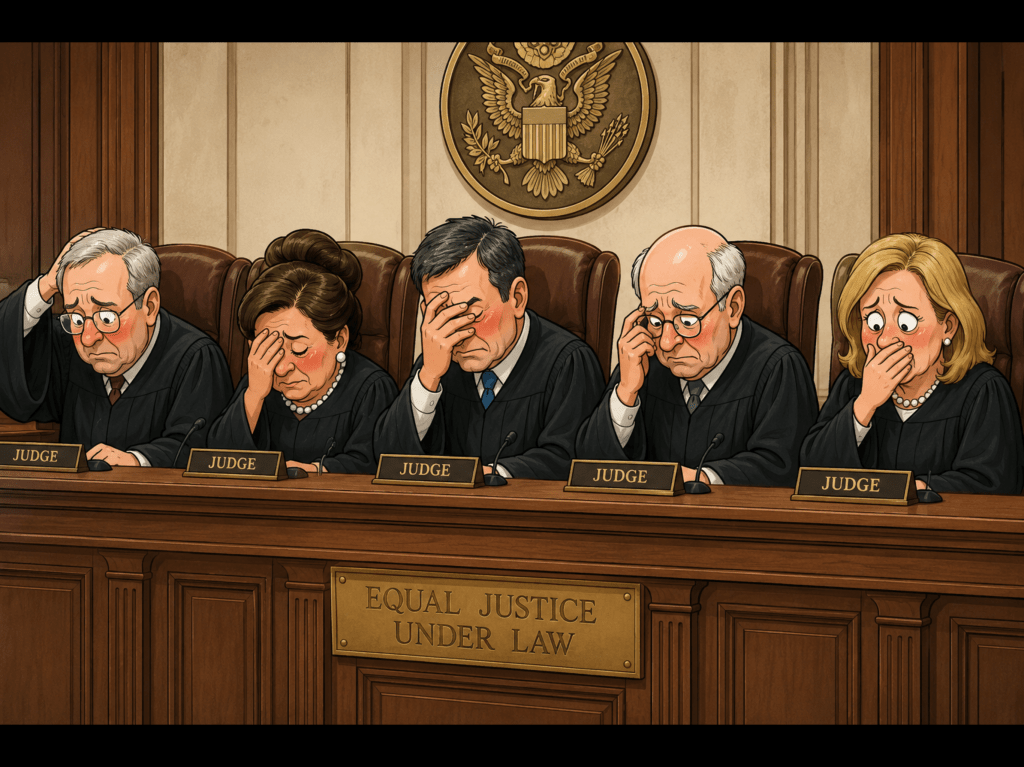
Ten rapes. Planned. Filmed. Shared.
And somehow the conversation became about protecting the perpetrators from being “criminalised” because they lacked intelligence or maturity. Meanwhile the victims are expected to carry trauma for life while society tiptoes around the feelings of the offenders. 🤯
If someone is considered too incapable of understanding the gravity of rape today, then the obvious question is: what changes tomorrow if there’s no serious intervention? Freedom without rehabilitation isn’t compassion — it’s negligence dressed up as progressive justice. 🚨
🎭 “They Didn’t Understand”? Society’s Favourite Get-Out Clause
There’s a dangerous trend creeping into modern justice: confusing explanation with excuse.
Yes, background matters. Education matters. Upbringing matters. But none of those erase calculated cruelty. Filming assaults isn’t confusion. Coordinating abuse isn’t childish mischief. That takes awareness, intent, and a complete collapse of moral boundaries. 📱💥
A justice system terrified of “criminalising youth” risks abandoning the very people it’s supposed to protect. Accountability should not mean revenge — but it absolutely should mean consequences, containment, and mandatory rehabilitation.
And here’s the uncomfortable part nobody wants to touch: if these teenagers genuinely lack the capacity to function safely in society, then simply releasing them back into the public with minimal intervention protects nobody. A secure environment focused on education, behavioural reform, and psychological treatment would arguably serve both public safety and their future prospects far better than pretending the problem solved itself. 🧠🔒
But the responsibility doesn’t stop there.
👨👩👧👦 The Parents: Invisible in the Courtroom, Central to the Disaster
At what point do parents become accountable for catastrophic failures in upbringing?
When children commit repeated acts of violence, abuse, or organised criminal behaviour, society often acts as though they emerged from a vacuum. They didn’t. Values are taught. Boundaries are taught. Respect is taught — or ignored. ⚠️
That doesn’t mean every parent is automatically guilty whenever a child commits a crime. Some parents genuinely struggle against impossible circumstances. But when there are repeated warning signs, patterns of behaviour, online evidence, or complete neglect of supervision, it’s reasonable to ask whether legal responsibility should extend further.
Because if nobody is responsible, then accountability becomes meaningless theatre. 🎪
🔥Challenges🔥
How many times can society excuse brutality before people stop trusting the justice system altogether?
Should rehabilitation come before punishment? Should parents face legal scrutiny when minors commit horrific crimes? And where exactly is the line between understanding behaviour and enabling it? 💬⚖️
👇 Drop your thoughts in the blog comments.
Like, share, and challenge the culture of endless excuses.
The sharpest comments and strongest arguments could be featured in the next magazine issue. 📝🔥
Chameleon News


Leave a comment