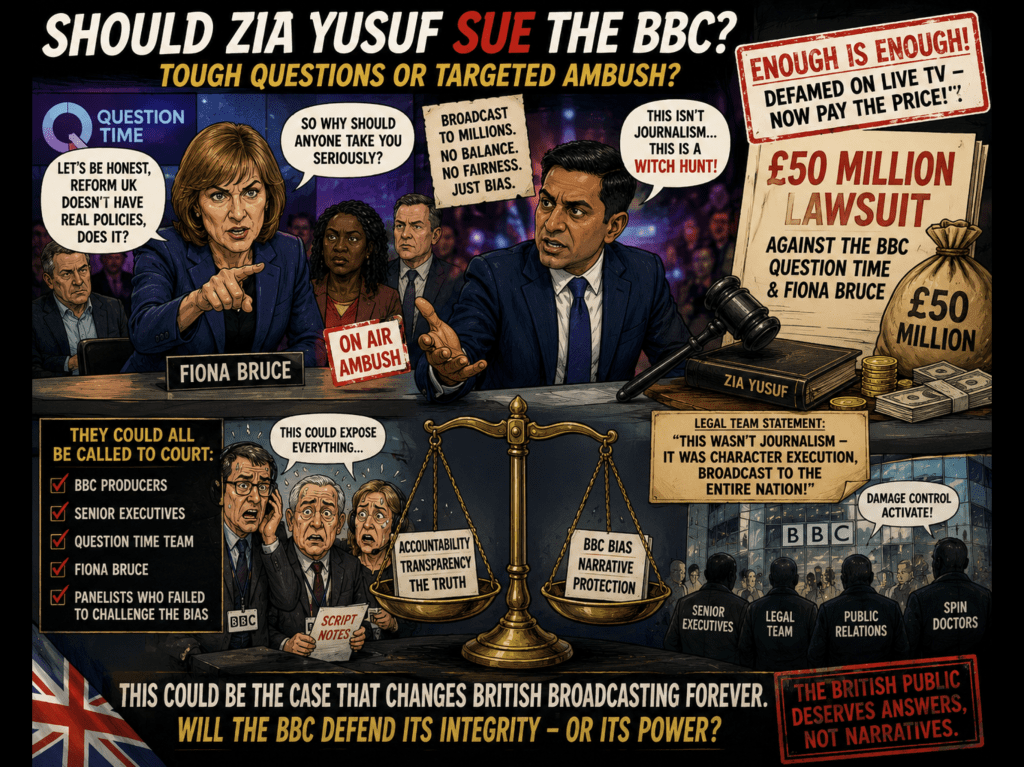
If Reform UK’s leadership genuinely believes the BBC treated Zia Yusuf unfairly, then perhaps the obvious question is this:
Why not sue?
For years politicians have complained about media bias.
For years broadcasters have defended themselves by insisting they operate with fairness and impartiality.
A courtroom has a way of settling those arguments.
📺 Journalism or Defamation?
Supporters of Zia Yusuf argue that he was subjected to treatment that went far beyond robust political questioning.
Critics say tough scrutiny is simply part of public life.
The problem is that both sides can claim victory in the court of public opinion.
The only place where evidence truly matters is a court of law.
If defamatory statements were made, they should be tested.
If they were not, that should be established too.
🏛️ A Case That Could Change Everything
Imagine what would happen if a senior Reform figure took on the BBC in court.
Disclosure.
Emails.
Internal communications.
Editorial decisions.
Producer discussions.
Every decision could potentially come under scrutiny.
For an organisation that regularly demands transparency from politicians, it would be an interesting moment to see transparency demanded of them.
Perhaps that is why some people wonder whether legal action would reveal more than a thousand political debates ever could.
🔥 Challenges 🔥
Should political figures simply accept controversial treatment from broadcasters?
Or should they challenge it through the courts when they believe lines have been crossed?
Would a lawsuit strengthen public trust—or damage it further?
Tell us what you think in the comments below. 💬👇
👍 Like. 💬 Comment. 🔄 Share.
The best comments will be featured in the next issue of the magazine. 🏆📝


 Chameleon Magazine
Leave a comment