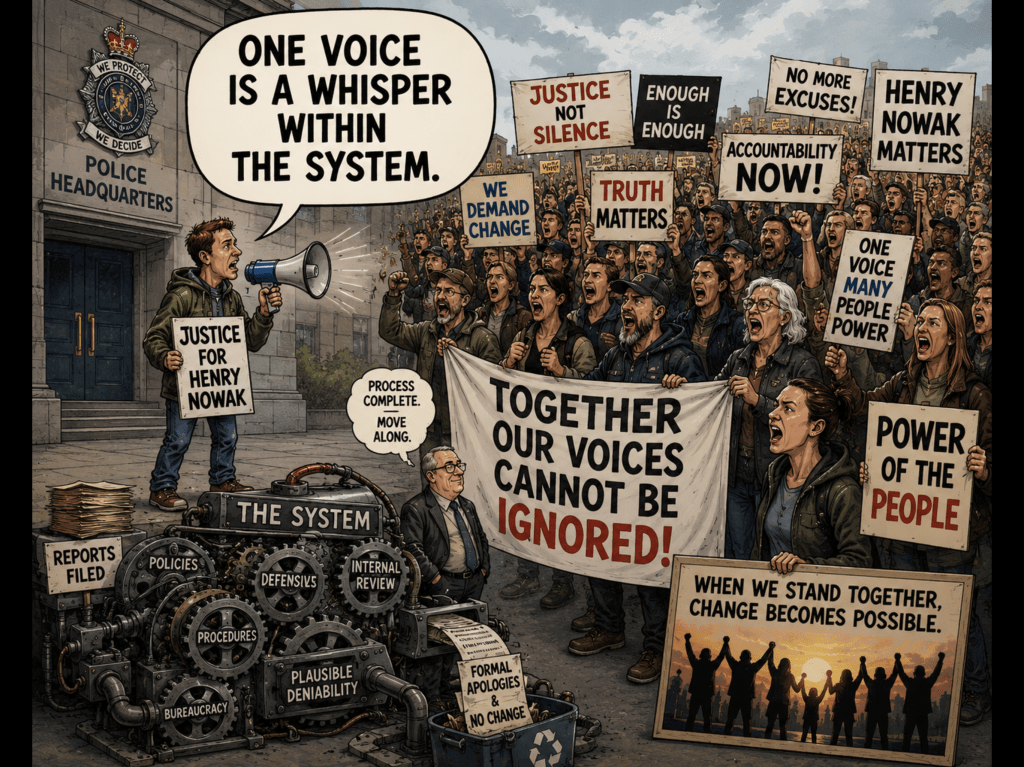
There is a fear shared by many people following the Henry Nowak case that the process from here is already predictable.
First there will be investigations.
Then there will be reviews.
Then there will be reports.
Then there will be carefully worded statements expressing regret.
And after all of that, many fear that very little will actually change.
Those concerns may or may not prove justified, but they help explain why public frustration remains so intense.
For many observers, the issue is not simply the actions of individual officers on one particular night. They believe the deeper question is whether wider policies, procedures and assumptions contributed to what happened. If that is what people believe went wrong, then they naturally wonder whether an organisation investigating itself can ever fully satisfy public concerns.
That is why so many high-profile cases eventually lead to calls for independent inquiries. Families often feel that internal reviews answer some questions while leaving others unresolved. Critics argue that institutions can be too focused on defending systems, while supporters argue that proper investigations are capable of identifying failures and learning lessons.
The challenge for Henry’s family is that justice and accountability are not always the same thing.
A formal apology may acknowledge mistakes.
A report may identify failures.
An inquiry may recommend reforms.
But none of those things can bring Henry back.
And for many people watching from the outside, the real question is what his legacy will be.
Will his name become another tragic case referenced in future reports and policy documents?
Or will it become a catalyst for changes that restore public confidence and prevent similar controversies from occurring again?
History suggests that meaningful change rarely comes from official reports alone. It often comes when public pressure, media scrutiny, campaigners and grieving families refuse to let difficult questions disappear from view.
That does not require disorder.
It does not require violence.
But it does require persistence.
Because institutions are often most likely to change when they know the public is still paying attention.
Perhaps that is why this case continues to resonate so deeply. Many people are no longer simply asking what happened to Henry Nowak.
They are asking what happens next.
And whether, years from now, Britain will remember this case as another apology issued and forgotten—or as the moment a tragedy forced a serious conversation about accountability, trust and reform.
🔥 Challenges 🔥
Do public inquiries lead to genuine change, or do they too often become exercises in damage control?
What would meaningful accountability look like in a case such as this?
And how should Henry Nowak be remembered?
Join the discussion below. 💬👇
👍 Like, 🔄 Share and make your voice heard.
The best comments will be featured in the next issue of the magazine. 📝🏆


 Chameleon Magazine
Leave a comment