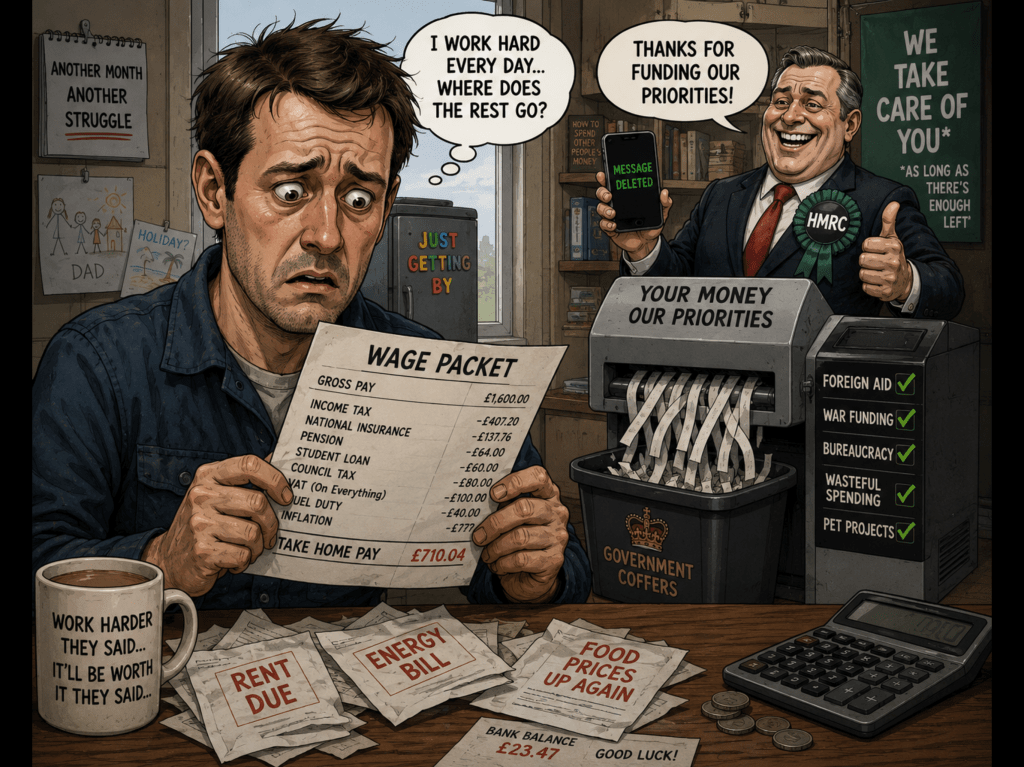
In what is rapidly becoming Britain’s most popular magic act, disappearing messages appear to have become a preferred feature of modern government.
One moment conversations exist.
The next moment they don’t.
Poof.
Gone.
Like a tax rebate.
Or affordable energy.
Or economic growth.
The latest controversy surrounding disappearing WhatsApp messages has once again raised questions about transparency in government. Ministers insist there is nothing unusual about using modern communication tools, while critics ask a rather obvious question:
If these conversations are important enough to conduct government business, shouldn’t they be important enough to keep?
After all, ordinary citizens are constantly reminded about record keeping, compliance, regulations and accountability.
Miss a tax deadline and HMRC remembers.
Forget a payment and the system remembers.
Submit a form incorrectly and the system definitely remembers.
Yet somehow, when it comes to government communications, memories can become remarkably short.
🤔 Curious, isn’t it?
This growing sense of frustration is fuelled by a wider public perception that there are different rules depending on who you are.
Across Britain, workers are opening payslips and wondering where half their earnings disappeared. Rising taxes, frozen thresholds and increasing deductions have left many feeling as though they are working harder while keeping less of what they earn.
Every month the money vanishes.
The difference is that the taxpayer gets a detailed breakdown.
The government apparently prefers messages that self-destruct.
Whether fair or unfair, that contrast is becoming increasingly difficult for many voters to ignore.
The real issue here is not WhatsApp.
It’s trust.
Trust that decisions are being made transparently.
Trust that records are being preserved.
Trust that those exercising power are willing to operate under the same standards they expect everyone else to follow.
Because once trust starts disappearing, it is much harder to recover than a deleted message.
And unlike WhatsApp, there is no handy restore button for public confidence.
🔥 Challenges 🔥
Should all government communications relating to public business be permanently archived?
Do disappearing messages have any place in government decision-making?
And has public trust in political transparency been strengthened or weakened in recent years?
Drop your thoughts in the comments below. 💬👇
👍 Like, 🔄 Share and join the debate.
The best comments will be featured in the next issue of the magazine. 📝🏆


 Chameleon Magazine
Leave a comment