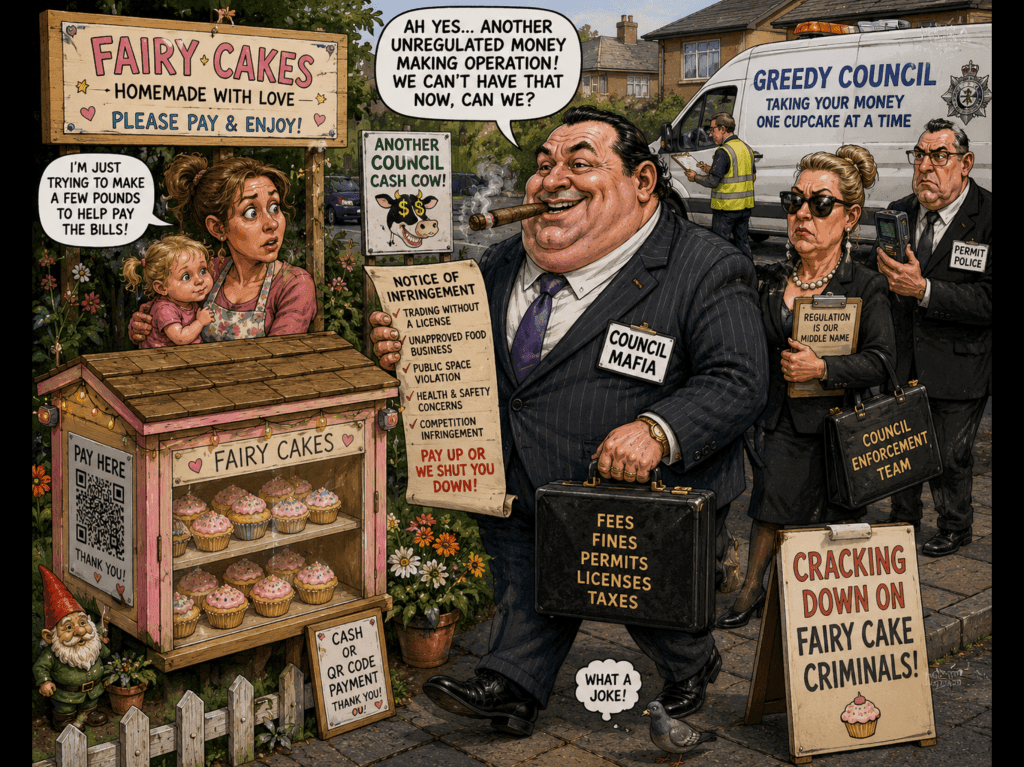
In a world where every penny counts, thousands of hardworking mums have discovered a simple way to bring in a few extra pounds while still being there for the school run, bedtime stories, and the endless cycle of washing that somehow never ends.
Their weapon of choice? The humble fairy cake. 🧁✨
Across the country, tiny magical cake boxes have appeared in front gardens, outside cottages, and tucked away in quiet corners where local residents can stop by, pick up a homemade treat, and leave a few coins—or simply scan a QR code and pay digitally.
No multinational corporation.
No offshore tax haven.
No boardroom full of consultants.
Just mums, mixing bowls, and a dream. 👩🍳💷
🧁 When the Fairy Cakes Became Public Enemy Number One 🧁
But as sure as rain falls on a bank holiday, the authorities have spotted a thriving enterprise and apparently decided something must be done.
Because nothing strikes fear into the heart of officialdom quite like a mother selling six fairy cakes for £3.50 from a decorated wooden box.
Forget potholes.
Forget litter.
Forget antisocial behaviour.
The real threat to civilisation appears to be Sandra from Number 42 selling lemon drizzle cupcakes while looking after her kids. 🚨🧁
One can almost imagine the emergency council meetings.
“Chairman, we’ve discovered a woman selling butterfly cakes without a twenty-seven-page licensing application.”
Gasps around the room.
“Good Lord, man! Deploy the inspectors immediately!”
Meanwhile, the fairy cake bakers simply want enough money to soften the blow of rising bills, soaring food prices, and the general cost of existing in modern Britain.
Yet somehow, these tiny community ventures are increasingly finding themselves under scrutiny from officials who seem determined to ensure every possible crumb falls under regulation.
🍰 The Great Cake Grab 🍰
Critics argue that councils see every successful local venture as a potential revenue stream.
A few pounds here.
A permit there.
A licence fee somewhere else.
Before long, the woman earning enough to pay for a week’s electricity bill is buried beneath paperwork thicker than the sponge cake she’s selling.
And that’s what leaves many people asking:
Have we really reached a point where a mother selling homemade fairy cakes from a box in her garden is viewed as a problem that needs solving?
When neighbours support neighbours, communities support families, and children learn the value of enterprise, shouldn’t that be celebrated rather than scrutinised?
Or has the modern world become so obsessed with rules, regulations, and revenue collection that even fairy cakes aren’t safe anymore? 🧁⚔️
🔥 Challenges 🔥
Who’s the real villain in the Fairy Cake Wars?
The mum selling homemade cakes to help pay the bills?
Or the bureaucrats who seem unable to walk past a successful community venture without reaching for a form, a permit, or a fee?
Tell us what you think. Have you seen fairy cake boxes in your area? Would you support them? Should councils leave them alone or regulate them?
💬 Drop your comments on the blog.
👍 Like the article.
🔄 Share it with fellow cake lovers.
The best comments will be featured in the next issue of the magazine. 📰🎯


 Chameleon Magazine
Leave a comment