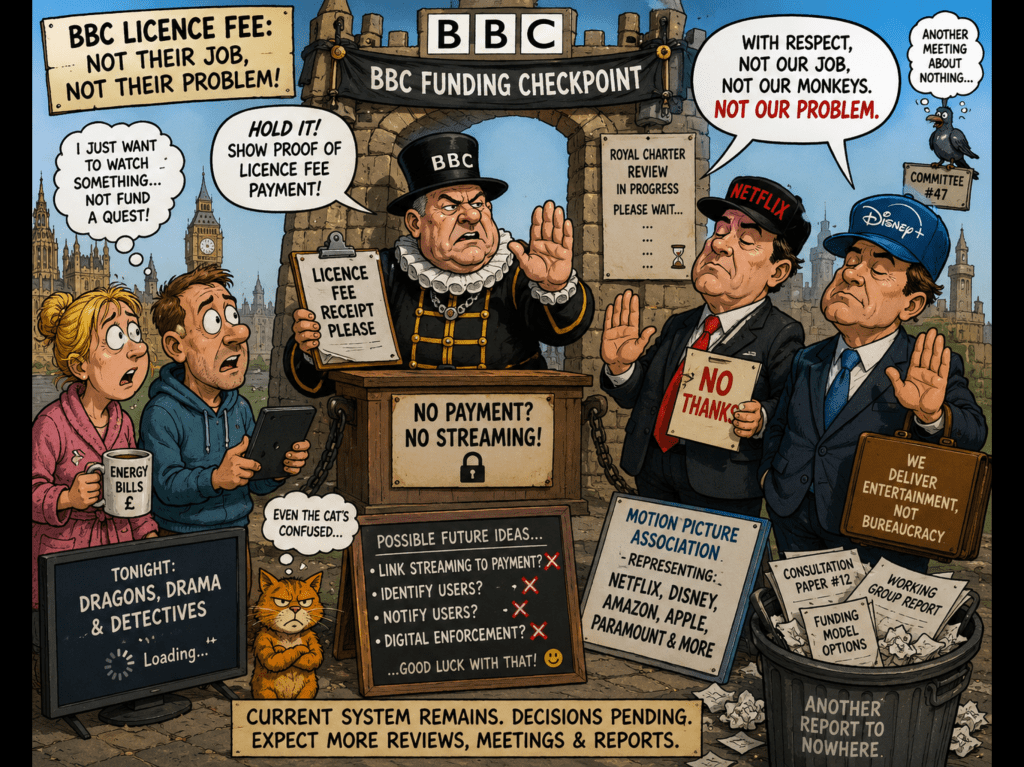
💷🔍While the media establishment rummages through the sofa cushions searching for the future of public broadcasting, a rather awkward scene has unfolded: major streaming giants like Netflix and Disney+ have reportedly told anyone expecting them to become unpaid BBC tax collectors that they can keep dreaming. 😬🍿
The debate isn’t about whether the BBC should be funded. It’s about whether private streaming platforms should be drafted into the role of digital licence-fee bouncers—checking tickets at the virtual door while viewers just want to watch a crime drama and forget their energy bill exists.
🚪 “Show Us Your Licence Fee Receipt Before Watching The Dragons”
🐉📄
Imagine opening your favourite streaming app only to be greeted by a stern digital hall monitor asking whether you’ve contributed to the BBC fund. That’s the kind of futuristic bureaucracy some proposals have reportedly flirted with.
The idea appears simple enough on paper: streaming households are growing, traditional TV viewing is shrinking, and the BBC is looking for ways to keep the money flowing. The problem? The world’s biggest streaming companies seem about as enthusiastic about becoming licence-fee deputies as a cat is about becoming a lifeguard. 🐱🏊
After all, these companies built businesses around delivering entertainment, not around chasing paperwork on behalf of government-backed broadcasters. Asking them to enforce licence-fee compliance is a bit like asking your pizza delivery driver to conduct a council tax inspection while dropping off your pepperoni. 🍕🚔
Meanwhile, viewers are left watching policymakers perform an elaborate game of funding-model Jenga. Pull out the wrong block and the whole tower wobbles. Leave it untouched and critics argue the system is stuck in the 20th century. Either way, nobody seems eager to volunteer as the person holding the clipboard.
For now, the current licence-fee system remains in place, no final decisions have been made, and the great BBC funding mystery continues. Expect plenty more consultations, committees, reviews, and reports—because nothing says “modernisation” quite like another meeting. 📑☕😂
🔥 Challenges 🔥
If streaming services refuse to become licence-fee enforcers, what should replace the current system? A subscription model? General taxation? A hybrid approach? Or is the licence fee still the least bad option available?
Tell us what you think in the blog comments. 💬👇 Would you trust streaming companies to police payments, or should they stay firmly out of the BBC’s funding debate?
🚀 Like it, share it, and tag someone who has an opinion on the licence fee (which, let’s be honest, is practically everyone in Britain).
🏆 The best comments, hottest takes, and sharpest one-liners will be featured in the next issue of the magazine.


 Chameleon Magazine
Leave a comment