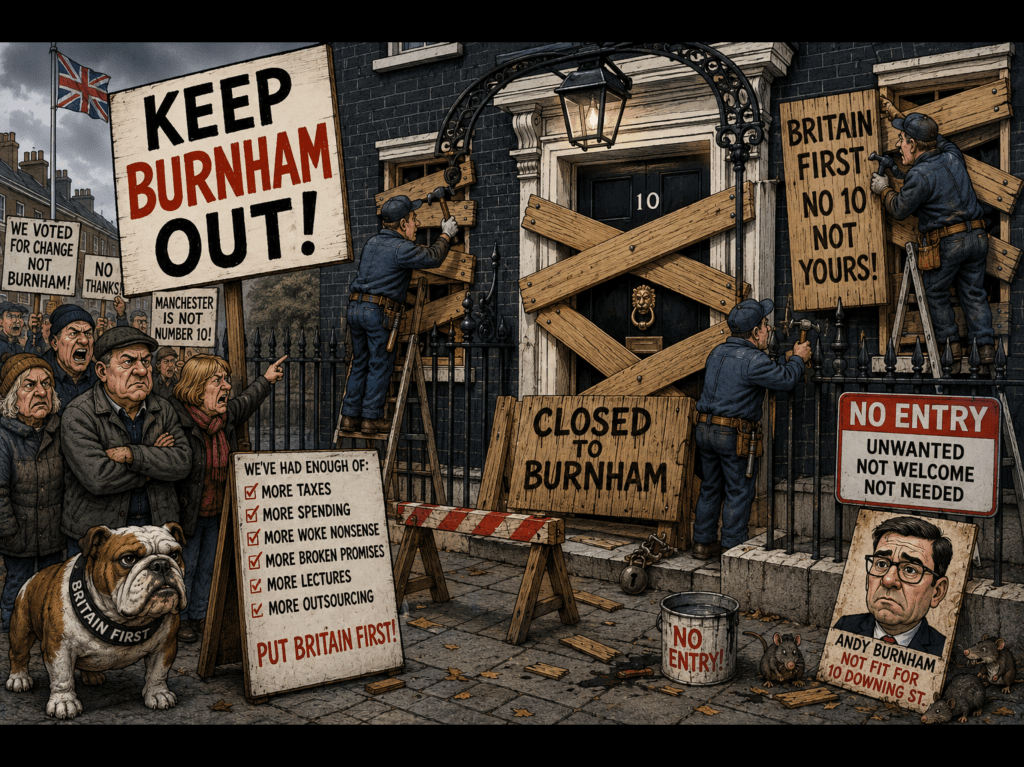
Britain appears to have a growing problem.
The Prime Minister insists he’s listening.
The public increasingly suspects he’s listening to someone else.
As household bills remain stubbornly high, public services creak under pressure, immigration remains a divisive issue, and economic growth struggles to get out of second gear, many voters are asking a simple question:
Does anyone in Westminster actually understand how frustrated people are? 🤔🇬🇧
🚶♂️ Britain’s Great Sleepwalk
Keir Starmer entered Downing Street promising competence, stability, and change.
What many voters believe they’ve received instead is a government that seems permanently trapped inside a focus group.
Every week brings another carefully managed announcement.
Another consultation.
Another strategy.
Another task force.
Another promise to “take action.”
Yet millions of people still feel their concerns are sitting in the government’s spam folder. 📥
The latest battleground is online regulation and internet restrictions aimed at protecting young people.
Supporters argue it’s a necessary step to shield children from harmful content.
Critics see something different.
They see politicians reaching for highly visible policies that generate headlines while deeper problems remain unresolved.
It’s easier to regulate screens than fix the economy.
It’s easier to announce restrictions than rebuild trust.
And it’s certainly easier to police the internet than explain why so many voters feel ignored.
📊 The Westminster Bubble Strikes Again
The problem for any government isn’t criticism.
It’s indifference.
People don’t become angry because they care too little.
They become angry because they expected more.
Across Britain, many voters increasingly feel that politicians spend more time discussing demographics than discussing the people struggling to pay the mortgage, heat their homes, or access basic services.
Whether that perception is fair or not is almost beside the point.
In politics, perception eventually becomes reality.
And once voters decide their leaders are out of touch, winning back trust becomes far harder than winning an election.
⚠️ The Warning Signs Are Flashing
Governments rarely fall because of a single policy.
They fall because people slowly lose confidence.
One disappointment becomes another.
One broken promise becomes a pattern.
One ignored concern becomes a movement.
The danger for Starmer isn’t that people disagree with him.
The danger is that growing numbers no longer believe he understands them.
And when voters reach that conclusion, they start looking elsewhere.
History shows that political vacuums never stay empty for long.
🔥 Challenges 🔥
Do you think Keir Starmer understands the frustrations of ordinary Britons?
Are online restrictions a necessary protection for young people, or a distraction from bigger issues facing the country?
Drop your views in the blog comments below. 💬🔥
👇 Like, share, and join the debate.
The best comments will be featured in the next issue of the magazine. 🏆📝


 Chameleon Magazine
Leave a comment