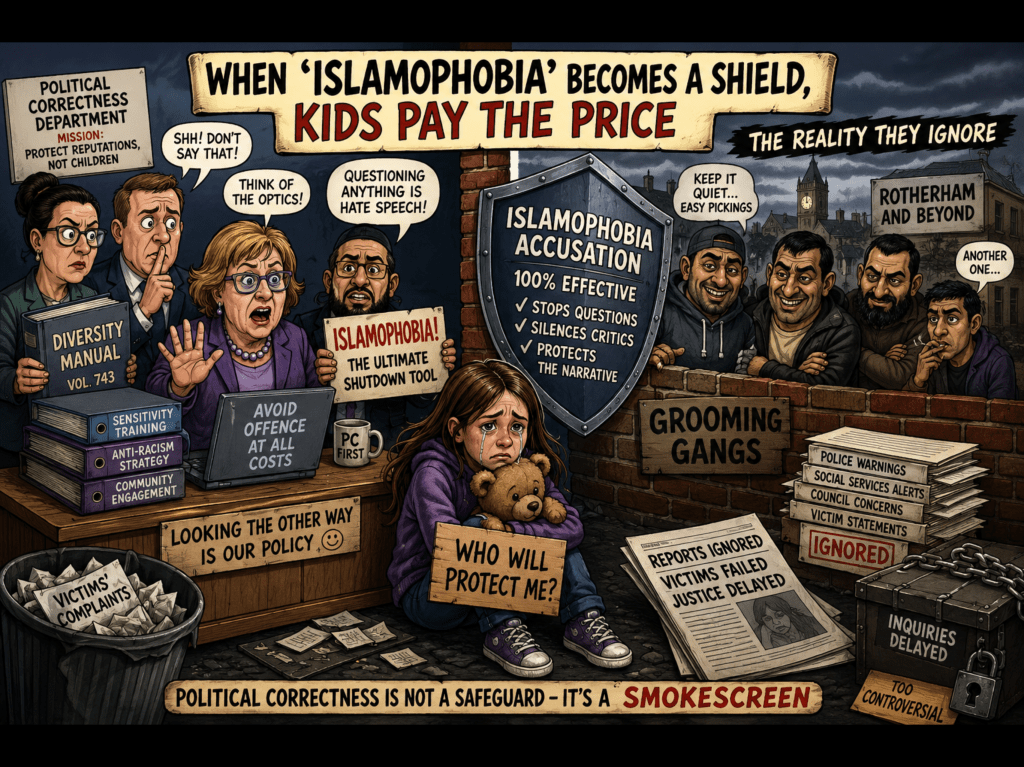
🎭⚖️For years, critics have argued that fears of being branded “Islamophobic” helped create an atmosphere where uncomfortable questions were quietly shoved into a filing cabinet marked “Too Difficult.” 📁🙈 As grooming gang scandals emerged across multiple towns, allegations grew that institutions, politicians, and community leaders became more concerned with avoiding controversy than confronting criminality. The result? Victims left waiting while officials perfected the art of looking the other way. 🚨😡
🤐 Speak No Evil, Hear No Evil, Investigate No Evil🐵🔥
According to reports highlighted by Policy Exchange, accusations of “Islamophobia” have often been deployed as a political shield against scrutiny. Critics argue that anyone attempting to discuss patterns within certain grooming gang cases risked being labelled a bigot before they could even finish a sentence. 🎯💥
The situation begins to resemble a bizarre bureaucratic theatre production. On one side stand victims demanding justice. On the other stand officials frantically checking diversity manuals, terrified someone might say something politically inconvenient. 📚😰
The reports point to protests against police investigations, claims of Muslim communities being “scapegoated,” and institutional cultures where anti-racism bureaucracy sometimes appeared better funded than common sense. Meanwhile, predators weren’t exactly sitting around waiting for sensitivity training certificates before committing crimes. 🚔🤦♂️
The uncomfortable question remains: if authorities become so worried about offending people that they stop identifying problems, who exactly benefits? Spoiler alert: it certainly isn’t the victims. ⚠️
Critics of political correctness argue that justice should never require permission from public relations departments. Yet for years, many believe the conversation became less about protecting vulnerable children and more about protecting reputations. That’s not safeguarding. That’s damage control wearing a superhero cape. 🦸♂️🗑️
🔥 Challenges 🔥
Here’s the challenge: Were concerns about racism and community relations allowed to outweigh the protection of vulnerable children? 🤔💬
Should difficult facts be discussed openly regardless of political discomfort, or does that risk creating new divisions? Where should the balance lie between tackling prejudice and pursuing justice?
We want to hear your views in the blog comments. Bring your arguments, your questions, and yes—even your outrage. 🔥📝
👇 Comment below, like, and share this post with others who aren’t afraid of difficult conversations.
🏆 The best comments, strongest arguments, and sharpest observations will be featured in the next issue of the magazine.


 Chameleon Magazine
Leave a comment