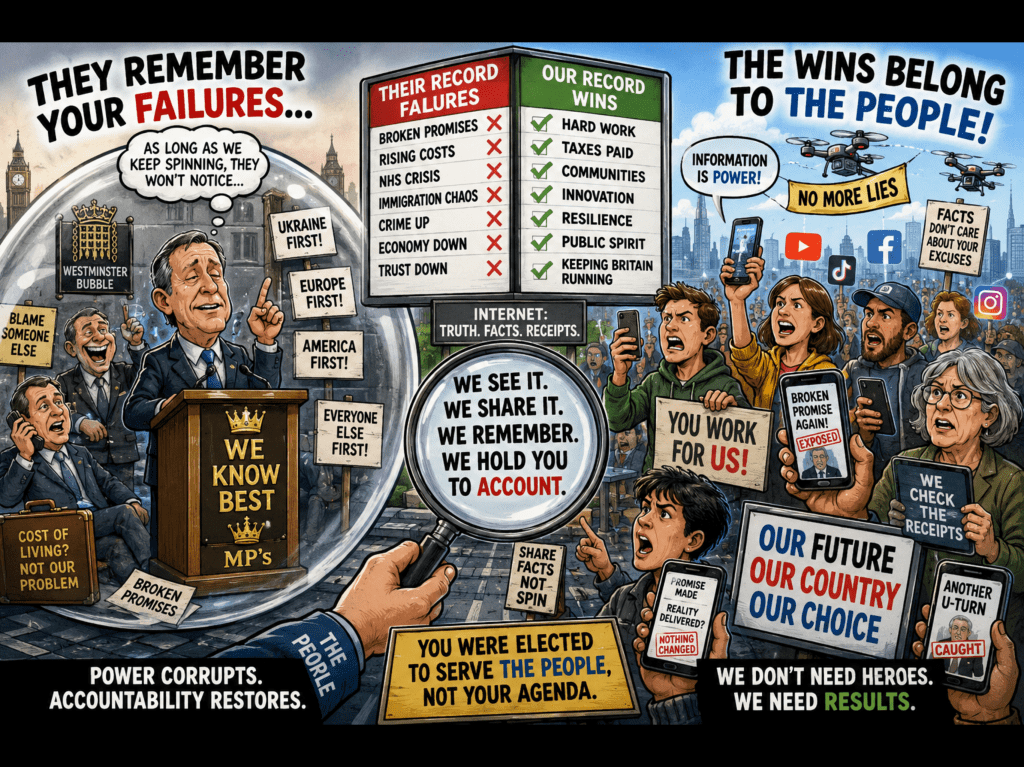
📱⚡Politicians used to rely on a simple formula: make promises, blame someone else when things go wrong, and hope voters forget by the next election. Unfortunately for them, the internet has arrived, and unlike Westminster, it actually keeps receipts. 🧾🔥
The distinction many MPs seem unable to grasp is painfully simple: people remember your failures far more vividly than your victories. And when they do celebrate victories, they often see them as their own hard-earned wins rather than gifts handed down from political elites.
🎭 The Customer Service Department That Forgot Its Customers
Somewhere along the way, politics stopped behaving like public service and started behaving like an international networking event. 🌍🍷
The people footing the bill—the British public—are increasingly wondering when they stopped being the priority customer. Every speech seems directed elsewhere. Every crisis appears to come with a foreign policy photo opportunity. Every promise somehow ends with ordinary citizens being told to wait a little longer.
Meanwhile, voters are left asking a simple question: “What exactly are we getting for our investment?”
In the past, politicians could hide behind complicated reports, friendly newspapers, and lengthy news cycles. Failures could be buried for months, sometimes years. Today? A broken promise can be clipped, shared, fact-checked, memed, and distributed to millions before lunch. 🚀📲
The political class still behaves as though they’re operating in the era of filing cabinets and evening newspapers. The public, however, is operating in real time.
A minister says one thing on Monday, a video appears on Tuesday showing the opposite, and by Wednesday the internet jury has already delivered its verdict. ⚖️💥
The uncomfortable reality is that modern voters no longer need permission from traditional gatekeepers to compare promises with outcomes. They can see the receipts for themselves.
And unless people’s lives are noticeably improving—higher living standards, safer streets, better services, more opportunities—the excuses wear thin remarkably quickly.
The age of delayed accountability is over.
Welcome to the age of instant replay. 🎥🔥
If politicians are now under constant public scrutiny, is that making government more accountable—or simply better at producing excuses?
What failures do you think voters are paying the closest attention to right now? And are politicians adapting to this new reality, or are they still campaigning as if nobody can fact-check them?
Drop your thoughts in the blog comments and join the debate. 💬⚡
👇 Like, comment, and share if you think public accountability should move at internet speed.
The sharpest comments, hottest takes, and best observations will be featured in the next issue of the magazine. 🏆📝


 Chameleon Magazine
Leave a comment