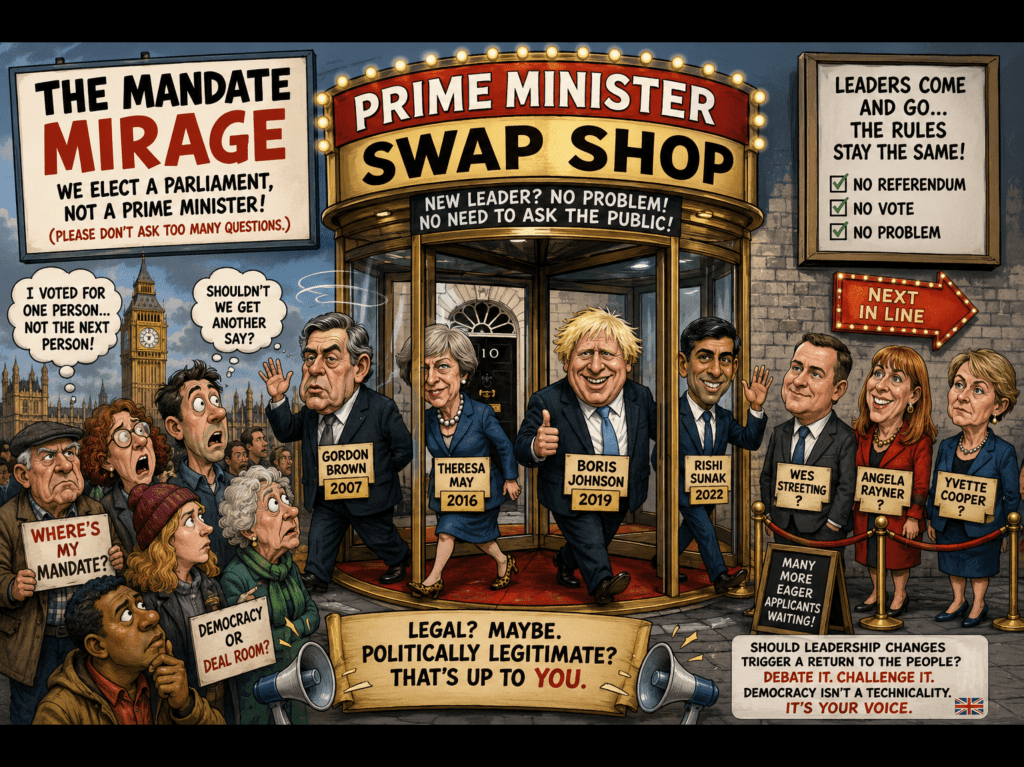
Britain loves to boast about democracy, yet every so often the country wakes up to discover a brand-new Prime Minister has moved into Downing Street without a single voter being asked for permission. One day you’re told you’re backing one leader, and the next day someone entirely different is standing behind the lectern insisting everything is perfectly normal. 🤔📦
The defence is always the same: “We elect a Parliament, not a Prime Minister.” Technically true. Politically? That’s where the argument gets messier than a Westminster expenses receipt.
🎪 Welcome to Britain’s Prime Minister Swap Shop
Imagine ordering a pizza because you like the chef, only for a completely different cook to arrive halfway through dinner and announce they’re now running the kitchen. Legally acceptable? Perhaps. Likely to raise a few eyebrows? Absolutely. 🍕😆
This isn’t a complaint aimed at one party or one politician. The same argument surfaced when leadership changed hands in previous governments, whether it was Gordon Brown, Theresa May, Boris Johnson or Rishi Sunak. Every time, a sizeable chunk of the public asked the same question:
“If this wasn’t the person I thought would be leading the country, shouldn’t I get another say?”
Yet Westminster’s answer often resembles a shrug wrapped in constitutional jargon. The rules say it’s allowed, therefore the debate should end. But voters rarely stop asking questions simply because politicians insist the paperwork is in order. 📜🙄
The issue isn’t whether someone won a constituency seat. Plenty of MPs win local mandates. The controversy begins when a local mandate suddenly transforms into the keys to Number 10 and authority over the entire nation. For many people, that’s a leap larger than the political class likes to admit. 🚀🏠
And if a future Labour succession battle ever emerged, there would be no shortage of ambitious figures circling the runway. Politics has never suffered from a shortage of volunteers eager to inherit power. 😏🎯
At its core, this debate isn’t really about personalities. It’s about accountability. Should a governing party be able to replace a Prime Minister mid-term without consulting the electorate? Some argue stability demands it. Others argue democracy demands the opposite.
Both sides can make a case.
What they cannot do is pretend the public has no right to question the system itself.
🔥Challenges🔥
Would you accept a Prime Minister you never expected to get the job? Should parties be forced back to the country whenever leadership changes, or is Parliament alone enough to provide legitimacy?
Tell us what you think in the blog comments. Challenge the argument, defend the system, or tear it apart entirely. The bigger the debate, the better. 💬⚡
👇 Like, comment and share if you think democratic accountability deserves more than a technical explanation.
🏆 The best comments, arguments and political hot takes will be featured in the next issue of the magazine.


 Chameleon Magazine
Leave a comment