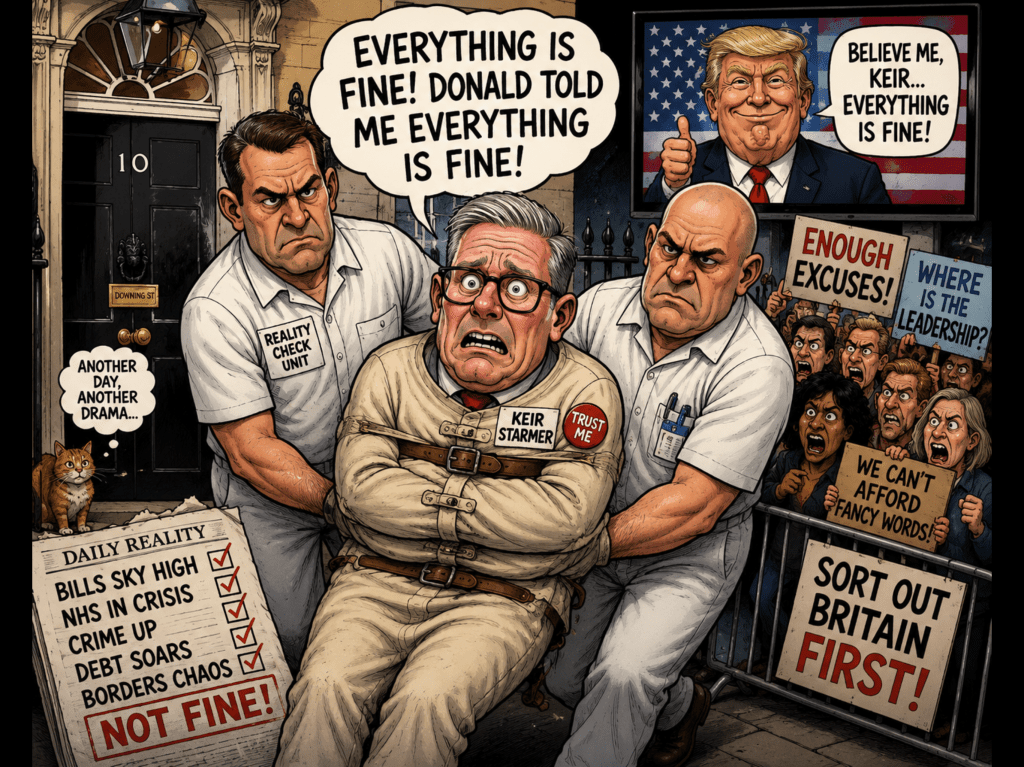
Britain was promised a government of competence, honesty and accountability.
Instead, many critics believe we’ve ended up with a Prime Minister who seems reluctant to accept responsibility when things go wrong. Every setback appears to have another explanation, another excuse, or another person to blame.
Meanwhile, millions of ordinary people are still wondering how they’re supposed to afford the basics. For too many families, it’s still a choice between heating or eating. Businesses continue to struggle with rising costs, public services remain under pressure, and confidence in politics is wearing thin.
So where is the accountability?
🎁 Gifts, Controversies and Public Trust
Governments live or die by public confidence.
Rows over gifts and hospitality, questions surrounding senior figures in government, and repeated political controversies have left many voters wondering whether Westminster has really changed at all. Every headline chips away at trust, yet the response often seems to focus on managing the political fallout rather than addressing the concerns directly.
For many people, actions speak louder than carefully crafted press releases.
💷 Borrowing Britain into the Future?
Supporters argue that government borrowing can help fund investment and stimulate economic growth.
Critics see something very different.
Britain already carries a huge national debt, with billions spent every year servicing it. That’s money that cannot be spent on hospitals, policing, defence, infrastructure or lowering taxes.
To many, borrowing even more isn’t a sign of economic strength—it’s simply passing today’s bills to tomorrow’s taxpayers.
If your household finances were already stretched, would taking out another loan be called good money management?
Many people ask why the same logic shouldn’t apply to government.
🌍 Charity Begins at Home?
Another growing frustration is the feeling that Britain has become the world’s charity operation.
Critics argue that whenever another international crisis emerges, Britain is expected to provide funding, accommodation, services and support, even while many people here are struggling to make ends meet.
This isn’t simply a debate about who comes to Britain. It’s about priorities.
Many believe the government’s first responsibility should be to the people who already live here—fixing housing, improving public services, reducing debt and helping families cope with the cost of living—before committing ever more resources abroad or expanding support at home for new arrivals.
Supporters argue that humanitarian assistance reflects Britain’s values and international obligations. Critics respond that compassion abroad should never come at the expense of people already facing hardship at home.
⚖️ Leadership Means Owning the Results
No Prime Minister inherits an easy job.
Most voters understand that.
But they also expect honesty when policies don’t work, accountability when mistakes are made, and leadership that accepts responsibility instead of constantly looking for someone else to blame.
Whether you support Keir Starmer or oppose him, that’s a standard every Prime Minister should be judged by.
Because leadership isn’t measured by how well you explain problems.
It’s measured by how well you solve them.
🔥 Challenges
Do you think Keir Starmer is taking responsibility for Britain’s problems, or has blame become the government’s default response?
Has Britain got its priorities right, or are ordinary people being asked to accept sacrifices while government spending continues elsewhere?
Where should the balance lie between helping others and looking after people at home?
Share your views in the blog comments. We welcome strong opinions, thoughtful arguments and respectful debate from every side of the political spectrum. 💬
👍 Like it. 💬 Comment on the blog. 🔄 Share it with friends and family who’ll have a different opinion.
The best comments will be featured in the next issue of the magazine. 📝


 Chameleon Magazine
Leave a comment