Politics has always been a rough business. Strong words, fierce disagreements and passionate arguments are part of democracy. But there is a line that should never be crossed. That line is the normalisation or encouragement of violence against political opponents.
Reports that Zack Polanski has been referred to the Metropolitan Police after sharing a post appearing to depict Nigel Farage alongside a guillotine image raise questions that go beyond party politics. Whatever the outcome of any police assessment, the broader principle deserves attention.
A politician’s first responsibility is not simply to represent their supporters. It is also to help preserve the democratic culture that allows disagreement without intimidation. When elected representatives or aspiring leaders share images, slogans or messages that appear to glorify violence against political rivals, they risk lowering the standard for everyone else.
It does not matter whether the target is Nigel Farage, Keir Starmer, Kemi Badenoch, Angela Rayner or any other public figure. The principle remains exactly the same. Democracy depends upon defeating opponents through debate and the ballot box—not through imagery that appears to celebrate their harm.
Political violence rarely begins with violence. It begins with language. It begins with symbols. It begins when people convince themselves that those who disagree with them are no longer fellow citizens but enemies deserving punishment.
History repeatedly shows that once this boundary becomes blurred, it becomes increasingly difficult to restore civility.
This should not become another tribal argument where one side excuses behaviour because they happen to support the politician involved. The standard should be universal. If an image would be unacceptable when directed at one politician, it should be unacceptable when directed at any politician.
Politicians occupy positions of influence. Their words and actions carry greater weight than those of ordinary social media users because they help shape what supporters believe is acceptable. With that influence comes responsibility.
Political leaders should lower the temperature, not raise it. They should encourage disagreement without hatred and criticism without dehumanisation. A healthy democracy can survive fierce arguments over taxes, immigration, climate policy or public spending. It becomes far more fragile when violence, even by implication or symbolism, starts entering the political conversation.
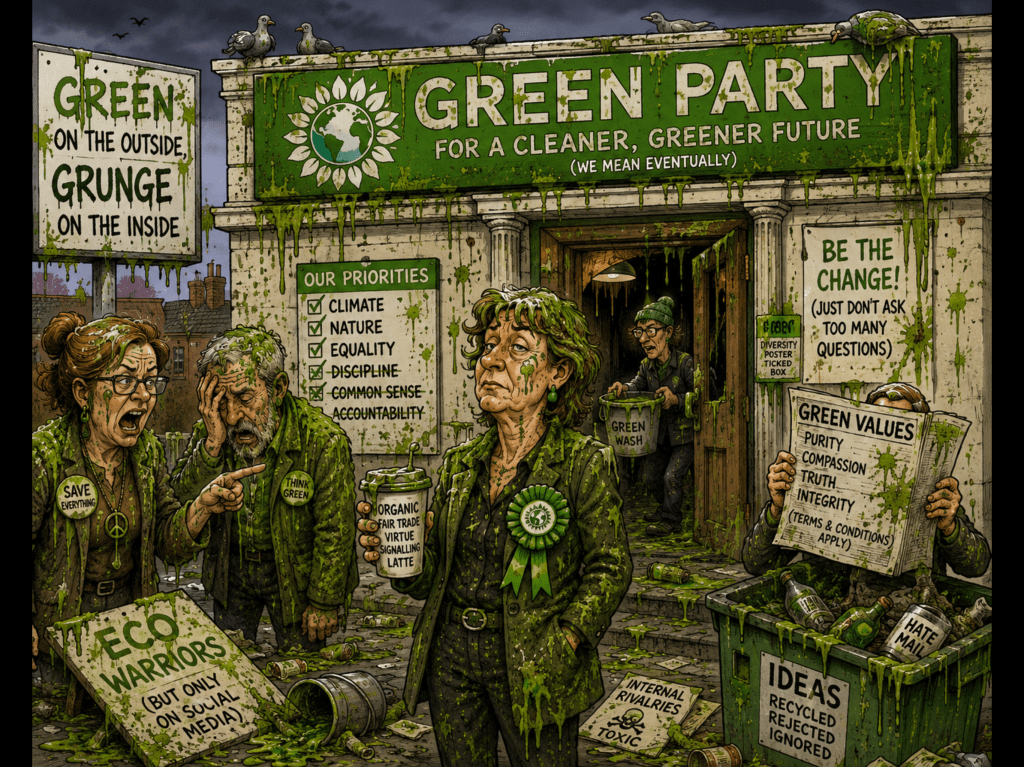
The colour of a political party should never matter more than the principles it claims to defend. Democracy demands better from those who seek to lead it.


 Chameleon Magazine
Leave a comment