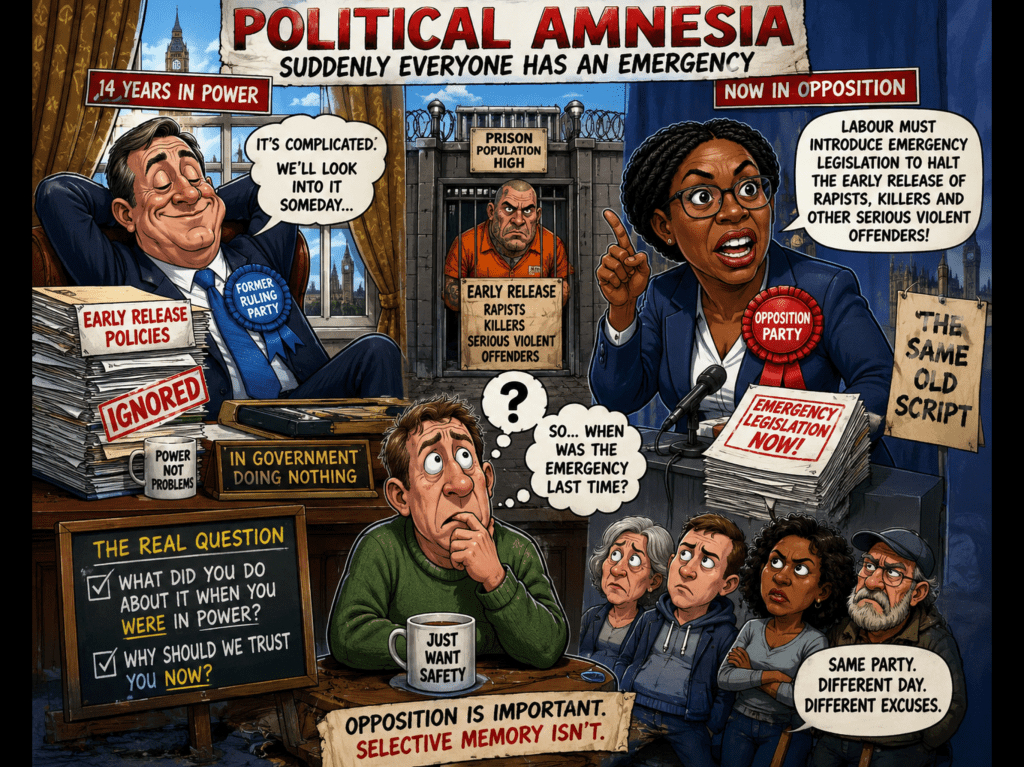
🤦♀️⚖️Kemi Badenoch is demanding emergency legislation to stop the early release of rapists, killers and other serious violent offenders. Strong words. Urgent words. The kind of words that make for excellent headlines.
The awkward question, however, is this: where was the emergency when her own party was in government?
Opposition politics has become a strange performance. Every week, parties demand urgent action on problems that either developed or worsened while they themselves held power. Then, when the roles reverse, the new opposition does exactly the same thing.
It’s less about solving problems than scoring points.
Should opposition parties be banned from making requests? Probably not. In a democracy, scrutinising the government is one of the opposition’s primary jobs. If they were legally prevented from challenging policies or proposing alternatives, Parliament would become little more than a rubber stamp.
But perhaps they should be held to a different standard.
Imagine if every demand came with a compulsory reminder:
“This proposal comes from a party that held office for 14 years and did not introduce this measure.”
Suddenly, voters would have the context needed to judge whether they’re witnessing genuine concern or convenient outrage.
Politics has become a revolving door of selective memory.
When in government: “It’s complicated.”
When in opposition: “Why hasn’t this been fixed immediately?”
It’s remarkable how quickly impossible problems become obvious solutions once you’re no longer responsible for implementing them.
That doesn’t mean opposition parties should stay silent. Sometimes they raise legitimate concerns. Sometimes governments do need pressure to act.
The real issue isn’t that they’re making requests.
It’s whether those requests are credible in light of their own record.
Perhaps before any politician demands emergency legislation, they should first answer a simple question:
“What did you do about it when the responsibility was yours?”
That single question might do more to improve political honesty than a thousand parliamentary debates.


 Chameleon Magazine
Leave a comment