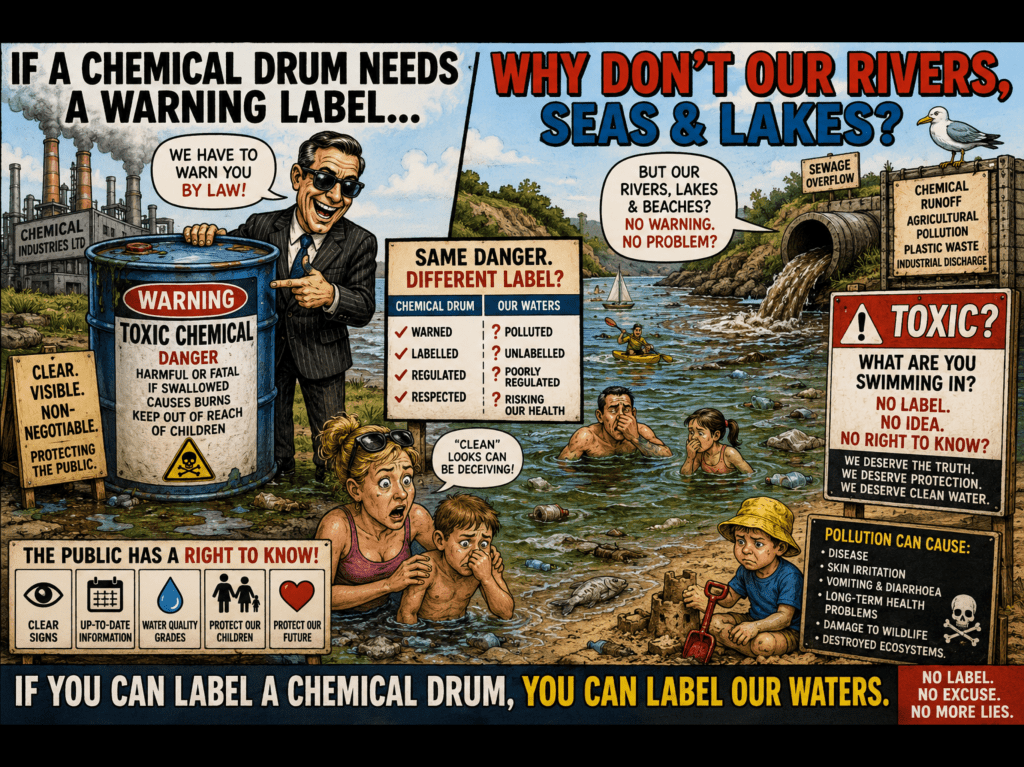
Every drum of hazardous chemicals must carry a bright warning label telling the public it’s dangerous. So here’s the uncomfortable question: if our rivers, lakes and coastal waters can contain sewage, toxic algae, industrial pollution or harmful bacteria, why aren’t they clearly marked with the same urgency?
🚱 The Water Might Look Beautiful… But Would You Drink It?
Imagine a chemical company leaving an unlabelled drum marked “Contents Unknown” in a public park. The authorities would be there in minutes.
Yet every year, families swim, paddle and fish in waters that can be affected by sewage overflows, agricultural runoff, harmful bacteria and chemical pollution. Sometimes there are warnings. Sometimes there aren’t. Sometimes the information is buried on a website that most people never check before heading to the beach.
Why?
If the public has a right to know what’s inside a chemical container, surely they have an equal right to know what’s in the water their children are about to swim in.
This isn’t about causing panic.
It’s about transparency.
A simple, highly visible warning system at beaches, lakes and rivers could tell people whether the water quality is safe, questionable or should be avoided altogether. Clear signs. Easy to understand. Updated regularly.
Because pollution doesn’t become harmless simply because it’s dissolved in water instead of sitting inside a steel drum.
If businesses are legally required to warn us about hazardous chemicals, shouldn’t public authorities be held to the same standard when those hazards end up in our environment?
Clean water shouldn’t be a guessing game.
🔥 Challenge 🔥
Would you support mandatory “Water Quality Warning” signs at every public beach, river and lake, showing the latest pollution and safety information?
Or do you think we’re already given enough information?
💬 Join the debate in the blog comments. Tell us whether Britain needs a proper warning-label system for its waterways.
👇 Like, share and comment if you believe the public has a right to know exactly what they’re swimming in.
🏆 The best comments will be featured in the next issue of the magazine.


 Chameleon Magazine
Leave a comment