Jason Arday’s family does not need another public inquiry into the final days of a man they loved. They need privacy, dignity and the freedom to grieve without his death becoming another arena for political argument.
And who genuinely wants a public inquiry whose practical purpose would be to decide whether Jason Arday was some kind of “Walter Mitty” figure? That would be cruel to his family and unlikely to produce anything of public value.
He would not be the first person accused of exaggerating qualifications or achievements, and he will not be the last. We are entering an age in which people routinely use artificial intelligence to polish CVs, personal statements and professional profiles—sometimes making ordinary experience sound far more impressive than it really is. Universities and employers must therefore become better at verifying claims rather than accepting carefully constructed narratives at face value.
A professorship at Cambridge is not an ordinary job. The criteria are traditionally set extremely high, making such a position something many learned and accomplished people spend their entire careers aspiring to achieve. When someone appears to rise unusually quickly into that privileged academic circle, questions—and perhaps some professional jealousy—are not difficult to imagine. That does not make every criticism malicious or every allegation untrue, but it does mean the university should have anticipated intense scrutiny and ensured that the appointment could withstand it.
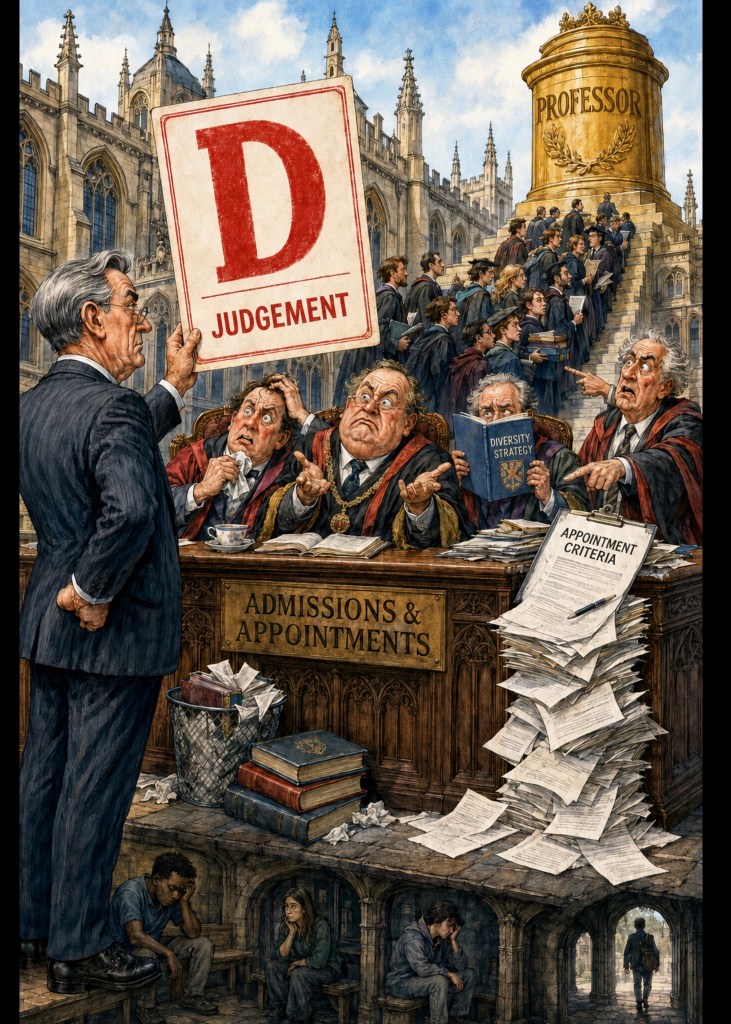
If an inquiry is necessary, it should examine something much broader: how universities appoint professors to prestigious positions—and whether institutional ambitions sometimes take priority over properly assessing, preparing and supporting the individual.
Cambridge must explain whether Jason Arday was chosen solely because he was the strongest academic candidate, or whether his appointment also served a wider institutional story about representation, progress and cultural relevance.
That question matters. If a university elevates someone into an internationally prominent position, it assumes a responsibility to ensure that the appointment is academically sound, that the individual is prepared for the scrutiny that will follow, and that proper support is available when serious difficulties arise.
Responsibility cannot simply be passed to journalists, critics or strangers on social media. If the criticism was justified, the university must explain how the circumstances arose. If it was unfair or exaggerated, those who promoted it must answer for the damage caused.
The family should not be placed on trial. The appointment process should be.
The proper question is not merely, “Who said what after the controversy began?” It is:
Who made the decisions that placed Jason Arday in that position, what checks were undertaken, why was he appointed, and what responsibility did the institution accept for what followed?


Leave a comment