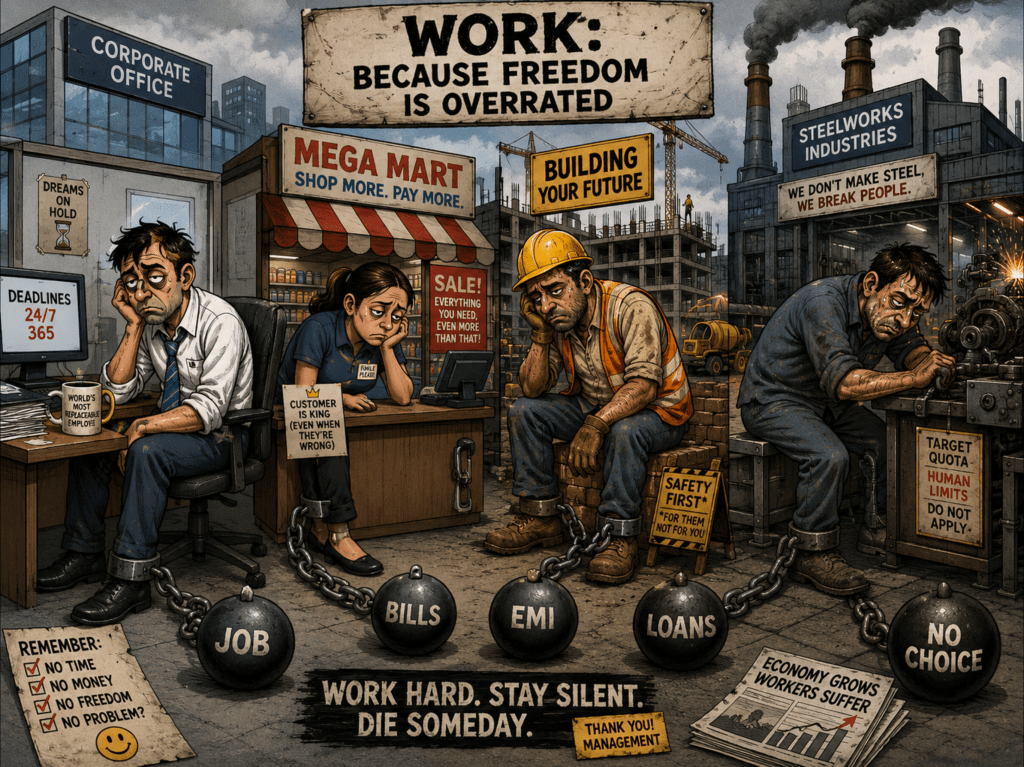
💼📉Britain’s labour-market slowdown is no longer just a story about people losing jobs. Increasingly, it’s about the millions still employed who may discover that their bargaining power has quietly packed its bags and left the building.
With vacancies down to 707,000 and private-sector pay growth running at 2.8%, the days of hopping across the road for a chunky salary increase may be fading. Employers, after several years of scrambling for staff, could find themselves back in the driving seat—while workers become more cautious about quitting, recruiters chase fewer openings, and consumer-facing businesses deal with customers who suddenly feel much less adventurous about spending. 🛒💷
🚪 Congratulations, You Still Have a Job — Now Try Escaping It
Remember the post-pandemic hiring boom? Recruiters were calling, salaries were jumping, and changing jobs sometimes felt less like career planning and more like switching broadband providers for a better introductory offer.
Now the music is slowing. 🎶🪑
Fewer vacancies mean fewer tempting exits. Fewer exits mean employers face less pressure to throw money at retention. And less competition for workers can turn the annual pay conversation from “What will it take to keep you?” into “Have you considered being grateful for the branded water bottle?”
That matters far beyond the unemployment figures.
A workforce that feels stuck is less likely to demand more money, less likely to move house for a new role, less likely to splash out confidently and considerably more likely to stare at LinkedIn before closing it again five minutes later. Recruiters feel the freeze first, but retailers, restaurants and other consumer businesses may feel the consequences soon after. 🥶📱
Still, this is not necessarily economic Armageddon wearing a lanyard.
ONS vacancy figures provide the clearest evidence of weakening demand, but payroll estimates remain provisional and can be revised. Meanwhile, a separate recruiter survey has suggested tentative stabilisation in permanent hiring.
So this looks less like the labour market falling through a trapdoor and more like somebody gradually turning down the thermostat. 🌡️
Unfortunately, if you’re hoping to negotiate a 15% raise by dramatically announcing that “competitors are interested,” you may soon discover the competitors have also decided to “keep your details on file.”
🔥 Challenges🔥
Here’s the uncomfortable question: are workers about to lose the bargaining power they gained after the pandemic without even noticing it?
If vacancies keep shrinking, does loyalty become valuable again—or simply cheaper for employers?
💬 Tell us in the blog comments: Would you risk changing jobs in this market, push harder for a pay rise, or stay exactly where you are until the economic weather improves?
👇 Comment, like and share the post — especially with someone currently pretending they aren’t checking job vacancies during lunch.
The best comments will be included in the magazine. 🎯📝


Leave a comment