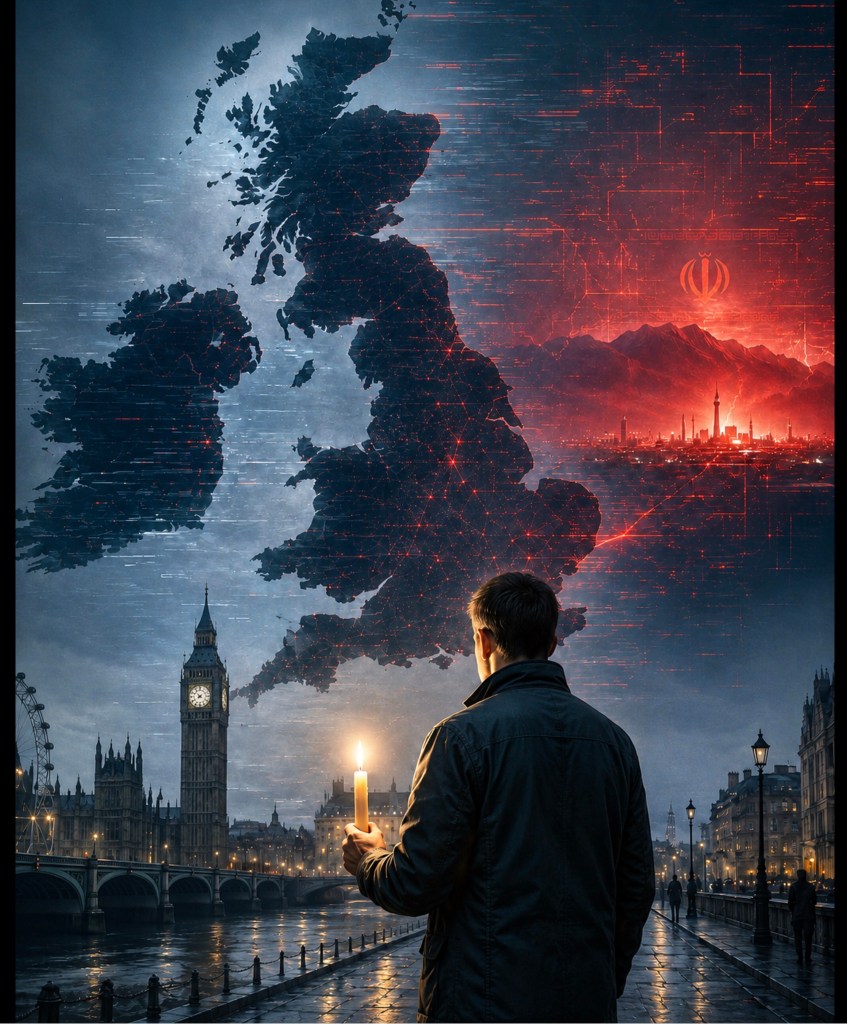
⚡💻🚨A British energy facility was reportedly forced offline for four days after a cyber attack linked to Iran, in what is believed to be the first successful attack of its kind against a UK power facility. The plant was relatively small and the shutdown did not affect Britain’s wider electricity supply, according to reporting on the incident. (The Times)
That distinction matters. Britain’s grid wasn’t brought to its knees. But neither should “it was only a small power plant” become the technological equivalent of “don’t worry, they only got through the kitchen window.” 🪟🔓
Because the frightening question isn’t simply what happened this time.
It’s what happens if whoever did it learns how to do it again — somewhere bigger?
⚡
“Nothing to See Here, Just Someone Remotely Switching Off Infrastructure”
🙃Government officials have reportedly stressed that the affected facility was small and that Britain’s broader energy supply continued normally. Executives in the power industry were subsequently briefed and businesses were sent security advice. (Report.az)
Perfectly sensible reassurance.
But reassurance and complacency are very different things.
If someone breaks into your house, discovers they can turn off the boiler and then wanders back out again, you probably don’t celebrate because the fridge stayed on.
You change the locks. 🔐
Britain’s own National Cyber Security Centre has already described Iran as an aggressive and capable cyber actor, warning that Iran-linked actors possess disruptive and destructive capabilities. Earlier this year it urged UK organisations to strengthen their cyber defences as tensions in the Middle East escalated. (National Cyber Security Centre)
And the timing makes this considerably more uncomfortable.
The British incident reportedly occurred around the same period that water facilities across numerous US states were being attacked. American officials have investigated possible Iranian involvement, although US authorities have not publicly made a definitive attribution of those water attacks to Iran. (Reuters)
So no, this doesn’t mean Tehran possesses a giant cartoon button labelled “TURN BRITAIN OFF” sitting beside the Ayatollah’s desk. 🔴⚡
But four days offline demonstrates something arguably more important:
physical infrastructure can be affected through a keyboard.
Power stations, water systems, transport networks and industrial machinery increasingly depend on digital control systems. Once hostile actors discover vulnerable doors into those systems, warfare starts looking considerably less like tanks crossing borders and considerably more like somebody thousands of miles away opening a laptop. 💻🌍
And that’s where “it was only a small facility” stops being particularly comforting.
The first successful demonstration of a capability is rarely frightening because of the size of the first target.
It’s frightening because somebody just proved the door can open.
🔥Challenges🔥
Here’s the question Britain should be arguing about:
If a hostile cyber actor can reportedly take one UK energy facility offline for four days, how confident are you that the systems protecting the bigger ones are ready?
And how much information should the Government reveal after attacks like this? Too little and the public cannot judge the danger. Too much and you potentially hand future attackers a useful roadmap. ⚡🤔
👇 Drop your view in the blog comments — not just Facebook. Comment, like and share this post, and tell us whether Britain is taking cyber warfare seriously enough.
The best comments, arguments and beautifully brutal observations will be featured in the magazine. 🎯📝


Leave a Reply