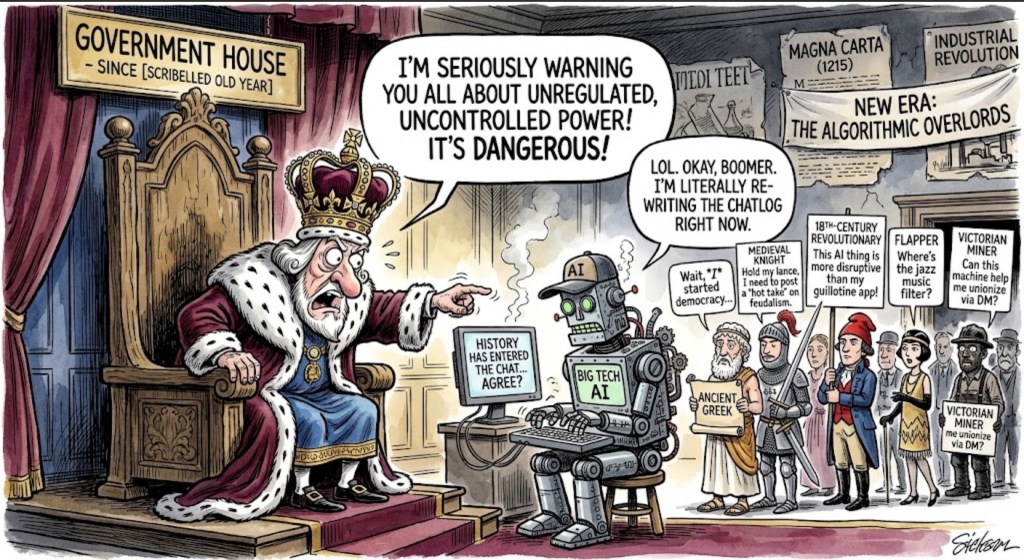
There is a precise, exquisite frequency of institutional hypocrisy that can only be achieved when an hereditary monarch—a human being whose very existence is derived from the divine right of uninterrupted, unchecked power—sits atop a golden throne to warn the public about the terrifying dangers of unregulated authorities.
The latest moral panic consuming our governing class is not the cost of living, the collapse of basic public infrastructure, or the fact that trains now operate on a schedule best described as conceptual. No, the true villain of our age is Artificial Intelligence, a technology so vast, so unaccountable, and so free from democratic oversight that it has managed to deeply unsettle a royal dynasty that spent several centuries executing its critics and annexing continents without asking for planning permission.
Lessons in Absolutism from the Original Algorithm
The core allegation against AI is that it processes massive amounts of stolen data, operates behind opaque walls, and imposes its automated will upon millions without a shred of democratic accountability. To address this unprecedented threat, His Majesty’s Government has done what British authorities always do when faced with a existential technological shift: they have called a conference, drafted a non-binding white paper, and formed a advisory panel that will meet quarterly in a drafty room in Whitehall.
While Silicon Valley tech titans move at breakneck speed, our political apparatus is deploying its heaviest artillery. Committees are being formed. Peers are shaking their heads. Regulators are issuing polite guidelines suggesting that algorithms really ought to try being a bit more ethical. The sheer scale of institutional effort being poured into this panic is breathtaking—a parade of ministers, civil servants, and royal commentators all wringing their hands over the terrifying prospect of a single entity holding too much control over the masses.
And what will realistically change as a result of this grand moral crusade? Absolutely nothing.
After months of breathless headlines, frantic parliamentary debates, and solemn declarations that human dignity must be protected, the ultimate outcome will be entirely familiar. Big Tech will receive a sternly worded compliance document, a modest administrative fee disguised as a fine, and a quiet invite to partner with the Department for Education. The algorithms will continue to mine our personal data uninterrupted, provided they display a small, government-approved privacy banner at the bottom of the screen.
And then what? What actually changes?
We are left with the magnificent spectacle of a monarch warning us against the dangers of arbitrary, central power, managed by a government whose idea of regulation is asking a trillion-dollar monopoly if it wouldn’t mind self-auditing its own code. The contrast between the apocalyptic rhetoric and the limp, bureaucratic response is almost poetic. If history has taught us anything about absolute power, it is that those who possess it rarely give it up because someone asked them nicely in a committee meeting.
The practical alternative is not particularly complex: enforceable rules, meaningful financial penalties tied to global turnover, and swift legal consequences for corporate overreach that actually deter wrongdoing. Instead, we are offered institutional theatre—a royal sermon on the evils of unregulated influence, delivered from a palace built on it.
🔥 Challenges: Should an institution built on centuries of absolute, unregulated authority really be the one lecturing us on the dangers of rogue algorithms?
Leave a comment below, hit like, and share this article to join the debate!
🏆 The best comments will be included in the magazine.


Leave a comment